
Family & Relationships


How to Build Trust with a Teenager Who Has Shut Down
When was the last time your teenager actually talked to you — not just answered a question, but really talked? If you're drawing a blank, you're not alone. Research from the Pew Research Center found that nearly 40% of teens say they rarely or never feel heard by their parents. That's not a parenting failure — it's a signal. A quiet teenager isn't a broken one. They're often a hurting one, waiting to see if the space around them is truly safe enough to open up.

How to Handle Sibling Rivalry Without Losing Your Mind
Did you know that approximately 80% of children grow up with at least one sibling, and that conflict between them is so common it's considered a normal part of childhood development? Yet here's the kicker: while we know it's "normal," that doesn't make it any easier when you're the parent caught in the crossfire, listening to the hundredth argument about whose turn it is to sit in the front seat. Your blood pressure spikes, your patience evaporates, and you find yourself wondering if raising tiny humans was supposed to feel this chaotic.

How to Keep Romance Alive When You Have Young Kids
You've been told that romance is something you protect — that with enough date nights, enough effort, enough scheduling, you can preserve the spark you had before children arrived. But that advice might be quietly setting you up to fail. It frames love as a fragile object that requires constant guarding rather than a living thing that grows and changes shape. And when you're running on four hours of sleep with a toddler attached to your hip, "just try harder" doesn't just feel unhelpful — it feels like an accusation.

How to Navigate Family Conflict During the Holidays
What if the most stressful relationship in your life isn't with a coworker, an ex, or a difficult neighbor — but with the people sitting across from you at the holiday dinner table?

How to Raise Emotionally Intelligent Children
You've been told that a good childhood means keeping kids happy — shielding them from frustration, smoothing over conflict, and making sure the tears don't last too long. But that instinct, however loving, might be quietly working against the very thing you want most for them. Emotional intelligence isn't built in calm waters. It's built in the moments you let your child feel the full weight of something hard — and stay beside them while they do.

How to Reconnect with Your Partner After a Difficult Season
Remember the final season of Schitt's Creek, when David and Patrick have that quiet, loaded moment where they've been so consumed by the chaos around them that they almost forgot to actually be with each other? No big fight, no dramatic betrayal — just two people who love each other, standing on opposite sides of a distance that crept in while they were busy surviving? If you've ever looked across the dinner table at your partner and felt something that used to be warmth replaced by something more like... politeness — you already know exactly what that scene was about.

How to Set Screen Time Rules That Your Kids Will Actually Follow
You've been told that setting firm limits and taking away devices is the answer to your kid's screen addiction — but that approach might be making the problem worse.

What Are the Biggest Mistakes Couples Make When Raising Children Together?
You wanted to build something beautiful together — a family, a home, a shared life rooted in love. But somewhere between the sleepless nights, the school pickups, and the endless negotiations over screen time, something quietly shifted. The partnership that felt solid before children arrived started showing cracks you didn't see coming.

What Are the Signs Your Child Is Struggling Socially at School?
You pick your kid up from school and ask the classic parental question: "How was your day?" They shrug, stare out the window, and mutter "Fine." Cue the internal parental alarm bells. Is it just a phase? Are they tired? Or is something deeper going on — like the kind of quiet social struggle that doesn't come with a permission slip or a note from the teacher?

What Are the Signs of Emotional Burnout in Parents?
You love your kids. That's never the question. But lately, the sound of someone calling "Mom!" or "Dad!" for the fourteenth time before 9 a.m. makes something inside you go quiet and hollow. That's not a character flaw — that's your nervous system waving a white flag.

What Is Attachment Parenting and Is It Right for You?
I remember standing in the middle of Target at 2 p.m. on a Tuesday, my nine-month-old daughter strapped to my chest in a carrier, while a well-meaning stranger leaned over her cart to tell me I was "spoiling" my baby. My daughter had been fussy, and I'd scooped her up rather than letting her cry in the cart. The woman shook her head with that particular brand of unsolicited certainty only strangers in grocery stores seem to possess. "You're creating a monster," she warned. "She'll never learn independence."

What Is Conscious Co-Parenting After Divorce?
The first school pickup after the divorce papers were signed, Daniel almost didn't go. He sat in the car outside the elementary school for four minutes longer than necessary, rehearsing what he'd say if his ex-wife, Renata, was already there. They hadn't spoken — really spoken — in weeks. Their communication had narrowed to terse texts about schedules and a few tense exchanges over who forgot to pack Lily's inhaler. The air between them had the specific quality of a bruise: tender, discolored, not quite healed. When he finally walked to the pickup line, Renata was already there. Their eyes met. There was a long, suspended second. And then Lily came bursting through the school doors, arms wide, running toward both of them at once — not toward one parent or the other, but toward the space between them, as if she already knew, instinctively, that her wholeness lived there.

What Is Gentle Parenting and Does It Really Work?
It was a Tuesday evening that broke something open in her.

What Is the Best Way to Communicate with a Stubborn Teenager?
It was a Tuesday evening, and I was standing in the kitchen holding a plate of pasta like a peace offering. My fifteen-year-old sat across the counter, arms crossed, headphones around his neck — not in his ears, just around his neck, which somehow felt more pointed. I'd asked a simple question: "How was school?" Three words. He responded with one: "Fine." Then silence, thick as fog, settled between us. I stood there trying to remember the last real conversation we'd had — the kind where he actually looked up, where something passed between us beyond logistics and mild irritation. I couldn't. And something in me quietly cracked open.

How to Apologize to Your Child and Repair the Relationship
Every parent has moments they wish they could take back. A raised voice when patience ran out. A dismissive response when your child needed to feel heard. A broken promise, an unfair punishment, a reaction that was more about your stress than their behavior. These moments don't make you a bad parent. They make you a human one.
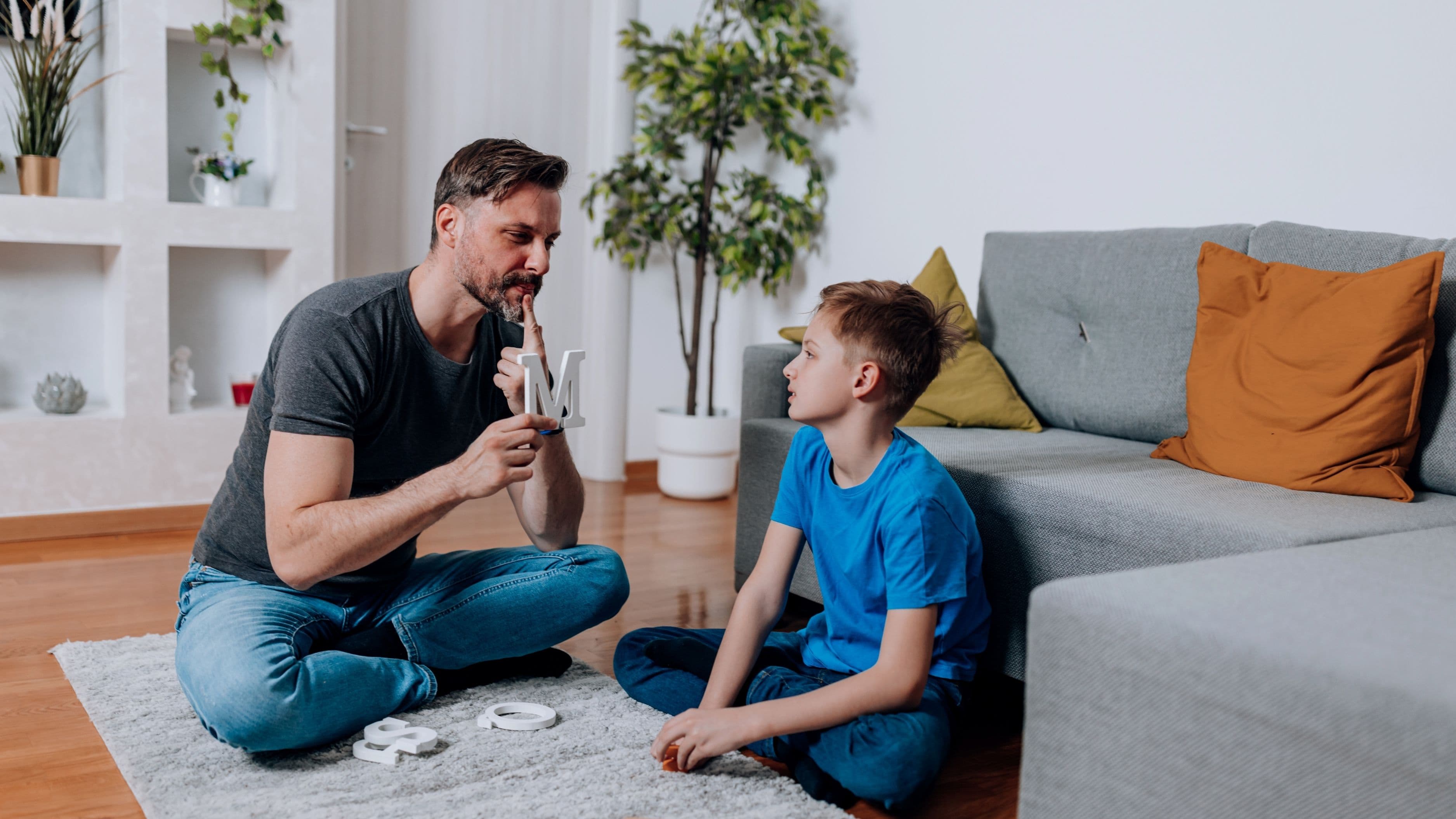
How to Foster Open Communication with Your Preteen
Somewhere around age ten or eleven, the easy chattiness of childhood often gives way to shorter answers, closed doors, and a lot more "I'm fine." This shift can feel sudden and a little unsettling, but it's a normal part of a preteen developing independence, not a sign that your relationship is failing.

How to Help Aging Parents While Protecting Your Own Mental Health
Somewhere between scheduling your parent's doctor appointments and answering your own phone at work, it can start to feel like there's no version of this that doesn't involve running on empty. Caring for aging parents while trying to hold onto your own life, career, and wellbeing is one of the quiet, often invisible pressures so many adults are carrying right now, and it rarely comes with a manual.

How to Help Your Child Build Resilience After Disappointment
Watching your child face disappointment – not making a team, a friendship falling apart, a project that didn't turn out the way they hoped – is genuinely hard to sit with as a parent. The instinct to fix it, soften it, or rush past it is completely understandable. But disappointment handled well, with the right support rather than the right rescue, is actually one of the places resilience gets built. Here's how to help your child move through it in a way that strengthens them rather than just easing the moment.

How to Help Your Child Cope with Grief and Loss
Grief is one of the hardest things to sit with as a parent – not just because you may be grieving yourself, but because watching your child hurt in a way you can't simply fix can feel unbearable. The instinct is to protect them, to smooth things over, to offer reassurance that everything will be okay. And while that impulse comes from love, what children in grief most need is something a little different: a safe place to feel what they're actually feeling, with someone who isn't afraid to be there with them in it.

How to Help Your Child Develop Healthy Friendships
Watching your child navigate friendships can bring up feelings you didn't expect. There's the quiet worry when they mention feeling left out, the relief when they come home excited about a new friend, and sometimes the harder moments when you notice a friendship that doesn't feel quite right for them. Friendship is one of the earliest places kids practice trust, communication, and boundaries, which means it's also one of the most meaningful places you can gently guide without taking over.

How to Navigate Blended Family Dynamics with Grace
Blending two families together sounds simple in theory and feels anything but simple in practice. There are new routines to negotiate, loyalties that feel complicated, and relationships that can't be rushed no matter how much everyone wants them to click right away. If you're in the middle of this right now, the friction you're feeling isn't a sign you're doing it wrong. It's a sign you're doing something genuinely hard.

How to Prepare Your Family Emotionally for the Back-To-School Season
The school supply lists and new-shoe shopping trips get most of the attention this time of year, but the emotional side of the transition often gets overlooked. New routines, new teachers, new social dynamics, all of it lands on kids at once, and parents feel the ripple effects too. A little emotional preparation goes a long way toward making the shift feel manageable instead of overwhelming.

How to Raise a Child Who Is Kind and Empathetic
Kindness isn't something children either have or don't. It's something that grows – quietly, steadily – in the right conditions. And the conditions aren't complicated: they're built from everyday moments, repeated so often they become second nature, until caring about others stops being something a child is reminded to do and starts being part of who they are.

How to Strengthen Your Friendship with Your Spouse
There's a version of a marriage that runs on logistics – coordinating schedules, splitting responsibilities, managing the household, raising children, showing up for work. It functions. But somewhere underneath all of that, there's a question worth sitting with: are you still friends? Not just partners. Not just co-parents or housemates. Friends – in the real sense of the word.

How to Survive the Summer with Kids at Home and Keep Your Sanity
Somewhere around week three of summer break, the novelty of no school wears off for everyone, and a lot of parents find themselves quietly wondering how they're going to make it to September without losing their minds. This is an incredibly common feeling, not a sign you're failing at parenting or don't love the extra time with your kids. Summer with kids home full-time is a genuinely different rhythm than the school year, and it helps considerably to plan around that reality rather than expecting yourself to just power through without any structural support.

How to Turn Screen Time Into Quality Family Connection Time
Most conversations about screens and families focus on limits, timers, and guilt. Less time on the phone, less time on the tablet, less time in front of the TV. But for a lot of households, screens aren't going anywhere, and treating them purely as the enemy misses an opportunity. When screen time is approached intentionally, it can actually become a bridge for connection rather than a barrier to it. The shift isn't about eliminating screens, it's about changing how and when your family uses them together.

What Are the Benefits of Family Meetings and How to Run Them?
A lot of family friction doesn't come from big, dramatic conflicts – it comes from small things going unaddressed until they quietly build into resentment or miscommunication. A regular family meeting sounds almost too simple to matter, but it creates something most households don't otherwise have: a predictable, low-pressure space where everyone's voice actually gets heard before frustration builds up.

What Are the Benefits of Family Therapy and When Should You Consider It?
Every family hits moments where the usual ways of talking to each other stop working. Tensions build up, the same arguments repeat on a loop, someone withdraws, and it starts to feel like you're all speaking different languages even in the same room. It doesn't mean your family is broken. It means you might be navigating something bigger than everyday conversation can hold.

What Are the Best Ways to Keep Long-Distance Family Connections Strong?
Distance changes relationships, but it doesn't have to diminish them. Whether a sibling moved across the country, your parents live in a different time zone, or your family is spread across multiple cities after years of life pulling people in different directions – the gap can feel larger than the miles suggest. The silence between calls grows. Visits feel rushed. You wonder how someone you grew up with can start to feel like a stranger.

What Are the Long-Term Benefits of Reading Together As a Family?
There's something quietly powerful about a family that reads together regularly, even if it doesn't feel like much in the moment. Ten minutes before bed, a shared chapter book over a few weeks, or a Sunday afternoon with everyone reading their own thing in the same room – these small, repeated moments build something that lasts well beyond childhood. Reading together isn't just about literacy. It shapes connection, emotional development, and family identity in ways that show up years later.

What Are the Most Effective Ways to Discipline Without Yelling?
There's a particular kind of exhaustion that comes after yelling at your kids. It's not just the raised voice fading out of the room, it's the quiet after, when you're left wondering if there was a calmer way to get the same point across. If you've been there, you're not failing at parenting. You're just human, running on too little sleep and too much pressure, reaching for the fastest tool available in a stressful moment.

What Are the Most Effective Ways to Handle Peer Pressure with Your Teen?
Peer pressure feels different now than it probably did when you were a teenager. The pressure hasn't just moved from the hallway to a group chat, it's become constant, following your kid into their bedroom through a phone that never really turns off. As a parent, watching your teen navigate this can feel helpless, especially if they've stopped sharing the details with you the way they used to. But there's a lot you can do, and most of it has less to do with control and more to do with the kind of relationship you're building with them day to day.

What Are the Signs That Your Marriage Needs a Check-In?
Marriages don't usually fall apart in one dramatic moment. More often, small distances build up quietly over months, until one day you look at your partner and realize you've been living parallel lives instead of a shared one. Recognizing the early signs of that drift is one of the kindest things you can do for your relationship, because it gives you a chance to address it while it's still small.

What Are the Warning Signs of Toxic Relationships Parents Should Teach Their Kids?
Somewhere between teaching your child to tie their shoes and helping them navigate their first heartbreak, there's a conversation many parents put off simply because it feels uncomfortable to start. Teaching kids to recognize an unhealthy relationship isn't about instilling fear or suspicion of every friendship and connection they'll form. It's about giving them a quiet, internal compass they can trust long before they ever need it.

What Is Love Language Theory and How Can It Improve Your Relationships?
There's a particular kind of frustration that comes from genuinely caring about someone and still feeling like they don't quite feel it. You show up. You try. And somehow, there's still a gap. Love language theory offers one of the most useful frameworks for understanding why that gap exists – and what you can do to close it.

What Is Positive Reinforcement and How Does It Shape Child Behavior?
You've probably noticed that the moments you praise or acknowledge in your child tend to happen again, while the ones you ignore or scold often stick around anyway. That pattern isn't random. It's the basic mechanism behind positive reinforcement, one of the most well-studied and reliable tools for shaping behavior in children, and understanding how it actually works can make your day-to-day parenting feel a lot less like guesswork.

What Is the Best Way to Handle a Child's Temper Tantrums?
It happens in the middle of the grocery store, at the dinner table, or right before bedtime – your child dissolves into tears, screaming, or a full floor-drop meltdown over something that seems, from your perspective, completely minor. In that moment, you're not just managing a situation. You're managing your own stress response while trying to stay steady for someone who can't yet manage theirs.

6 Real Ways Friendships Change After You Have Kids
Discover how friendships change after having kids. From scheduling struggles to new priorities, explore the honest reality of new mom friendships and how to navigate these shifts with grace.

6 Unexpected Reasons Co-parenting Often Drives Parents Crazy (and How to Stay Sane)
Discover the hidden emotional and psychological challenges of co-parenting that catch parents off guard, plus proven strategies to maintain your sanity and strengthen your family dynamic.

7 Sanity-saving Tips for Navigating In-law Relationships
Learn practical strategies for dealing with difficult in-laws while protecting your marriage and mental health. Discover boundary-setting techniques and communication tips that actually work.

7 Surprising Reasons Why Some Mothers and Daughters Struggle to Get Along
Discover the hidden psychology behind mother-daughter relationship issues. Learn why generational differences and emotional patterns create conflict, plus actionable tips for improving family relationships.

A New Perspective on Aggression: 6 Connection-focused Insights Every Parent Should Know
Transform your parenting approach with 6 connection-focused insights that reframe childhood aggression as a pathway to deeper understanding and stronger family bonds.

From Shared Bedrooms to Separate Lives: How Adult Siblings Drift Apart
Discover why adult siblings grow apart and learn practical strategies for reconnecting with estranged family relationships. Expert tips for healing sibling bonds and finding closure.

How to Say No to Overbearing Parents Without Guilt
Learn practical strategies to set healthy boundaries with overbearing parents while maintaining your relationship. Overcome guilt and communicate with confidence using these proven techniques.

How to Stop Feeling Guilty for Prioritizing Yourself
Learn 5 practical do's and don'ts to overcome self-prioritization guilt. Transform your mindset from selfish to self-caring with these proven strategies for better wellness and life balance.

Nurturing Stronger Bonds: the Transformative Power Of Connection-based Parenting
Transform your family dynamics with connection-based parenting strategies that build emotional bonds, reduce conflict, and create lasting harmony in your home.

Playful Discipline: How Fun Fosters Better Behaviors
Transform tantrums into teachable moments with playful discipline techniques that build connection while setting boundaries. Discover 9 fun strategies that actually work.

Revolutionizing Connection: the Power Of Unconditional Love in Parenting
Transform your parenting with unconditional love strategies. Complete beginner's guide to building deeper connections, reducing conflicts, and raising emotionally secure children through practical love-based approaches.

Simple Strategies for Preventing Emotional Drift in Your Marriage
Discover 7 simple daily and weekly strategies to prevent emotional drift in your marriage. Learn practical tips for maintaining deep connection, intimacy, and communication that take just minutes a day. Research-backed advice for busy couples.

The Hidden Emotional Work That's Quietly Destroying Your Relationship
Discover the invisible emotional labor in relationships that often falls on women's shoulders. Learn 6 practical ways to recognize, address, and balance emotional responsibilities with your partner for a healthier relationship.

The Myth Of the Perfect Family: 5 Mistakes to Avoid When Chasing an Impossible Dream
Stop chasing the perfect family myth. Discover 5 common mistakes that harm your family's wellness and learn practical ways to build authentic, harmonious relationships instead.

When Emotions Erupt: a Parent’s Guide to System Restraint Collapse
Learn to recognize and respond to system restraint collapse in children with 8 practical strategies for conscious parents seeking emotional wellness and family harmony.

Why Long-term Relationships Need More Than Love to Survive
Discover the essential elements beyond love that keep relationships thriving long-term. Learn practical strategies for building lasting partnerships through trust, communication, and shared growth.

Your Relationship with Yourself Affects Every Other Relationship
Discover how nurturing your relationship with yourself transforms all your connections. 6 practical ideas to build self-awareness and create healthier relationships.
Explore other categories
Same editorial standard, different decisions.
Financial Wellness
Browse Financial Wellness
Growth
Practical growth frameworks for ambitious professionals — deep work, habit design, decision-making and boundary-setting systems that compound.
Browse Growth
Home & Haven
Browse Home & Haven
Lifestyle
Intentional lifestyle design for modern professionals — sleep hygiene, minimalist spaces, screen balance and routines that make calm the default.
Browse Lifestyle
Mindful Learning
Browse Mindful Learning
Mindful Living
Browse Mindful Living
Mindful Shopping
Browse Mindful Shopping
Wellness
Evidence-based wellness strategies for professionals — mindfulness, breathwork, cortisol regulation and nervous-system recovery you can apply today.
Browse Wellness