Why a Productive Week Starts on the Weekend
In our highly demanding professional routines, we treat the weekend as a block of unstructured time. We assume that by sleeping in, ignoring plans, and reacting to whatever comes up, we are recovering from work stress. However, behavioral psychology reveals a different reality: a lack of structure on the weekend often leads to anticipatory anxiety. To streamline your performance, you must build a set of healthy weekend habits productive week transitions support.
By installing structured weekend habits productive week transitions require, you eliminate the cognitive friction that leads to Monday morning overwhelm.
When you enter Monday without planning, your brain experiences the sudden shift in demands as a threat, triggering a large cortisol release. A set of simple, low-effort weekend habits bridges the gap between rest and work, helping you start the week with confidence and clarity. To check your weekend alignment markers, try our interactive Daily Harmony Calculator.
The Cortisol Awakening Response (CAR) and Planning
Research shows that the Cortisol Awakening Response is significantly higher on Monday mornings than on weekends. Setting your schedule and environment on Sunday afternoon reduces this response by resolving scheduling uncertainties beforehand.
The Science of Anticipatory Stress and Planning
Anticipatory stress occurs when the brain's threat-detection centers begin to monitor the demands of your upcoming shift.
This monitoring process activates the sympathetic nervous system, releasing adrenaline. If your schedule is disorganized, this response remains active, causing sleep debt.
According to clinical studies published by the National Institutes of Health (NIH), structured planning habits are directly linked to lower stress markers. To manage morning anxiety, read our guide on managing morning anxiety naturally, and explore somatic resets in our guide on somatic movements for beginners. You can also review stress remodeling pathways in our guide on chronic stress and brain chemistry.

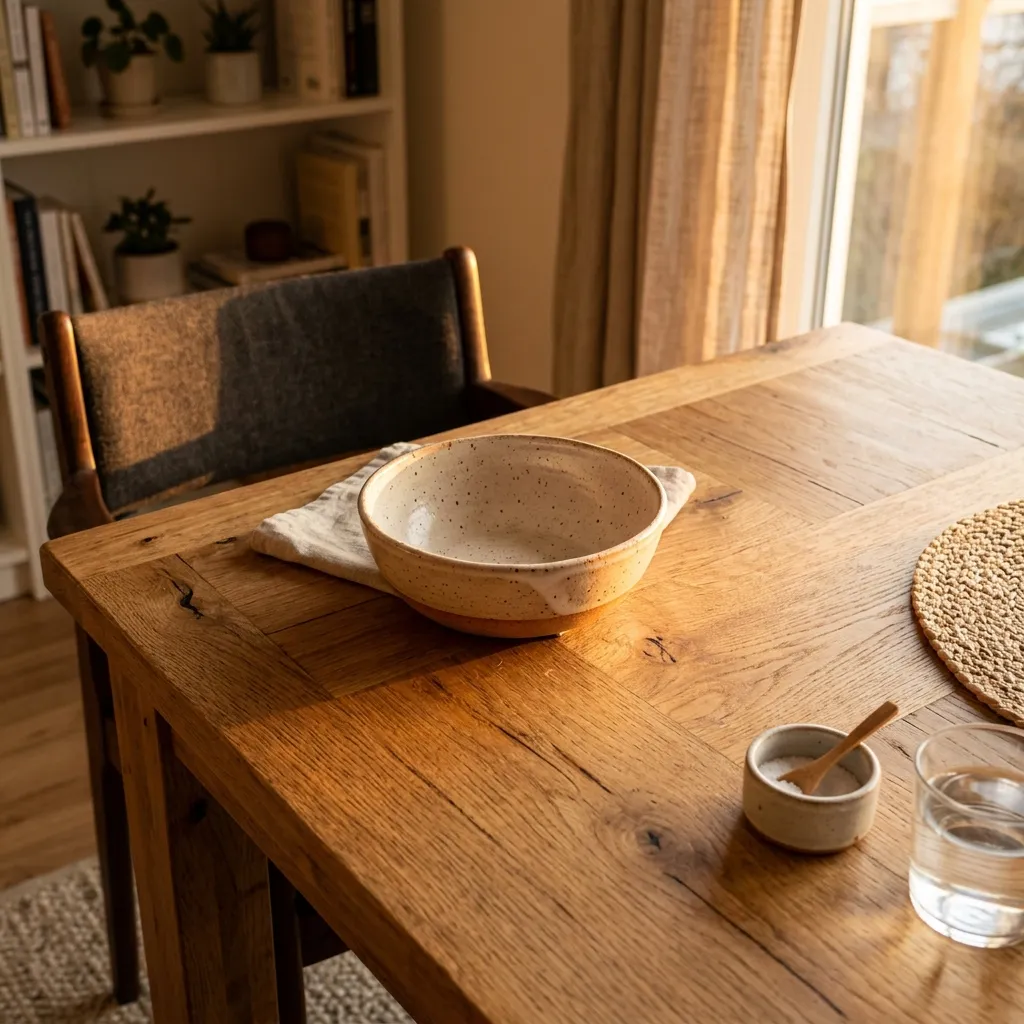
Image 2: Planning and preparing meals beforehand saves time and supports nutritional consistency.
5 Simple Weekend Habits to Implement
These five weekend habits take under 90 minutes combined, and together they protect your weekly productivity:
Habit 1: A 15-Minute Weekly Review
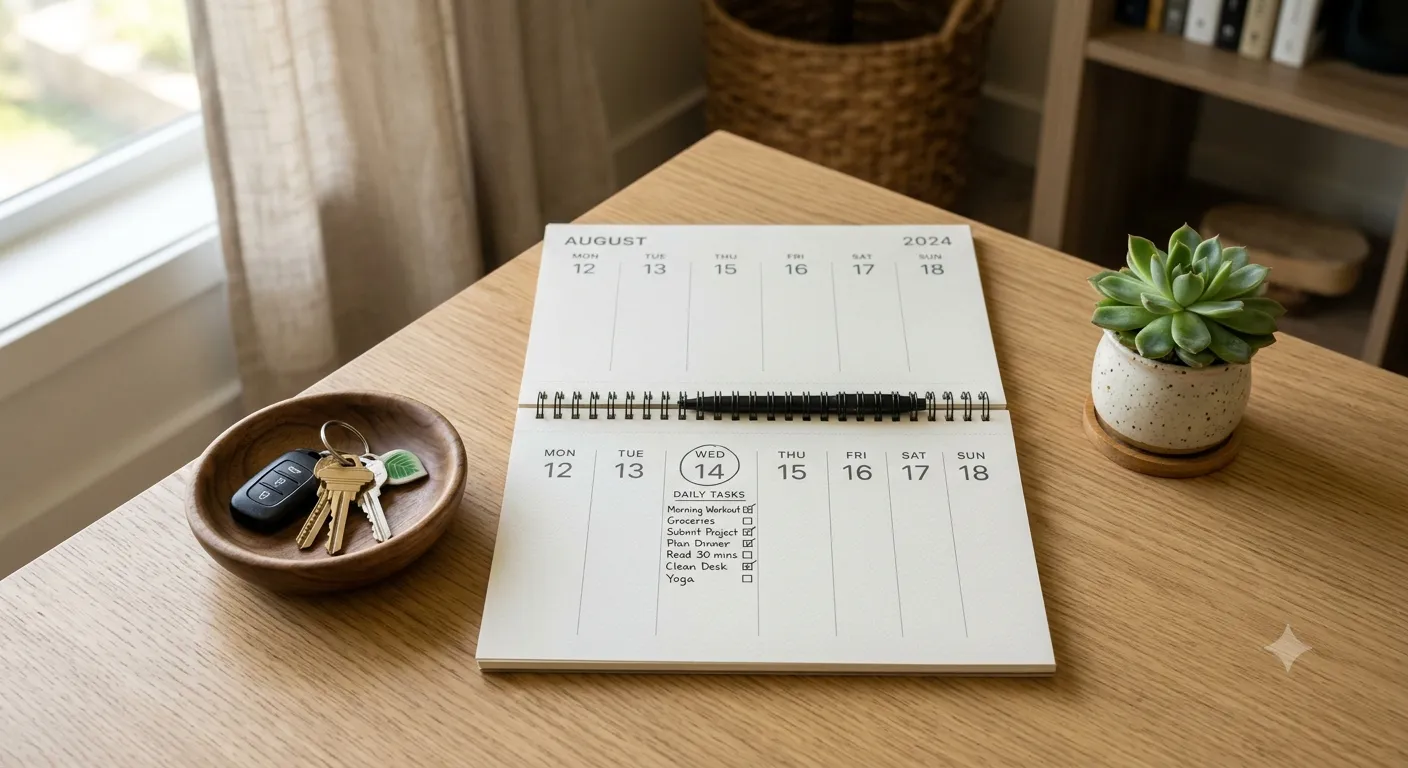
Spend 15 minutes reviewing your calendar for the upcoming week. Identify key meetings, project deadlines, and potential conflicts.
This review resolves scheduling uncertainties, reducing Monday morning stress. For schedule comparisons, read our guide on timeboxing vs time blocking.
Habit 2: Meal and Hydration Groundwork
Spend 45 minutes preparing healthy meals and snacks for the workweek. Preparing food beforehand saves time and supports healthy eating.
This groundwork reduces the stress of planning meals during busy workdays.
Habit 3: Sleep and Wake-Up Anchors
Keep your sleep-wake schedule consistent, even on weekends. Avoid sleeping in, which can disrupt your circadian rhythm.
For sleep environment tips, read our guide on minimalist bedroom design, and review circadian biology in our guide on sleep hygiene and circadian rhythms.
Habit 4: Workspace Decluttering
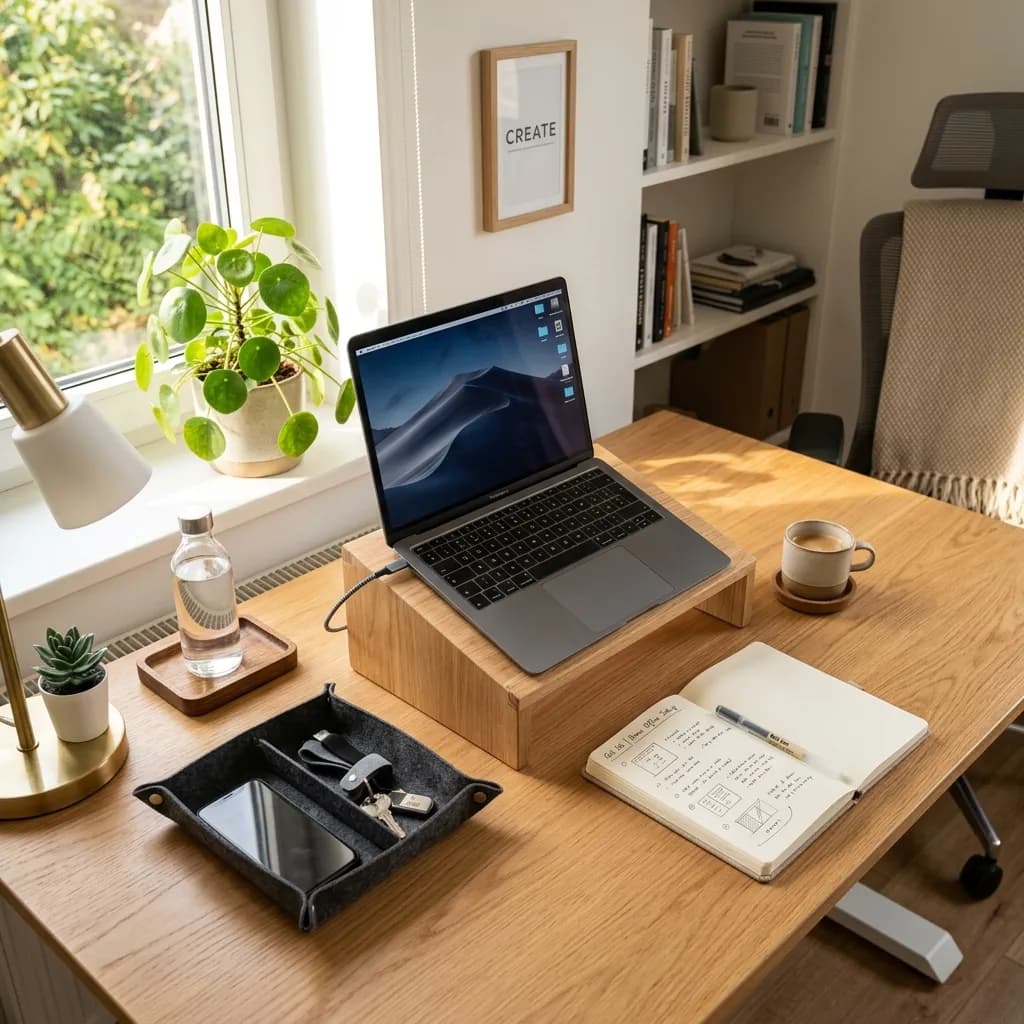
Spend 10 minutes clearing your physical desk. A clean workspace reduces cognitive distractions on Monday morning.
For a detailed decluttering process, see our physical decluttering guide.
Habit 5: Sunday Digital Shutdown
Turn off all work screens and communication tools at 6 p.m., placing them out of sight.
This boundary allows your brain to transition into recovery mode. To protect your downtime, see our guide on remote work boundaries.
How to Integrate Weekend Habits for Success
To make these habits a lasting part of your routine, schedule them at the same time every Sunday afternoon.
Track your consistency using minimalist tools. Read our review of minimalist habit tracking apps.
Integrate breathing cadences to manage stress during focus transitions. Read our guide on daily breathwork rituals, and manage daytime stress with our guide on micro-meditation routines. Additionally, practice biophilic design; see our guide on office plants for clean air, and explore slow pace audits in our guide on slow living blueprints.
Frequently Asked Questions About Weekend Routines
Will these habits turn my weekend into a second workday?
No. Spending 90 structured minutes on Sunday afternoon saves hours of chaotic scheduling and anxiety during the workweek. It is an investment that increases the overall quality of your weekend rest.
What should I do if my weekend schedule is highly irregular?
Focus on the sleep anchor. Keeping your wake-up time consistent is the single highest-leverage habit for stabilizing your circadian rhythm, even if your plans change.
Can somatic exercises help with Sunday anxiety?
Yes. Resets like extended-exhale breathing down-regulate sympathetic drive, reducing the physical sensations of panic that trigger Sunday dread. For somatic resets, see our guide on vagal tone stimulation.
Cited Scientific Sources & Literature
- CAR Research Group. (2012). The cortisol awakening response: Physiology and clinical implications. Psychoneuroendocrinology, 37(8), 1105-1115.
- Duhigg, C. (2012). The Power of Habit: Why We Do What We Do in Life and Business. Random House. [PubMed PMC]
- Sapolsky, R. M. (2004). Why Zebras Don't Get Ulcers. Holt Paperbacks.