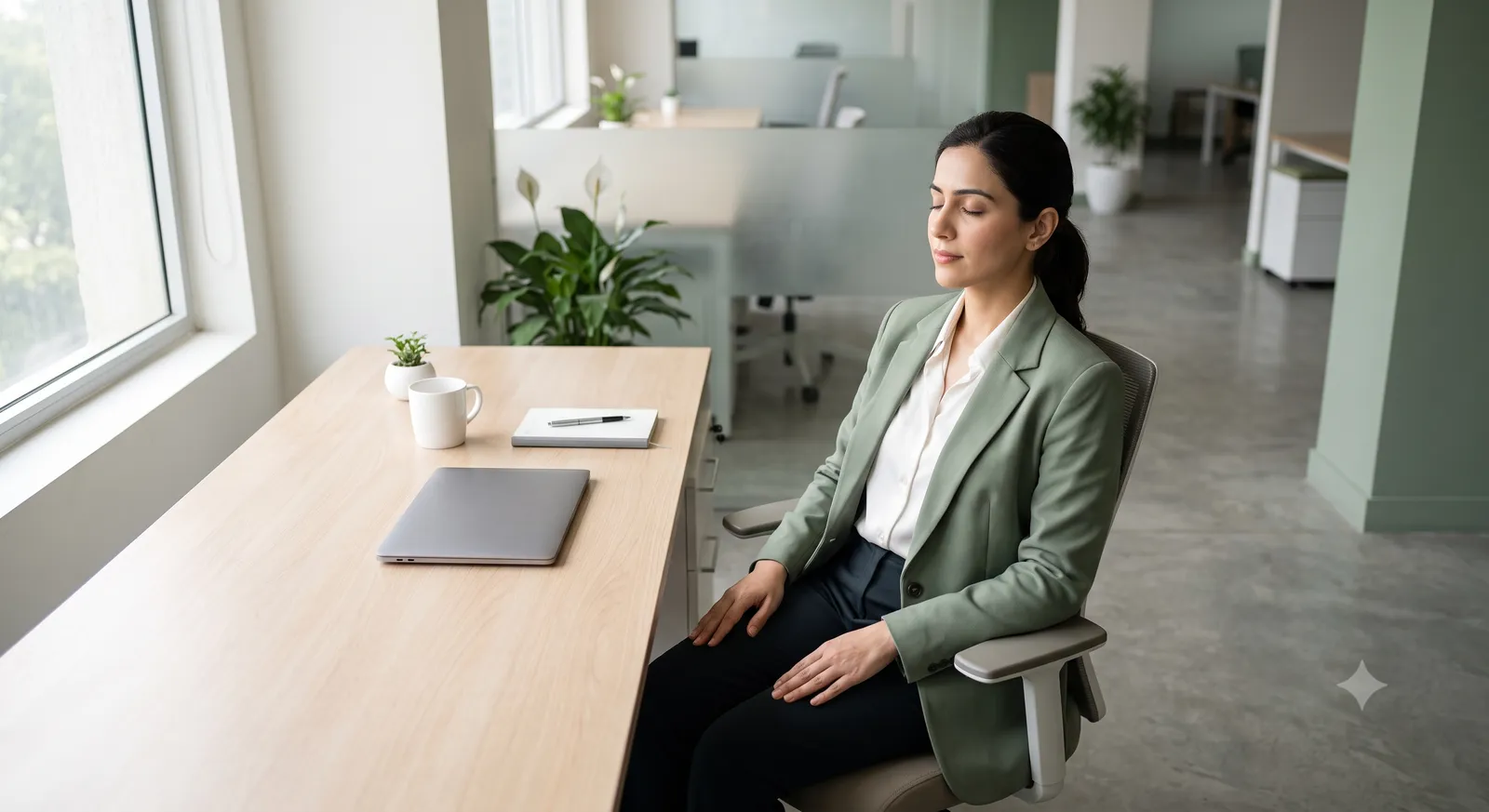
Understanding the Healing Power of Somatic Movement
In our highly analytical corporate culture, we are trained to exist almost entirely in our heads. We treat our bodies as physical shells that carry our minds from meeting to meeting. However, when chronic stress accumulates, it does not remain purely cognitive. Your body physically stores the tension, manifesting as chronic back pain, tight shoulders, and a shallow breathing pattern. To release this tension, we must utilize somatic movement.
Unlike traditional physical exercise, somatic movement does not focus on strength, flexibility, or aerobic capacity. Instead, it focuses on internal sensory awareness. The word "somatic" comes from the Greek word *soma*, meaning the living body experienced from within. By performing slow, conscious movements, you reconnect with your internal physical environment, letting go of patterns of chronic muscular contraction.
When the nervous system is stuck in sympathetic dominance, the muscles remain slightly contracted—a state known as high resting tone. Over time, the brain becomes accustomed to this tension, forgetting what relaxed muscles feel like. By introducing gentle somatic movement exercises, you retrain the motor cortex, restoring the muscle to its full resting length and resetting a dysregulated nervous system. To evaluate your current physical stress levels, try our interactive Daily Harmony Calculator.
Sensory-Motor Amnesia (SMA)
SMA occurs when the brain permanently maintains a muscle in a state of contraction because of chronic stress. Because the contraction is continuous, the brain habituates to it and stops noticing the tension. Somatic movements use slow, controlled contractions followed by slow, conscious releases to re-educate the motor cortex and reset muscle tone.
The Science of Mind-Body Stress Discharge
The clinical effectiveness of somatic movement rests on its ability to bypass the conscious, analytical brain. Under chronic stress, the brain keeps producing cortisol, which signals the body to prepare for action. This physiological charge has to be discharged physically; otherwise, it remains stored in the muscular system.
By focusing on slow, eccentric releases (releasing the muscle while it is under tension), you stimulate sensory receptors within the muscle fibers (spindle cells) and tendons (Golgi tendon organs). This sensory feedback travels up the spinal cord to the brain, confirming that the muscle is safe to relax.
According to clinical studies published by the National Institutes of Health (NIH), conscious somatic re-education helps down-regulate amygdala reactivity and reduce muscular indicators of chronic stress. This biological reset alleviates the chronic sympathetic load that contributes to early morning anxiety. To address early stress spikes, read our clinical guide on managing morning anxiety naturally. You can also explore how cortisol levels alter neurology in our guide on chronic stress and brain chemistry.

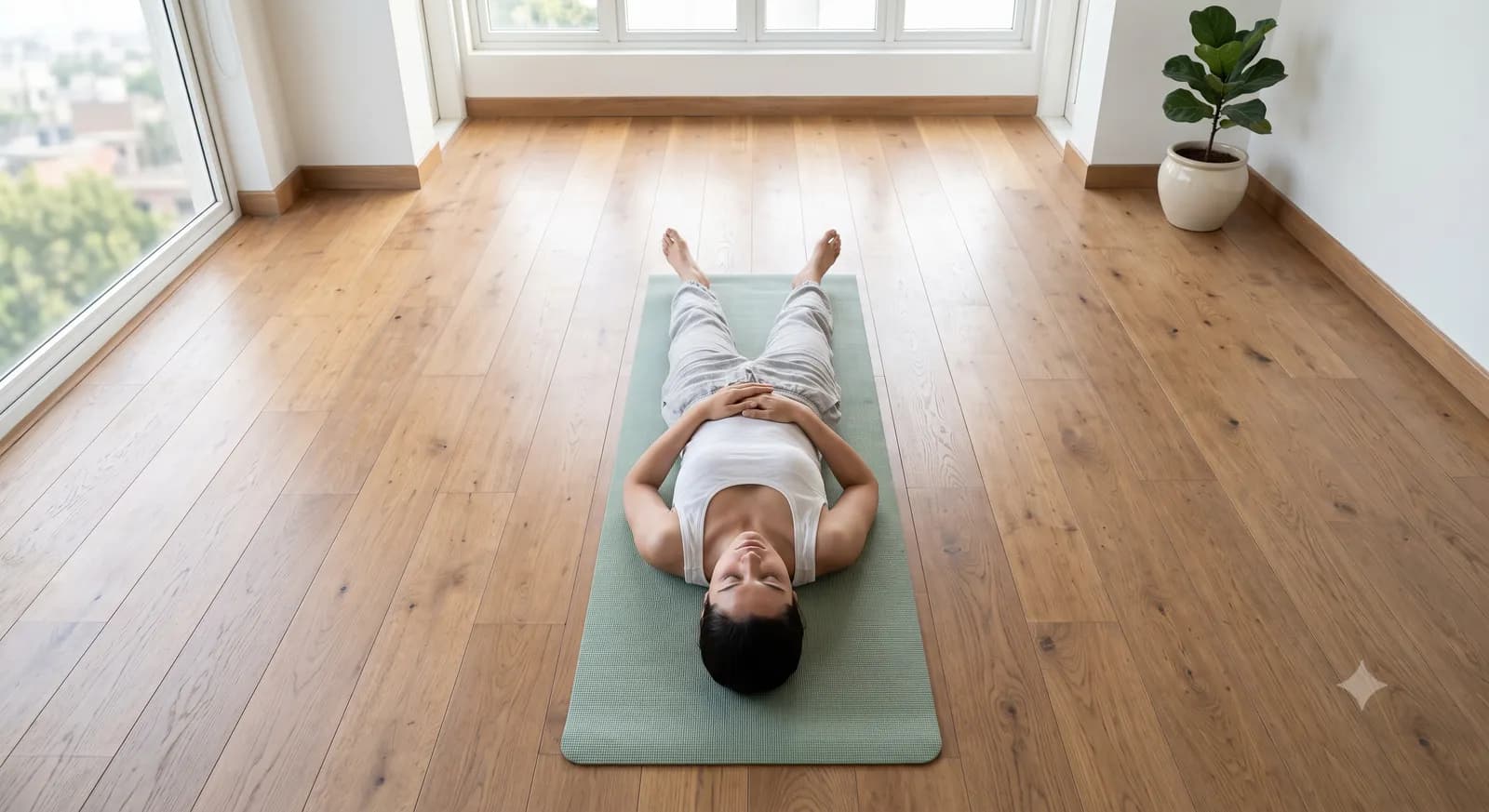
Image 2: Grounding your physical contact points with the floor establishes immediate sensory feedback loops for tension release.
8 Gentle Somatic Movement Exercises for Beginners
The following eight beginner exercises require no special equipment and should be performed slowly, with complete internal focus:
1. The Arch and Flatten
Lying on your back with knees bent and feet flat, focus on your pelvis. As you slowly inhale, arch your lower back off the floor, letting your pelvis tilt forward. As you exhale, slowly flatten your lower back completely against the floor, gently contracting your abdominal muscles.
Execute the release phase as slowly as possible over a count of 5. This movement directly targets the lower back muscles, releasing chronic tension in the lumbar spine.
2. The Flower Pose
Lying on your back, bring your knees to your chest and hug them with your hands, curling your body into a tight ball (the bud). As you inhale, slowly expand your arms and legs outwards, letting them rest flat on the floor in a star shape (the flower).
This movement sequences the opening and closing of your body, releasing chronic bracing in the chest, core, and hip flexors.
3. Trapezius Shrugs and Releases
Sitting or standing, slowly shrug both shoulders up towards your ears, holding a gentle contraction for 3 seconds. Over a slow count of 8, slowly and consciously lower your shoulders back down, allowing them to hang naturally.
This exercise releases the upper trapezius muscles, which carry significant tension for desk-bound professionals.
4. The Neck Slide
Lying on your back with knees bent, slowly slide your head back, flattening the back of your neck against the floor, gently tucking your chin. Hold for 2 seconds, then slowly release the movement, letting your neck arch naturally.
This movement addresses tension in the suboccipital muscles, which are highly stressed during prolonged screen use. To clear screen fatigue, check out our 48-hour digital detox guide.
5. Hip Hikes
Lying on your back with legs straight, slowly pull one hip up towards your shoulder, shortening your waist on that side. The leg on that side will appear to shorten. Slowly release the hip over a count of 5, then repeat on the opposite side.
This exercise releases the quadratus lumborum (QL) and lateral trunk muscles, correcting pelvic alignment.
6. The Seated Spinal Twist
Sitting upright on a chair with feet flat, slowly twist your upper body to one side, letting your head and eyes lead the rotation. Move only to the point of ease. Slowly return to the center over a count of 8, then repeat in the other direction.
This movement releases the rotational muscles of the thoracic spine and rib cage, improving respiratory movement.
7. Chest Openers
Lying on your side with knees bent at a 90-degree angle, extend both arms straight in front of you. Slowly sweep your top arm up and open, let your head follow the movement as your chest opens to the ceiling.
Slowly return the arm to the starting position. This open-book movement releases tension in the pectorals and front shoulders.
8. Dynamic Leg Glides
Lying on your back, slowly slide one heel along the floor, extending the leg completely. Focus on the release in your hip flexors. Slowly slide the heel back up to the bent position.
This release targets the psoas—the primary stress-response muscle in the pelvis that tightens during prolonged sitting.
How to Build a Daily Somatic Practice
To rebuild sensory awareness, a brief, daily practice is far superior to a single long session. Allocate exactly 10 minutes each evening before bed to perform 3 to 4 of these exercises.
Because somatic movement is designed to down-regulate the nervous system, performing these exercises in a low-light environment immediately signals the brain to prepare for restorative sleep. It is an excellent wind-down habit to include in your night routine. To align your evening setup, check out our guide on sleep hygiene and circadian rhythms.
Ensure you move with absolute control, never pushing into pain. The goal is to reprogram your nervous system's tension baseline, not to stretch the muscles to their absolute limits.
Frequently Asked Questions About Somatic Movement
How does somatic movement differ from standard stretching?
Traditional stretching forces the muscle to lengthen by pulling on it, which can trigger the protective stretch reflex, causing the muscle to contract further. Somatic movement uses pandiculation—contracting the muscle slightly, then releasing it very slowly while focusing on the sensory feedback. This resets the muscle's length in the brain, creating a lasting release of chronic tension.
Is it normal to feel emotional releases during these exercises?
Yes. The nervous system and the muscular system are deeply connected. Chronic stress and trauma are physically braced in the body's musculature (specifically in the jaw, neck, shoulders, and hips). Releasing this chronic bracing can trigger sudden emotional shifts, such as sighing, yawning, or a feeling of deep relief.
How quickly will I feel results from these exercises?
You will often feel a sense of lightness and a decrease in muscle tension immediately after a 10-minute session. However, changing long-term postural habits and resolving sensory-motor amnesia requires consistent, daily practice for 3 to 4 weeks.
Cited Scientific Sources & Literature
- Hanna, T. (1988). Somatics: Reawakening The Mind's Control of Movement, Flexibility, and Health. Da Capo Press.
- Payne, P., et al. (2015). Somatic experiencing: Biologically-based, trauma-informed approach to trauma and stress. Frontiers in Psychology, 6, 93-96. [PubMed PMC]
- Sapolsky, R. M. (2004). Why Zebras Don't Get Ulcers. Holt Paperbacks.