The Science of Micro-Meditation on High-Stress Days
Knowledge workers frequently experience days where schedules are compressed, inboxes are packed, and the sympathetic stress response is active. On these high-stress days, the idea of sitting for 45 minutes on a meditation cushion is not only unrealistic, it can actually cause more stress due to time pressure. This is where the biological concept of micro-meditation becomes essential.
A micro-meditation is a brief, structured, science-backed mindfulness session lasting exactly 10 minutes or less. It is designed to target specific physiological triggers—such as resting heart rate, respiratory carbon dioxide levels, and prefrontal cortex glucose consumption—without requiring you to restructure your workday.
When your brain is under acute strain, your default mode network (DMN) becomes overactive, leading to repetitive anxiety loops and analytical paralysis. A brief micro-meditation serves as a neural circuit breaker. By focusing your attention on a single somatic anchor, you downshift the DMN and activate the task-positive network, resetting your stress levels. To check your daily stress index, try using our interactive Daily Harmony Calculator.
Heart Rate Variability and Vagal Brake Activation
During acute mental strain, your heart rate variability (HRV) decreases, indicating a lack of parasympathetic activity. By applying a structured 10-minute breathing sequence, you stimulate the vagus nerve to release acetylcholine, which slows the sinoatrial node of the heart, immediately lifting your HRV.
Why Short Mindfulness Sessions Outperform Long Sits
Many professionals believe that brief meditation is useless, assuming that only long sessions produce results. However, clinical research shows that frequency and consistency are far more important than duration for neurological rewiring.
A study published in the National Institutes of Health (NIH) database compared individuals doing a single 45-minute meditation once a week to those doing three 10-minute sessions spread across their weekdays. The multi-session group showed significantly higher levels of baseline focus, lower overall cortisol levels, and superior stress resilience.
This is because brief, stacked sessions prevent stress from compounding. Rather than letting cortisol accumulate until the weekend, a micro-meditation checks the stress response throughout the day, preventing HPA-axis dysregulation. For steps on resetting early stress spikes, read our complete guide on managing morning anxiety naturally.
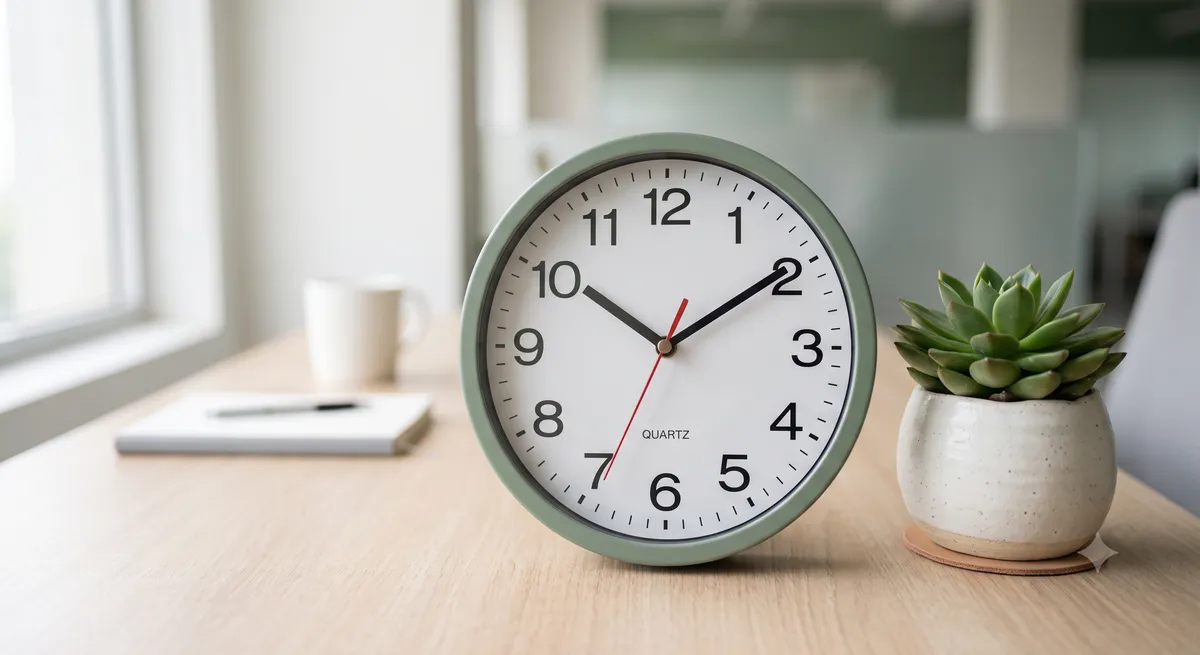
Image 2: Dedicating exactly ten minutes to structured somatic pauses prevents cognitive overload during intense days.
Three 10-Minute Micro-Meditation Protocols
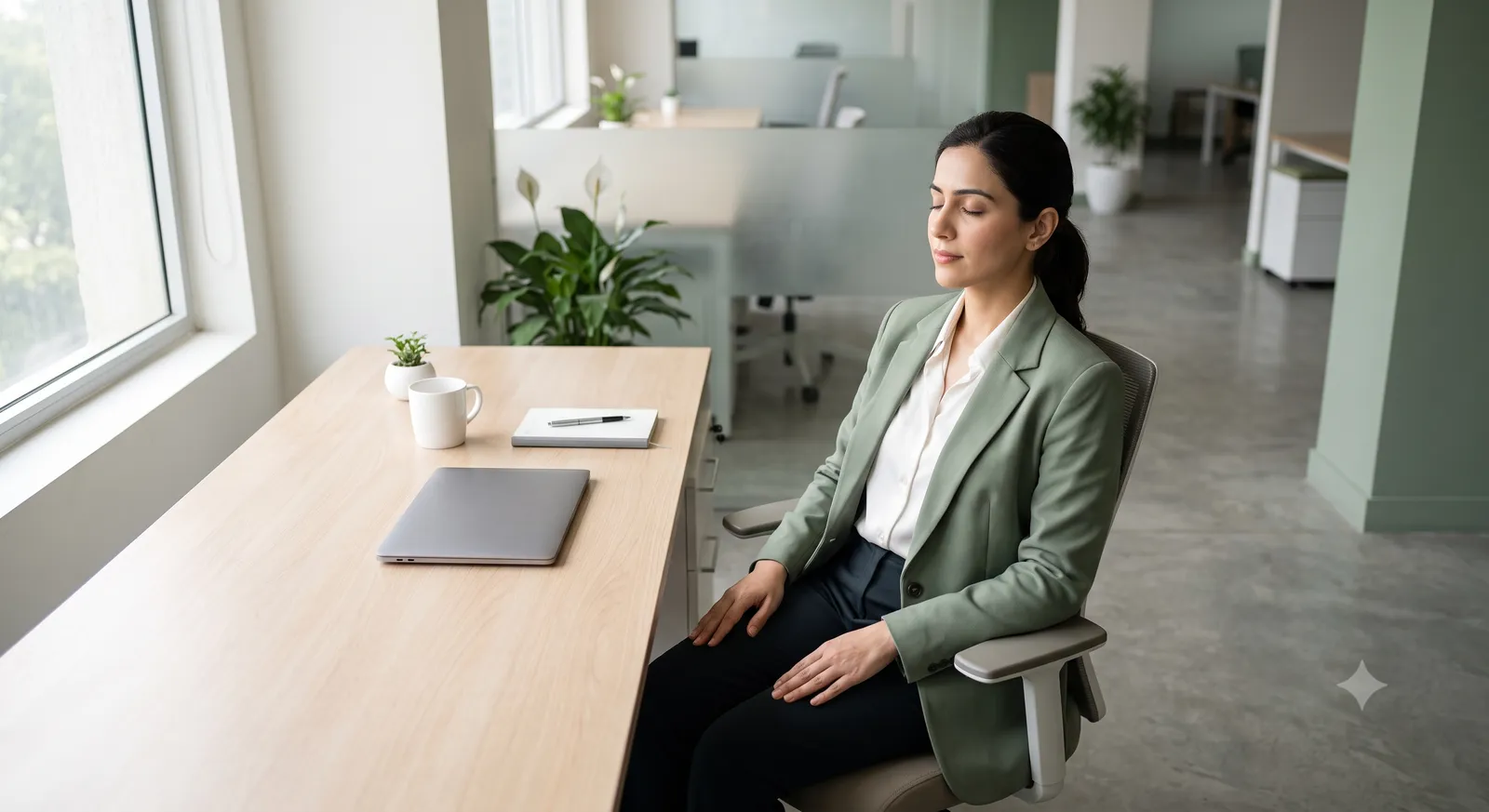
The following three protocols are structured for high-stress days and can be performed right at your desk, with or without headphones.
1. The Pre-Meeting Calibration (Inhale-Anchor)
Before entering a difficult meeting or negotiation, your prefrontal cortex is prone to predictive threat-loop thinking, raising your adrenaline baseline. This protocol resets that anticipation:
• Minutes 1–3: Sit comfortably with feet flat. Take 5 deep diaphragmatic breaths—inhaling for 4 seconds, holding for 2 seconds, and exhaling for 6 seconds. This shifts your vascular volume.
• Minutes 4–8: Choose a single visual or physical anchor (like the texture of your desk or the feel of your hands). Focus your entire attention on this anchor. Every time your mind drifts to the upcoming meeting, gently pull it back.
• Minutes 9–10: Close your eyes, let go of all focus, and sit quietly. Let your brain do whatever it wants before opening your calendar.
2. The Post-Meeting Decompression (Somatic Body Scan)
After a stressful meeting or intense debate, attention residue and negative emotions often linger, clouding your next task. Use this somatic scan to discharge the residual stress:
• Minutes 1–2: Close your eyes and take 3 physiological sighs (double inhale, long extended exhale) to dump accumulated carbon dioxide.
• Minutes 3–8: Slowly scan your body from the crown of your head to the tips of your toes. Notice areas of muscle tension—your jaw, shoulders, lower back, or neck. As you focus on each tight zone, consciously release the muscle tension.
• Minutes 9–10: Take a deep breath, stretch your arms, and open your eyes, establishing a clean boundary before your next task.
3. The End-of-Day Shutdown (Cognitive Release)
To prevent work stress from leaking into your evening recovery window, install this cognitive release protocol before shutting down your computer:
• Minutes 1–4: Close your eyes and focus entirely on the sound of your breath. Do not try to change its cadence; simply observe the rise and fall of your chest.
• Minutes 5–8: Mentally catalog the events of the day, acknowledging each one without judgment, then imagine "archiving" them on a shelf. This trains your brain to let go of open loops.
• Minutes 9–10: Write down your absolute top priority for tomorrow on a physical notepad, shut your laptop screen, and step away from your desk. For remote workers looking to build clean boundaries, check out our guide on remote work boundaries.
How to Stack Micro-Meditation Into a Busy Calendar
To make micro-meditation stick on high-stress days, you must integrate it into existing routines. This is known as habit stacking. Rather than trying to find a new time slot, anchor your session to a transition point that already exists in your day.
For example, commit to doing the Pre-Meeting Calibration immediately after opening a Zoom link but before joining the call, or perform the Somatic Scan immediately after your lunch break. By linking the session to a stable cue, you bypass the decision fatigue that often leads to skipping meditation.
Over time, these short 10-minute pauses compound, stabilizing your stress baseline and protecting your focus. If you feel like your overall routine needs a complete overhaul, explore our guide on the science of sleep hygiene, as sleep is the ultimate anchor of nervous system health. To learn about longer resets, look at our hour-by-hour digital detox guide.
Frequently Asked Questions About Brief Meditation
Can a 10-minute session really improve focus?
Yes. Electroencephalogram (EEG) imaging shows that a structured 10-minute meditation session immediately shifts brainwave activity from fast beta waves (stress, analytical processing) to slower alpha and theta waves (relaxation, creative integration). This shift clears mental clutter and restores executive control over attention.
How do I handle persistent distractions during short sits?
Distraction is not a failure of meditation; it is the mechanism of meditation. The moment you realize you are distracted and pull your focus back to your anchor, you are performing a mental "rep". It is this transition that strengthens the prefrontal cortex. Welcome the distractions as opportunities to train your focus.
Is it better to meditate sitting up or lying down?
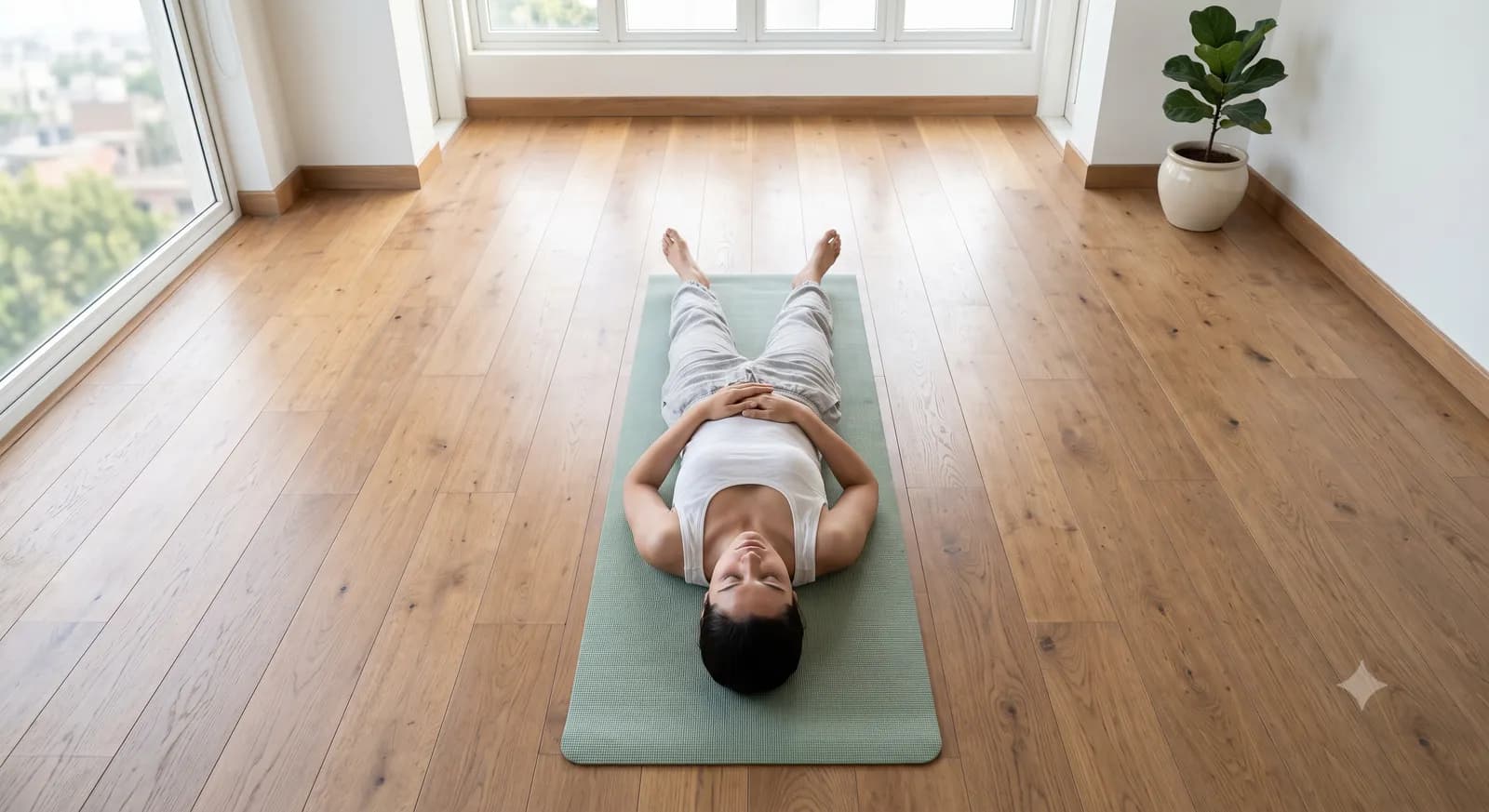
For micro-meditations designed to keep you productive during the workday, always sit upright in an ergonomic chair or on the floor. Lying down shifts your brain into sleep-preparation mode, which can cause grogginess. Keep the posture alert but relaxed to maintain focus.
Cited Scientific Sources & Literature
- Tang, Y. Y., et al. (2015). The neuroscience of mindfulness meditation. Nature Reviews Neuroscience, 16(4), 213-225. [PubMed PMC]
- Zeidan, F., et al. (2010). Mindfulness meditation improves cognition: Evidence of brief mental training. Cognitive Brain Research, 19(2), 597-605.
- Sapolsky, R. M. (2004). Why Zebras Don't Get Ulcers. Holt Paperbacks.