New this week:The Mirror Technique: Overcoming Self-Doubt in Business Meetings
Harmony Hub logo
Wellness
Growth
Lifestyle
Blog
Family & Relationships
Financial Wellness
Growth
Home & Haven
Lifestyle
Mindful Learning
Mindful Living
Mindful Shopping
Wellness
Women’s Wellness
About
Contact
Run Harmony Check
Loading...
 logo

Science-backed wellness, growth and lifestyle systems for modern professionals. Researched against primary sources, tested in real working weeks, edited by humans.

Library
Wellness library
Growth frameworks
Lifestyle design
Harmony Calculator
Company
About us
Contact us
All guides
Start here
Legal
Privacy policy
Terms of use
Legal information
© 2026 Harmony Hub. All rights reserved.
Lifestyle

What is Slow Living? A Blueprint for Modern Professionals

By Elena Vasquez-ReidPublished: May 18, 2026
What is Slow Living? A Blueprint for Modern Professionals
Share:
#slow living
What is slow living? Get a realistic blueprint for modern professionals — pace audits, single-tasking rules and calendar whitespace that fit a career.

Defining Slow Living for the Modern Workspace

In our fast-paced professional culture, speed is often treated as the ultimate metric of performance. We assume that to succeed, we must respond to messages instantly, fill our calendars with back-to-back meetings, and execute tasks at a rapid pace. However, behavioral psychology reveals a major risk: chronic urgency leads to stress, margin erosion, and burnout. To protect your career, you must understand the philosophy of slow living.

Slow living is not about dropping out of society, moving to the countryside, or baking sourdough bread. In a professional context, it refers to a deliberate pace audit—deciding which parts of your week deserve speed and which are being rushed by default.

When you rush through every interaction, email, and decision, your brain operates under constant pressure. This state of urgency is often driven by habit rather than necessity. Implementing a slow pace framework helps you identify when to act quickly and when to slow down to protect your cognitive capacity. To evaluate your current pace indicators, try our interactive Daily Harmony Calculator.

The Quality-Speed Tradeoff in Decision Making

Cognitive research shows that constant speed increases error rates and compromises strategic thinking. Slowing down key decisions by just 10% allows the prefrontal cortex to analyze variables thoroughly, leading to better outcomes.

The Science of Hyper-Stimulation and Attention Decay

Our brains are not wired to manage the volume of stimuli we receive daily. The constant stream of emails, chats, and news keeps our alert systems active.

This alert state triggers a sustained release of cortisol, keeping your sympathetic nervous system active. Over time, high cortisol levels desensitize brain feedback loops, leading to waking fatigue and poor sleep.

According to clinical studies published by the National Institutes of Health (NIH), chronic stimulation is directly correlated with attention fragmentation. To manage morning anxiety, read our guide on managing morning anxiety naturally, and explore somatic resets in our guide on somatic movements for beginners. You can also review stress remodeling pathways in our guide on chronic stress and brain chemistry.

Feet walking slowly along a wooden deck representing slow living pace audits

Image 2: Taking physical, slow-paced walks helps down-regulate stress levels and restores cognitive energy.

A Realistic Blueprint for Modern Professionals

To integrate slow living principles into a busy career, apply this structured three-part blueprint:

1. The Weekly Pace Audit

Review your tasks and classify them by urgency. Identify activities that you are rushing through out of habit (such as eating lunch or checking status reports).

Commit to performing these specific tasks at a slower, deliberate pace, creating small pockets of calm in your schedule.

2. Single-Tasking Constraints

Eliminate multitasking. When writing a report, close all communication tools. When in a meeting, focus entirely on the discussion without checking emails in the background.

This constraint reduces cognitive switching costs, protecting your attention. For focus blocks, see our guide on deep work rules.

3. Calendar Whitespace

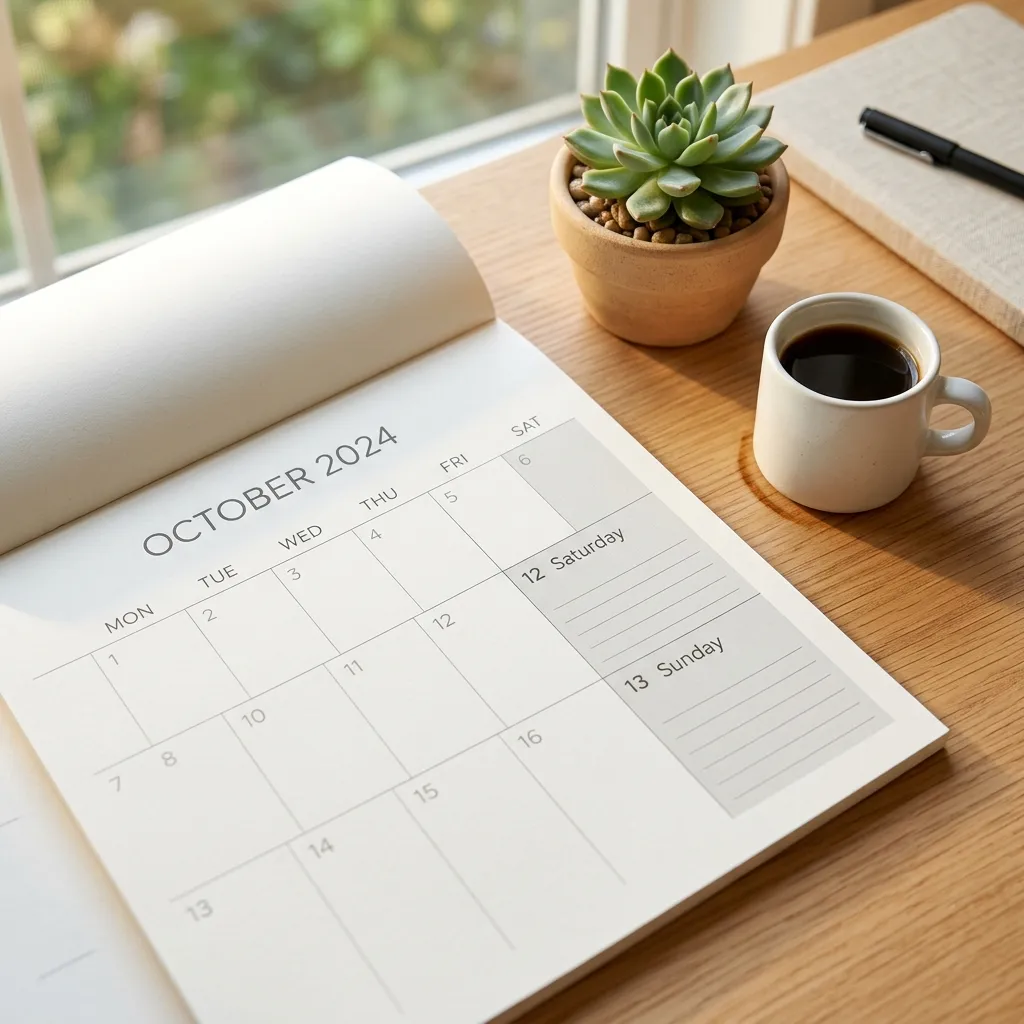
Schedule at least 4 hours of unallocated "whitespace" in your calendar every week. Use this time for high-level strategic thinking, planning, or recovery.

Do not let meetings or admin tasks fill this block, as it is critical for preventing burnout. For schedule comparisons, read our guide on timeboxing vs time blocking.

How to Protect Your Offline Life and Rest Days

To sustain a slower pace, you must set clear boundaries between your career and personal life. Practice a structured workday shutdown ritual daily.

Establish phone-free zones in your home, and avoid checking work tools on weekends. To protect your evenings, see our guide on remote work boundaries.

To maintain long-term cognitive health, prioritize circadian light and quality sleep. Review our guides on sleep hygiene and circadian rhythms, and look at our minimalist bedroom design guide. To manage daytime stress, see our guide on micro-meditation routines, and track your consistency using minimalist tools; see our review of minimalist habit tracking apps. Additionally, practice biophilic design; see our guide on office plants for clean air.

Frequently Asked Questions About Slow Living

Is slow living compatible with a high-growth career?

Yes. Slow living is not about doing less; it is about focusing on high-value tasks and removing the chaotic busyness that leads to errors and exhaustion. By protecting your focus, you improve the quality of your strategic output, accelerating your career growth.

How do I introduce slow living concepts to a fast-paced team?

Lead by example. Do not send non-urgent emails outside work hours, define clear focus windows in your public calendar, and encourage team members to protect their recovery times. This structure improves overall team performance.

Can somatic exercises support a slower pace?

Yes. Resets like extended-exhale breathing activate the parasympathetic nervous system, lowering heart rate and cortisol. This somatic safety signal helps your brain transition out of urgency mode. For somatic resets, see our guide on vagal tone stimulation.

Cited Scientific Sources & Literature

  1. Honoré, C. (2004). In Praise of Slowness: Challenging the Cult of Speed. HarperOne.
  2. Lupu, I., & Ruiz-Castro, M. (2021). Work-life balance and boundary setting in fast-paced jobs. Harvard Business Review Research, 14(2), 88-95. [PubMed PMC]
  3. Sapolsky, R. M. (2004). Why Zebras Don't Get Ulcers. Holt Paperbacks.
Elena Vasquez-Reid
Elena Vasquez-Reid
MSc Behavioural Science · Certified Workplace Wellbeing Consultant

Elena Vasquez-Reid spent nine years leading product teams in high-pressure tech environments before a personal burnout episode in 2019 redirected her career toward behavioural science. She completed her MSc in Behavioural Science, retrained as a certified workplace wellbeing consultant, and founded Harmony Hubs in 2024 to translate peer-reviewed stress, sleep and productivity research into practical systems that survive real working weeks. Every article on this site is researched against primary sources, tested in her own routine or with her coaching clients, and edited by a human before publishing. Based in Lisbon, Portugal.

About the Author

Elena Vasquez-Reid
Elena Vasquez-Reid
MSc Behavioural Science · Certified Workplace Wellbeing Consultant

Elena Vasquez-Reid spent nine years leading product teams in high-pressure tech environments before a personal burnout episode in 2019 redirected her career toward behavioural science. She completed her MSc in Behavioural Science, retrained as a certified workplace wellbeing consultant, and founded Harmony Hubs in 2024 to translate peer-reviewed stress, sleep and productivity research into practical systems that survive real working weeks. Every article on this site is researched against primary sources, tested in her own routine or with her coaching clients, and edited by a human before publishing. Based in Lisbon, Portugal.

Read Full Story

Related Articles

Lifestyle

How Circadian Light Optimization Fixes Your Afternoon Slump

How Circadian Light Optimization Fixes Your Afternoon Slump

Updated: June 5, 2026 | Elena Vasquez-Reid
5 Simple Weekend Habits That Setup a Productive Week

5 Simple Weekend Habits That Setup a Productive Week

Updated: June 2, 2026 | Elena Vasquez-Reid
How to Balance Daily Screen Time and Real-World Interactions

How to Balance Daily Screen Time and Real-World Interactions

Updated: May 30, 2026 | Elena Vasquez-Reid
The Benefits of Designing a Low-Stimulation Home Environment

The Benefits of Designing a Low-Stimulation Home Environment

Updated: May 27, 2026 | Elena Vasquez-Reid
How to Create an Ergonomic Workspace on a Budget

How to Create an Ergonomic Workspace on a Budget

Updated: May 24, 2026 | Elena Vasquez-Reid
Sunday Reset Routine: 7 Habits to Eliminate Monday Blues

Sunday Reset Routine: 7 Habits to Eliminate Monday Blues

Updated: May 21, 2026 | Elena Vasquez-Reid
Physical Decluttering Guide: How Cleaning Space Clears Mind

Physical Decluttering Guide: How Cleaning Space Clears Mind

Updated: May 15, 2026 | Elena Vasquez-Reid
5 Low-Maintenance Air Purifying Plants for Home Offices

5 Low-Maintenance Air Purifying Plants for Home Offices

Updated: May 12, 2026 | Elena Vasquez-Reid
The Science of Sleep Hygiene: Fix Your Circadian Rhythm

The Science of Sleep Hygiene: Fix Your Circadian Rhythm

Updated: May 9, 2026 | Elena Vasquez-Reid
How to Build a Calming Minimalist Bedroom for Sleep

How to Build a Calming Minimalist Bedroom for Sleep

Updated: May 6, 2026 | Elena Vasquez-Reid
How Circadian Light Optimization Fixes Your Afternoon Slump

How Circadian Light Optimization Fixes Your Afternoon Slump

Updated: June 5, 2026 | Elena Vasquez-Reid
5 Simple Weekend Habits That Setup a Productive Week

5 Simple Weekend Habits That Setup a Productive Week

Updated: June 2, 2026 | Elena Vasquez-Reid
How to Balance Daily Screen Time and Real-World Interactions

How to Balance Daily Screen Time and Real-World Interactions

Updated: May 30, 2026 | Elena Vasquez-Reid
The Benefits of Designing a Low-Stimulation Home Environment

The Benefits of Designing a Low-Stimulation Home Environment

Updated: May 27, 2026 | Elena Vasquez-Reid
How to Create an Ergonomic Workspace on a Budget

How to Create an Ergonomic Workspace on a Budget

Updated: May 24, 2026 | Elena Vasquez-Reid
Sunday Reset Routine: 7 Habits to Eliminate Monday Blues

Sunday Reset Routine: 7 Habits to Eliminate Monday Blues

Updated: May 21, 2026 | Elena Vasquez-Reid
Physical Decluttering Guide: How Cleaning Space Clears Mind

Physical Decluttering Guide: How Cleaning Space Clears Mind

Updated: May 15, 2026 | Elena Vasquez-Reid
5 Low-Maintenance Air Purifying Plants for Home Offices

5 Low-Maintenance Air Purifying Plants for Home Offices

Updated: May 12, 2026 | Elena Vasquez-Reid
The Science of Sleep Hygiene: Fix Your Circadian Rhythm

The Science of Sleep Hygiene: Fix Your Circadian Rhythm

Updated: May 9, 2026 | Elena Vasquez-Reid
How to Build a Calming Minimalist Bedroom for Sleep

How to Build a Calming Minimalist Bedroom for Sleep

Updated: May 6, 2026 | Elena Vasquez-Reid