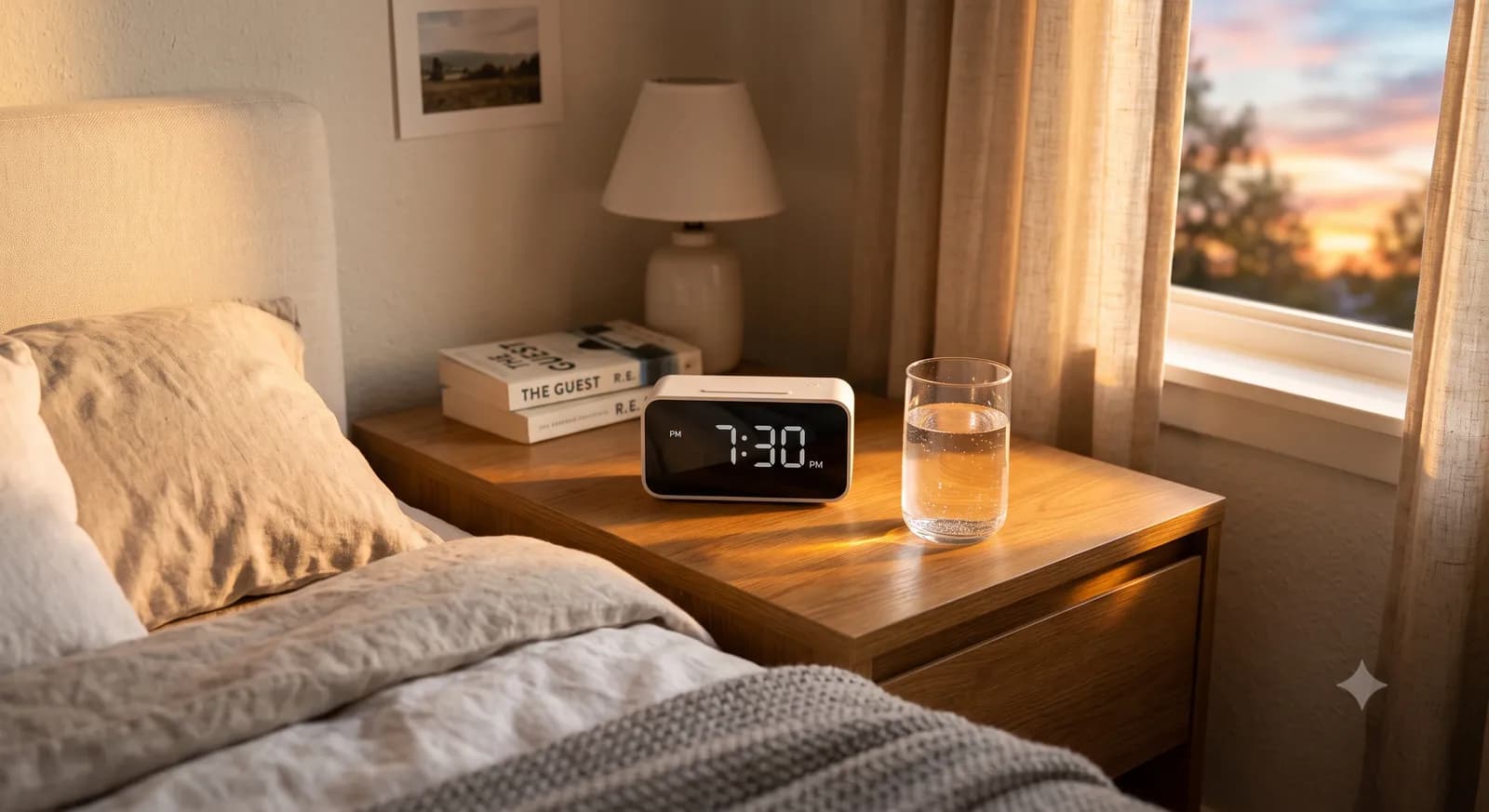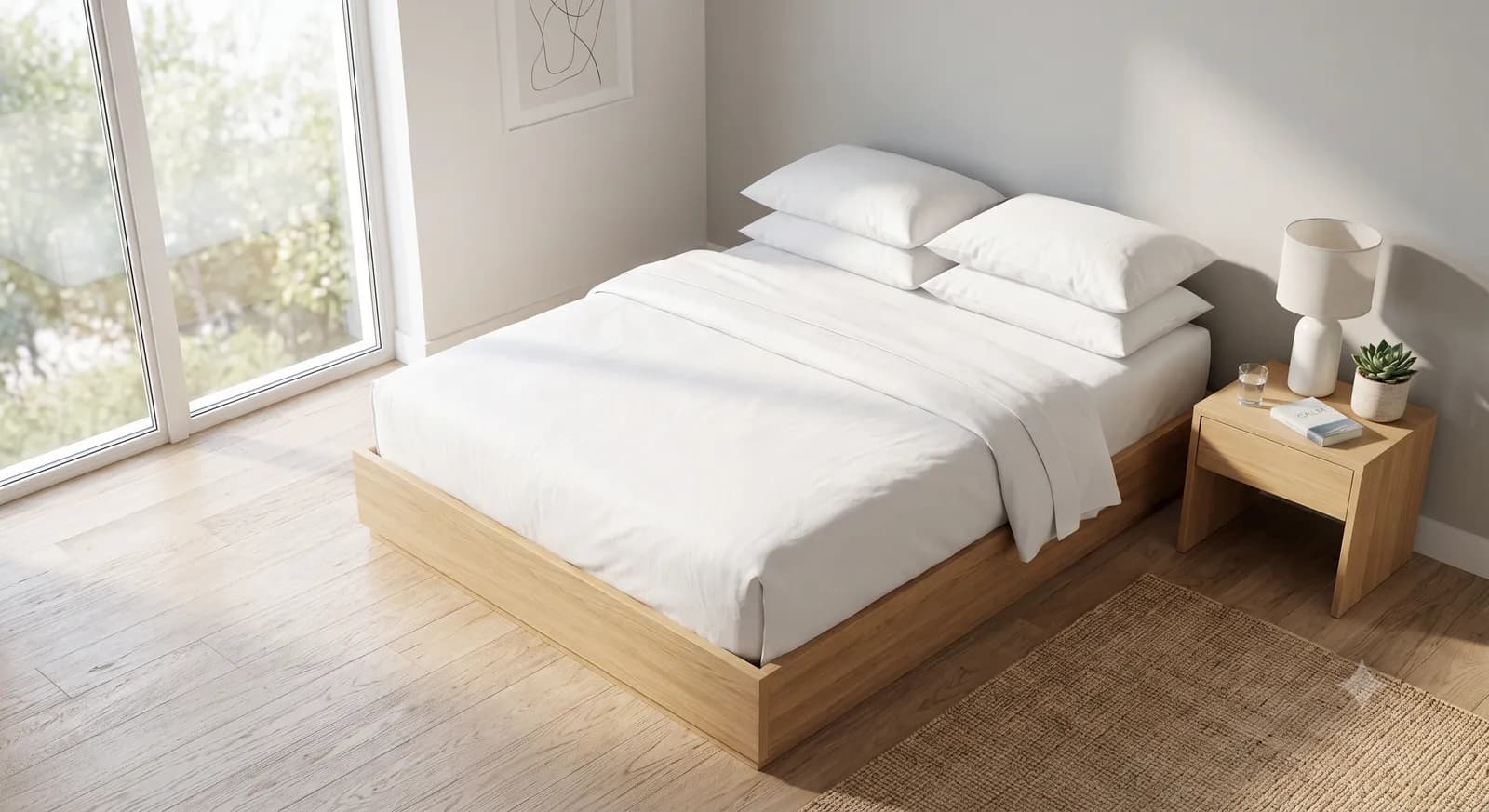
New this week:The Mirror Technique: Overcoming Self-Doubt in Business Meetings
Harmony Hub logo
Wellness
Growth
Lifestyle
Blog
Family & Relationships
Financial Wellness
Growth
Home & Haven
Lifestyle
Mindful Learning
Mindful Living
Mindful Shopping
Wellness
Women’s Wellness
About
Contact
Run Harmony Check
Loading...
 logo

Science-backed wellness, growth and lifestyle systems for modern professionals. Researched against primary sources, tested in real working weeks, edited by humans.

Library
Wellness library
Growth frameworks
Lifestyle design
Harmony Calculator
Company
About us
Contact us
All guides
Start here
Legal
Privacy policy
Terms of use
Legal information
© 2026 Harmony Hub. All rights reserved.
Lifestyle

How to Build a Calming Minimalist Bedroom for Sleep

By Elena Vasquez-ReidPublished: May 6, 2026
How to Build a Calming Minimalist Bedroom for Sleep
Share:
#minimalist bedroom sleep
Learn how to build a calming minimalist bedroom for sleep. Follow a room-by-room checklist covering light, texture, air and layout for deeper rest.

How Your Bedroom Environment Impacts Sleep Quality

In our highly productive professional lives, sleep is often treated as a simple transition block. We assume that when our shift ends, we can turn off our laptops and immediately fall into a restorative sleep state. However, environmental psychology reveals that this is incorrect: your bedroom design directly impacts your sleep architecture. To build a resting environment, you must set up a minimalist bedroom sleep layout.

A minimalist bedroom sleep layout is a design strategy that focuses on removing visual, sensory, and electronic clutter. The bedroom is either a sleep-promoting space or a source of stimulation—it is rarely neutral.

When your bedroom contains exercise equipment, laundry stacks, or work papers, your brain experiences cognitive noise. These items serve as visual cues of tasks, triggering a low-grade stress response. This response raises your baseline cortisol levels, making it difficult to transition into deep, restorative sleep phases. To check your daily sleep alignment markers, try our interactive Daily Harmony Calculator.

Visual Stimulation and Cortisol Levels

Environmental psychology shows that visual clutter increases alert hormones, keeping the amygdala active. Restoring a minimalist room setup reduces this baseline stimulation, allowing the brain to release melatonin naturally in the evening.

The Science of Circadian Rhythms and Environmental Cues

Your sleep-wake cycle is governed by your internal circadian rhythm. This rhythm relies on external environmental cues, primarily light and temperature.

In the evening, the absence of blue light signals the pineal gland to release melatonin, the hormone that helps you fall asleep. If your bedroom is filled with screens or bright lights, you disrupt this signal, delaying melatonin release and compromising your sleep quality.

According to clinical studies published by the National Institutes of Health (NIH), sleep environment optimization is directly linked to higher levels of deep sleep and lower stress markers. To manage waking fatigue, read our guide on managing morning anxiety naturally, and explore somatic resets in our guide on somatic movements for beginners. You can also review stress remodeling pathways in our guide on chronic stress and brain chemistry.
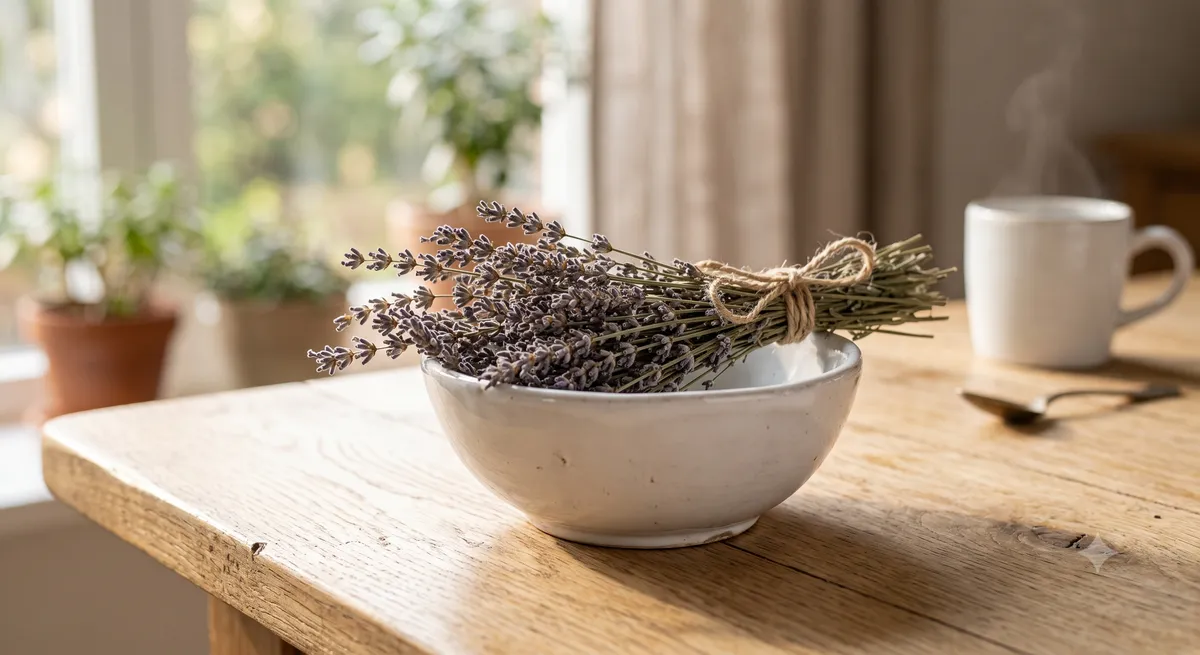
A close-up shot of dried lavender sprigs next to a bed

Image 2: Introducing natural textures and calming scents like lavender helps establish sensory cues for rest.

A Room-by-Room Checklist for a Minimalist Bedroom

Apply this structured checklist to optimize your bedroom for sleep:

1. Light and Darkness Control (Blackout Anchoring)

Remove all sources of artificial light. Install blackout curtains to block streetlights, cover electronic standby LEDs with black tape, and place your phone face down.

This absolute darkness prevents disruptions to melatonin synthesis, protecting your sleep depth.

2. Thermal Regulation

Keep your bedroom temperature cool, typically between 60 and 67 degrees Fahrenheit (15 to 19 degrees Celsius).

Your body temperature must drop to initiate sleep, and a cool room supports this natural cooling process.

3. Visual Decluttering

Remove all items that are not related to sleep or intimacy. Move books, files, clothes, and exercise gear out of sight.

This decluttering creates a spatial association of peace and rest. For organization advice, read our guide on timeboxing vs time blocking.

4. Ventilation and Clean Air

Keep a window slightly cracked for ventilation, and consider using a HEPA filter to keep the air clean.

Clean air reduces allergen exposure, preventing nighttime breathing issues. To build focus habits, see our guide on deep work rules.

How to Align Your Bedroom Environment with Daily Habits

To maintain healthy sleep, coordinate your environment with your daily habits. Practice transition rituals to clear attention residue before bed.

Turn off work screens 90 minutes before sleep to allow melatonin release. To protect your evenings, see our guide on remote work boundaries.

Integrate breathing cadences into your evening routine to lower your mental load before sleep. Read our guide on daily breathwork rituals, and review somatic resets in our guide on vagal tone stimulation. Additionally, track your consistency using minimalist tools; see our review of minimalist habit tracking apps.

Frequently Asked Questions About Bedroom Setup

Can plants help improve minimalist bedroom sleep quality?

Yes, certain low-maintenance species like snake plants release oxygen at night, which can help improve air quality. However, keep the quantity low to maintain a minimalist, clutter-free look.

What is the ideal bedroom temperature for deep sleep?

Most research suggests that a cool temperature between 60 and 67 degrees Fahrenheit (15 to 19 degrees Celsius) is ideal. Temperatures above 70 degrees or below 54 degrees can disrupt REM sleep and increase nighttime awakenings.

Should I keep a television in my bedroom?

No. A television is a major source of blue light and mental stimulation, which disrupts your circadian rhythm. Keep screens out of the bedroom to maintain the space as a dedicated sanctuary for rest.

Cited Scientific Sources & Literature

  1. Czeisler, C. A., et al. (1999). Association of sleep quality with light levels and environment. New England Journal of Medicine, 340(26), 2001-2009.
  2. Mishima, K., et al. (2001). Melatonin secretion and light sensitivity in sleep disorders. Biological Psychiatry, 50(5), 385-393. [PubMed PMC]
  3. Sapolsky, R. M. (2004). Why Zebras Don't Get Ulcers. Holt Paperbacks.
Elena Vasquez-Reid
Elena Vasquez-Reid
MSc Behavioural Science · Certified Workplace Wellbeing Consultant

Elena Vasquez-Reid spent nine years leading product teams in high-pressure tech environments before a personal burnout episode in 2019 redirected her career toward behavioural science. She completed her MSc in Behavioural Science, retrained as a certified workplace wellbeing consultant, and founded Harmony Hubs in 2024 to translate peer-reviewed stress, sleep and productivity research into practical systems that survive real working weeks. Every article on this site is researched against primary sources, tested in her own routine or with her coaching clients, and edited by a human before publishing. Based in Lisbon, Portugal.

About the Author

Elena Vasquez-Reid
Elena Vasquez-Reid
MSc Behavioural Science · Certified Workplace Wellbeing Consultant

Elena Vasquez-Reid spent nine years leading product teams in high-pressure tech environments before a personal burnout episode in 2019 redirected her career toward behavioural science. She completed her MSc in Behavioural Science, retrained as a certified workplace wellbeing consultant, and founded Harmony Hubs in 2024 to translate peer-reviewed stress, sleep and productivity research into practical systems that survive real working weeks. Every article on this site is researched against primary sources, tested in her own routine or with her coaching clients, and edited by a human before publishing. Based in Lisbon, Portugal.

Read Full Story

Related Articles

Lifestyle

How Circadian Light Optimization Fixes Your Afternoon Slump

How Circadian Light Optimization Fixes Your Afternoon Slump

Updated: June 5, 2026 | Elena Vasquez-Reid
5 Simple Weekend Habits That Setup a Productive Week

5 Simple Weekend Habits That Setup a Productive Week

Updated: June 2, 2026 | Elena Vasquez-Reid
How to Balance Daily Screen Time and Real-World Interactions

How to Balance Daily Screen Time and Real-World Interactions

Updated: May 30, 2026 | Elena Vasquez-Reid
The Benefits of Designing a Low-Stimulation Home Environment

The Benefits of Designing a Low-Stimulation Home Environment

Updated: May 27, 2026 | Elena Vasquez-Reid
How to Create an Ergonomic Workspace on a Budget

How to Create an Ergonomic Workspace on a Budget

Updated: May 24, 2026 | Elena Vasquez-Reid
Sunday Reset Routine: 7 Habits to Eliminate Monday Blues

Sunday Reset Routine: 7 Habits to Eliminate Monday Blues

Updated: May 21, 2026 | Elena Vasquez-Reid
What is Slow Living? A Blueprint for Modern Professionals

What is Slow Living? A Blueprint for Modern Professionals

Updated: May 18, 2026 | Elena Vasquez-Reid
Physical Decluttering Guide: How Cleaning Space Clears Mind

Physical Decluttering Guide: How Cleaning Space Clears Mind

Updated: May 15, 2026 | Elena Vasquez-Reid
5 Low-Maintenance Air Purifying Plants for Home Offices

5 Low-Maintenance Air Purifying Plants for Home Offices

Updated: May 12, 2026 | Elena Vasquez-Reid
The Science of Sleep Hygiene: Fix Your Circadian Rhythm

The Science of Sleep Hygiene: Fix Your Circadian Rhythm

Updated: May 9, 2026 | Elena Vasquez-Reid
How Circadian Light Optimization Fixes Your Afternoon Slump

How Circadian Light Optimization Fixes Your Afternoon Slump

Updated: June 5, 2026 | Elena Vasquez-Reid
5 Simple Weekend Habits That Setup a Productive Week

5 Simple Weekend Habits That Setup a Productive Week

Updated: June 2, 2026 | Elena Vasquez-Reid
How to Balance Daily Screen Time and Real-World Interactions

How to Balance Daily Screen Time and Real-World Interactions

Updated: May 30, 2026 | Elena Vasquez-Reid
The Benefits of Designing a Low-Stimulation Home Environment

The Benefits of Designing a Low-Stimulation Home Environment

Updated: May 27, 2026 | Elena Vasquez-Reid
How to Create an Ergonomic Workspace on a Budget

How to Create an Ergonomic Workspace on a Budget

Updated: May 24, 2026 | Elena Vasquez-Reid
Sunday Reset Routine: 7 Habits to Eliminate Monday Blues

Sunday Reset Routine: 7 Habits to Eliminate Monday Blues

Updated: May 21, 2026 | Elena Vasquez-Reid
What is Slow Living? A Blueprint for Modern Professionals

What is Slow Living? A Blueprint for Modern Professionals

Updated: May 18, 2026 | Elena Vasquez-Reid
Physical Decluttering Guide: How Cleaning Space Clears Mind

Physical Decluttering Guide: How Cleaning Space Clears Mind

Updated: May 15, 2026 | Elena Vasquez-Reid
5 Low-Maintenance Air Purifying Plants for Home Offices

5 Low-Maintenance Air Purifying Plants for Home Offices

Updated: May 12, 2026 | Elena Vasquez-Reid
The Science of Sleep Hygiene: Fix Your Circadian Rhythm

The Science of Sleep Hygiene: Fix Your Circadian Rhythm

Updated: May 9, 2026 | Elena Vasquez-Reid