New this week:The Mirror Technique: Overcoming Self-Doubt in Business Meetings
Harmony Hub logo
Wellness
Growth
Lifestyle
Blog
Family & Relationships
Financial Wellness
Growth
Home & Haven
Lifestyle
Mindful Learning
Mindful Living
Mindful Shopping
Wellness
Women’s Wellness
About
Contact
Run Harmony Check
Loading...
 logo

Science-backed wellness, growth and lifestyle systems for modern professionals. Researched against primary sources, tested in real working weeks, edited by humans.

Library
Wellness library
Growth frameworks
Lifestyle design
Harmony Calculator
Company
About us
Contact us
All guides
Start here
Legal
Privacy policy
Terms of use
Legal information
© 2026 Harmony Hub. All rights reserved.
Lifestyle

How Circadian Light Optimization Fixes Your Afternoon Slump

By Elena Vasquez-ReidPublished: June 5, 2026
How Circadian Light Optimization Fixes Your Afternoon Slump
Share:
#circadian light optimization
See how circadian light optimization fixes your afternoon slump. Time morning lux, midday breaks and evening dimming to keep energy stable past 3pm.

The Science of the Afternoon Slump

In our highly structured work schedules, we treat the afternoon energy dip as an inevitable fact of biology. We assume that a drop in focus around 3 p.m. is caused by our lunch, a lack of caffeine, or a simple drop in willpower. However, circadian biology reveals a different reality: this crash is often a light-timing problem. To maintain stable energy, you must apply circadian light optimization protocols.

Circadian light optimization is a systematic method of managing your exposure to specific wavelengths of light throughout the day.

When you work in dim indoor lighting during the morning, your brain fails to receive the strong signals required to confirm alertness. This lack of light exposure delays your internal circadian clock, causing a sudden rise in sleep pressure during the afternoon. Rebalancing your light exposure anchors your biological cycles, stabilizing your energy past 3 p.m. To evaluate your daily environmental indicators, try our interactive Daily Harmony Calculator.

Melanopsin-Expressing Retinal Cells

Retinal ganglion cells (ipRGCs) project directly to the brain's circadian master clock. These cells are highly sensitive to blue-wavelength light. Exposure to high-intensity blue light suppresses melatonin release, promoting alertness and cognitive performance.

The Neurobiology of Light and Human Alertness

Your master circadian clock (suprachiasmatic nucleus) coordinates your body temperature, alert hormone release (cortisol), and sleep hormones (melatonin) in response to light.

In the morning, high-intensity light exposure signals the master clock to suppress melatonin and raise cortisol. If this signal is weak, your brain remains in a low-grade sleep state.

According to clinical studies published by the National Institutes of Health (NIH), proper light timing is directly linked to higher daytime alertness and improved sleep quality. To manage morning anxiety, read our guide on managing morning anxiety naturally, and explore somatic resets in our guide on somatic movements for beginners. You can also review stress remodeling pathways in our guide on chronic stress and brain chemistry.
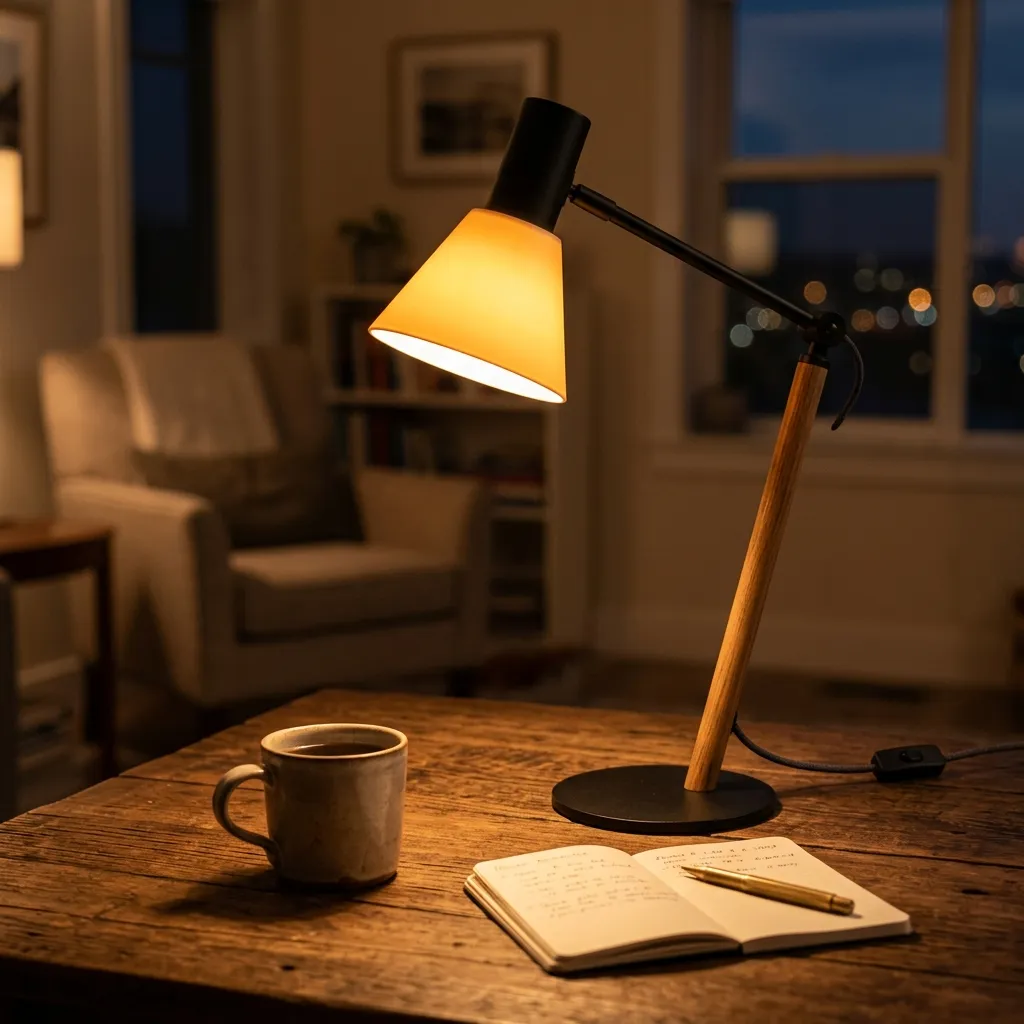
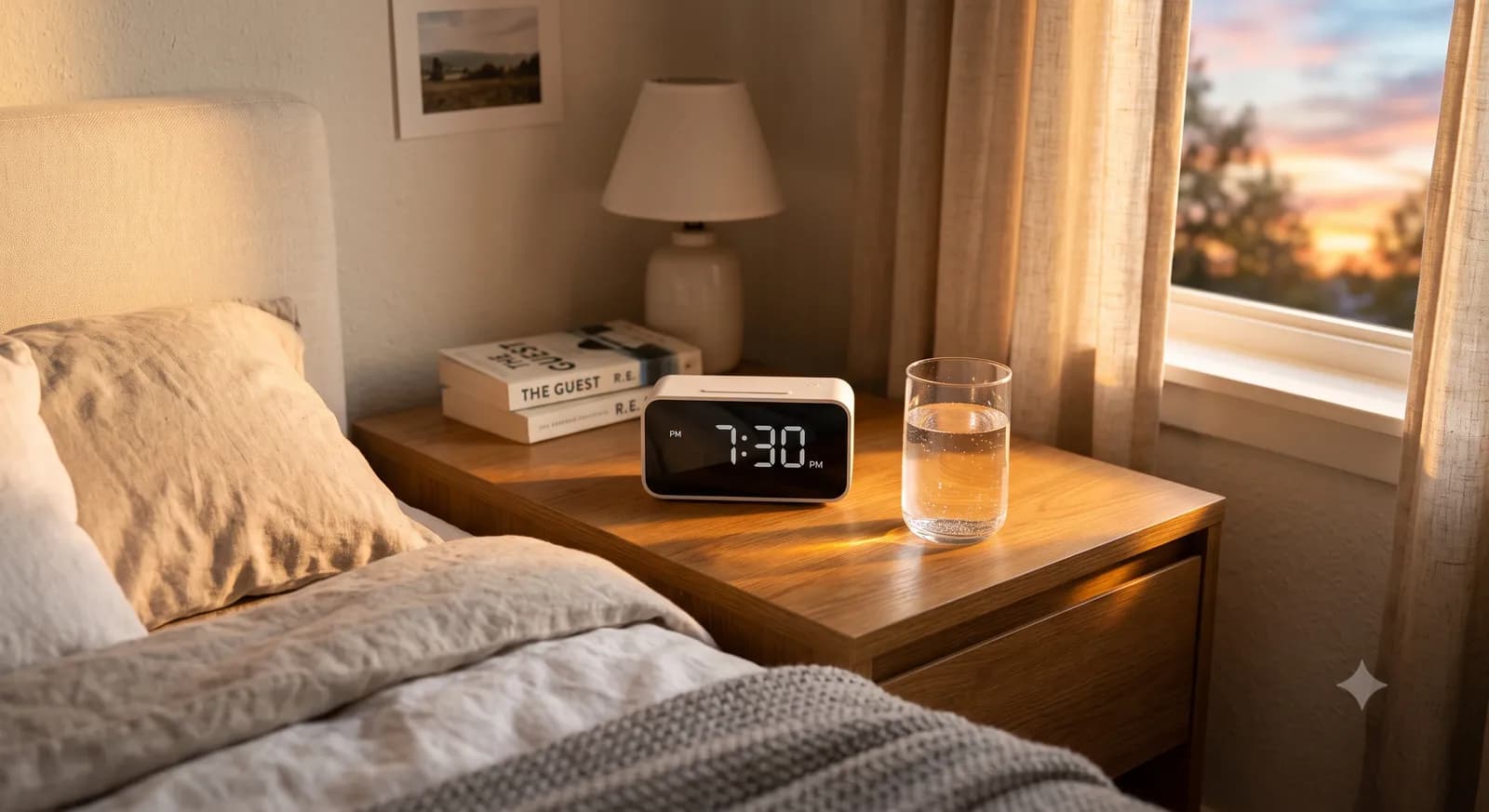
A modern desk lamp emitting warm amber light on a wooden table

Image 2: Transitioning to warm, low-intensity light in the evening supports the natural release of melatonin.

The 3-Step Protocol for Circadian Light Optimization

Apply this structured three-part protocol to synchronize your master clock:

Step 1: Morning Lux Anchoring

Expose your eyes to at least 10,000 lux of outdoor light within 30 minutes of waking. Spend 10 to 15 minutes outside (or 20 to 30 minutes on cloudy days).

This bright light sets your internal circadian clock, starting a timer for evening melatonin release.

Step 2: Midday Contrast Window

Step outside for a 15-minute walk between 12 p.m. and 2 p.m. Natural sunlight during these hours provides the high-intensity light required to suppress sleep pressure.

This midday contrast helps prevent the early afternoon dip, keeping you alert.

Step 3: Evening Dimming Schedule

Dim your home's overhead lights after 8 p.m., transitioning to warm, low-intensity lamps placed at floor level.

This setup mimics the low angle of sunset, signaling your brain that it is safe to prepare for sleep. For sleep environment tips, read our guide on minimalist bedroom design, and review circadian biology in our guide on sleep hygiene and circadian rhythms.

How to Rebuild Your Workspace Lighting Setup

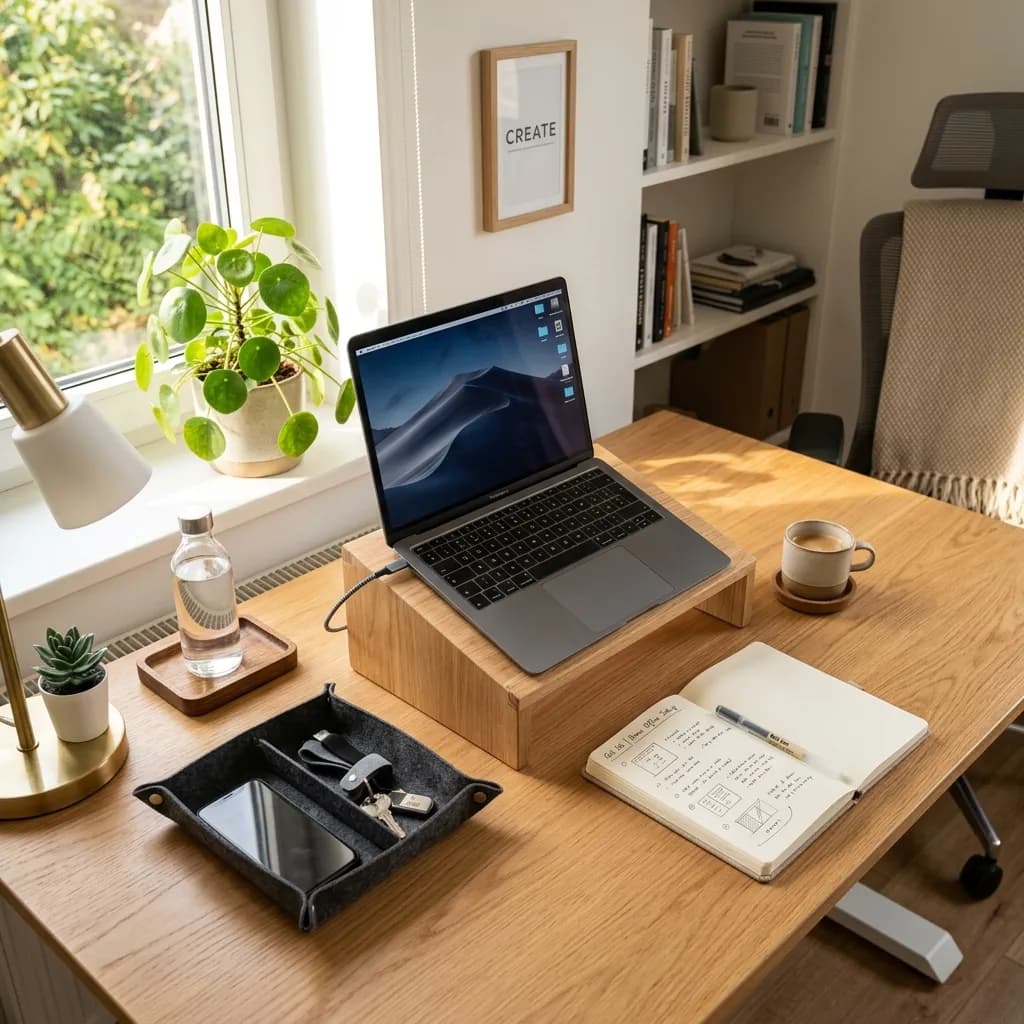
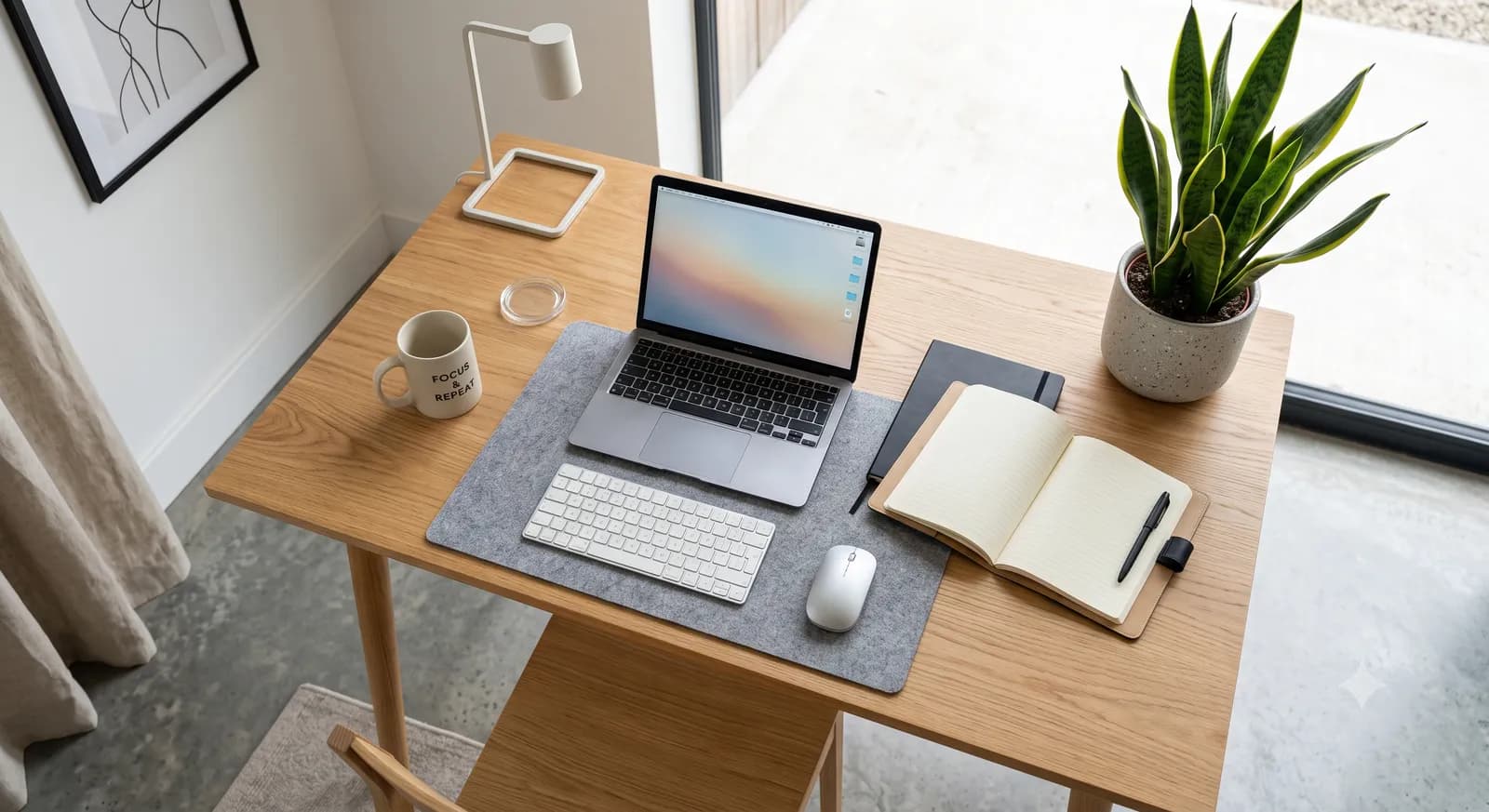
To maintain focus, position your desk near a window to receive natural light during the morning.

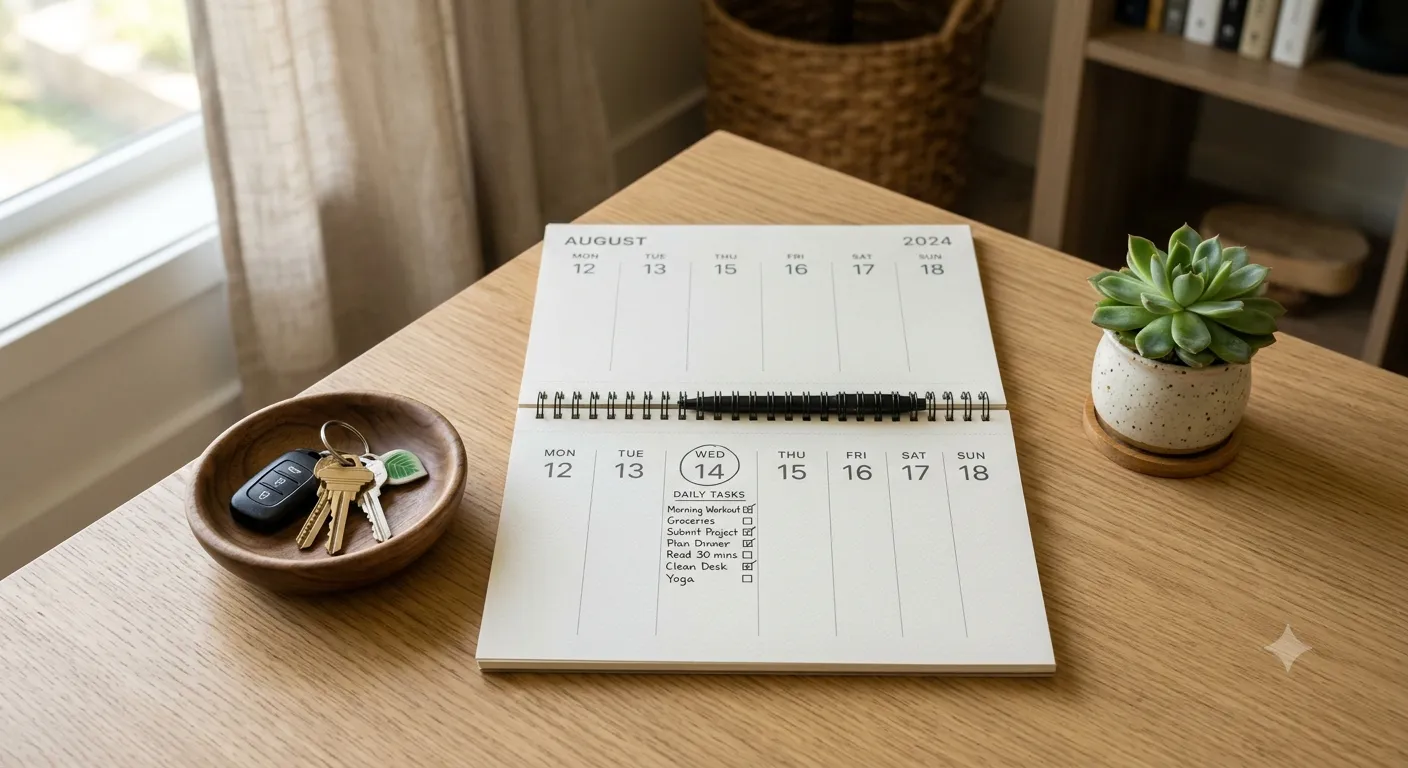
Combine proper lighting with daily scheduling tools to maintain steady focus. For schedule comparisons, read our guide on timeboxing vs time blocking, and see focus blocks in our guide on deep work focus rules.

Practice a clean workday shutdown ritual daily, turning off work screens at the end of your shift. See our guide on remote work boundaries.

To maintain long-term cognitive health, track your consistency using minimalist tools. Read our review of minimalist habit tracking apps. Integrate breathing cadences to manage stress during focus transitions. Read our guide on daily breathwork rituals, and manage daytime stress with our guide on micro-meditation routines. Additionally, practice biophilic design; see our guide on office plants for clean air, and explore slow pace audits in our guide on slow living blueprints. Organize your weekly transitions with a Sunday reset; see our guide on Sunday reset routines.

Frequently Asked Questions About Light Optimization

Can standard indoor lighting provide enough lux for my circadian rhythm?

No. Standard indoor lighting typically provides only 300 to 500 lux of light, which is insufficient to trigger circadian master clock suppression. Outdoor sunlight provides between 10,000 and 100,000 lux, making outdoor exposure critical.

Does circadian light optimization help improve overall sleep quality?

Yes. By anchoring your biological clock in the morning and protecting melatonin release in the evening, you improve your overall sleep quality and increase deep sleep phases.

Can somatic exercises help with the afternoon slump?

Yes. Physical resets like shoulder rolls, gentle neck stretches, and diaphragmatic breathing help restore blood flow to tense muscles, increasing alertness. For somatic resets, see our guide on vagal tone stimulation.

Cited Scientific Sources & Literature

  1. Berson, D. M., et al. (2002). Phototransduction by retinal ganglion cells that set the circadian clock. Science, 295(5557), 1070-1073.
  2. Gooley, J. J., et al. (2011). Exposure to room light before bedtime suppresses melatonin onset and shortens melatonin duration in humans. Journal of Clinical Endocrinology & Metabolism, 96(3), E463-E472. [PubMed PMC]
  3. Sapolsky, R. M. (2004). Why Zebras Don't Get Ulcers. Holt Paperbacks.
Elena Vasquez-Reid
Elena Vasquez-Reid
MSc Behavioural Science · Certified Workplace Wellbeing Consultant

Elena Vasquez-Reid spent nine years leading product teams in high-pressure tech environments before a personal burnout episode in 2019 redirected her career toward behavioural science. She completed her MSc in Behavioural Science, retrained as a certified workplace wellbeing consultant, and founded Harmony Hubs in 2024 to translate peer-reviewed stress, sleep and productivity research into practical systems that survive real working weeks. Every article on this site is researched against primary sources, tested in her own routine or with her coaching clients, and edited by a human before publishing. Based in Lisbon, Portugal.

About the Author

Elena Vasquez-Reid
Elena Vasquez-Reid
MSc Behavioural Science · Certified Workplace Wellbeing Consultant

Elena Vasquez-Reid spent nine years leading product teams in high-pressure tech environments before a personal burnout episode in 2019 redirected her career toward behavioural science. She completed her MSc in Behavioural Science, retrained as a certified workplace wellbeing consultant, and founded Harmony Hubs in 2024 to translate peer-reviewed stress, sleep and productivity research into practical systems that survive real working weeks. Every article on this site is researched against primary sources, tested in her own routine or with her coaching clients, and edited by a human before publishing. Based in Lisbon, Portugal.

Read Full Story

Related Articles

Lifestyle

5 Simple Weekend Habits That Setup a Productive Week

5 Simple Weekend Habits That Setup a Productive Week

Updated: June 2, 2026 | Elena Vasquez-Reid
How to Balance Daily Screen Time and Real-World Interactions

How to Balance Daily Screen Time and Real-World Interactions

Updated: May 30, 2026 | Elena Vasquez-Reid
The Benefits of Designing a Low-Stimulation Home Environment

The Benefits of Designing a Low-Stimulation Home Environment

Updated: May 27, 2026 | Elena Vasquez-Reid
How to Create an Ergonomic Workspace on a Budget

How to Create an Ergonomic Workspace on a Budget

Updated: May 24, 2026 | Elena Vasquez-Reid
Sunday Reset Routine: 7 Habits to Eliminate Monday Blues

Sunday Reset Routine: 7 Habits to Eliminate Monday Blues

Updated: May 21, 2026 | Elena Vasquez-Reid
What is Slow Living? A Blueprint for Modern Professionals

What is Slow Living? A Blueprint for Modern Professionals

Updated: May 18, 2026 | Elena Vasquez-Reid
Physical Decluttering Guide: How Cleaning Space Clears Mind

Physical Decluttering Guide: How Cleaning Space Clears Mind

Updated: May 15, 2026 | Elena Vasquez-Reid
5 Low-Maintenance Air Purifying Plants for Home Offices

5 Low-Maintenance Air Purifying Plants for Home Offices

Updated: May 12, 2026 | Elena Vasquez-Reid
The Science of Sleep Hygiene: Fix Your Circadian Rhythm

The Science of Sleep Hygiene: Fix Your Circadian Rhythm

Updated: May 9, 2026 | Elena Vasquez-Reid
How to Build a Calming Minimalist Bedroom for Sleep

How to Build a Calming Minimalist Bedroom for Sleep

Updated: May 6, 2026 | Elena Vasquez-Reid
5 Simple Weekend Habits That Setup a Productive Week

5 Simple Weekend Habits That Setup a Productive Week

Updated: June 2, 2026 | Elena Vasquez-Reid
How to Balance Daily Screen Time and Real-World Interactions

How to Balance Daily Screen Time and Real-World Interactions

Updated: May 30, 2026 | Elena Vasquez-Reid
The Benefits of Designing a Low-Stimulation Home Environment

The Benefits of Designing a Low-Stimulation Home Environment

Updated: May 27, 2026 | Elena Vasquez-Reid
How to Create an Ergonomic Workspace on a Budget

How to Create an Ergonomic Workspace on a Budget

Updated: May 24, 2026 | Elena Vasquez-Reid
Sunday Reset Routine: 7 Habits to Eliminate Monday Blues

Sunday Reset Routine: 7 Habits to Eliminate Monday Blues

Updated: May 21, 2026 | Elena Vasquez-Reid
What is Slow Living? A Blueprint for Modern Professionals

What is Slow Living? A Blueprint for Modern Professionals

Updated: May 18, 2026 | Elena Vasquez-Reid
Physical Decluttering Guide: How Cleaning Space Clears Mind

Physical Decluttering Guide: How Cleaning Space Clears Mind

Updated: May 15, 2026 | Elena Vasquez-Reid
5 Low-Maintenance Air Purifying Plants for Home Offices

5 Low-Maintenance Air Purifying Plants for Home Offices

Updated: May 12, 2026 | Elena Vasquez-Reid
The Science of Sleep Hygiene: Fix Your Circadian Rhythm

The Science of Sleep Hygiene: Fix Your Circadian Rhythm

Updated: May 9, 2026 | Elena Vasquez-Reid
How to Build a Calming Minimalist Bedroom for Sleep

How to Build a Calming Minimalist Bedroom for Sleep

Updated: May 6, 2026 | Elena Vasquez-Reid