The Science of Sound Healing Frequencies for Relaxation
In our highly digital work environment, our auditory environment is saturated. We spend hours listening to notifications, high-tempo background music, and low-quality microphone audio in video meetings. This persistent noise increases cognitive stress. To restore focus and rest, we must utilize the science of sound healing frequencies.
Sound healing frequencies are specific acoustic vibrations designed to interact with the electrical rhythms of the human brain. The brain operates using electrical impulses that oscillate at different rates, measured in Hertz (Hz). By listening to structured frequencies, you can encourage your brainwaves to align with these target rhythms.
This process is a validated neurological method known as brainwave entrainment. When you listen to calming frequencies (such as 432 Hz or theta binaural beats), you encourage the brain to transition out of high-frequency beta waves (stress and alert analysis) and into slow alpha and theta waves (deep relaxation and creative rest). To test your daily stress levels, try our interactive Daily Harmony Calculator.
Acoustic Brainwave Entrainment
Brainwave entrainment is the capacity of the brain to naturally synchronize its dominant EEG frequency with the cadence of an external rhythmic stimulus (such as sound or light pulses). By presenting stable, rhythmic acoustic frequencies, you can steer brain states from stress to deep rest in minutes.
Comparing Binaural Beats, Solfeggio Tones, and Pink Noise
Not all sound frequencies are created equal. To build an effective evening sound protocol, you must understand the different types of acoustic tools:
Binaural Beats (Neurological Synchronization)
Binaural beats occur when you present two slightly different frequencies to each ear (for example, 400 Hz in the left ear and 408 Hz in the right ear). The brain resolves this difference by creating a third, perceived frequency (in this case, 8 Hz, which matches the alpha wave boundary). Binaural beats require headphones to function, as the frequency difference must be processed within the brain's superior olivary nucleus.
Solfeggio Tones (Resonance-Based Tuning)
Solfeggio tones are a set of historical electromagnetic frequencies believed to carry specific restorative properties. The most popular frequencies include 528 Hz (often associated with cellular repair) and 432 Hz (aligned with natural harmonic geometries). While clinical studies on specific healing claims are ongoing, research indicates that tuning music to 432 Hz lowers resting heart rate significantly compared to standard 440 Hz tuning.
Colored Noise (Pink and Brown Noise)
Unlike white noise, which contains equal energy across all audible frequencies, pink noise decreases in volume as the frequency increases. This sounds deeper and softer, mimicking natural environments like rainfall or wind. Brown noise goes further, dropping high frequencies even faster to sound like a low waterfall. Colored noise is excellent for blocking external distractions and stabilizing sleep. To check sleep advice, read our guide on sleep hygiene and circadian rhythms.

Image 2: Acoustic frequencies behave like visual waves, gently guiding the central nervous system out of alarm mode.
The Neurobiology of Acoustic Entrainment
When your ears receive a sound, the acoustic vibration is converted into electrical signals by the cochlea. These signals travel along the vestibulocochlear nerve to the auditory cortex and the brainstem.
The brainstem regulates your resting heart rate, respiratory rate, and blood pressure. When it receives slow, rhythmic, low-frequency sound signals, it engages the parasympathetic vagal brake. Vagus nerve stimulation triggers the release of acetylcholine, slowing your heart rate and lowering systemic cortisol.
According to clinical studies published by the National Institutes of Health (NIH), listening to slow acoustic patterns reduces indicators of sympathetic dominance. This down-regulation helps manage symptoms like early morning anxiety. To address early stress spikes, read our guide on managing morning anxiety naturally. You can also review how cortisol levels affect brain chemistry in our guide on chronic stress and brain chemistry.
A 20-Minute Evening Sound Relaxation Protocol
To reset your stress baseline after a demanding workday, execute this 20-minute evening sound protocol:
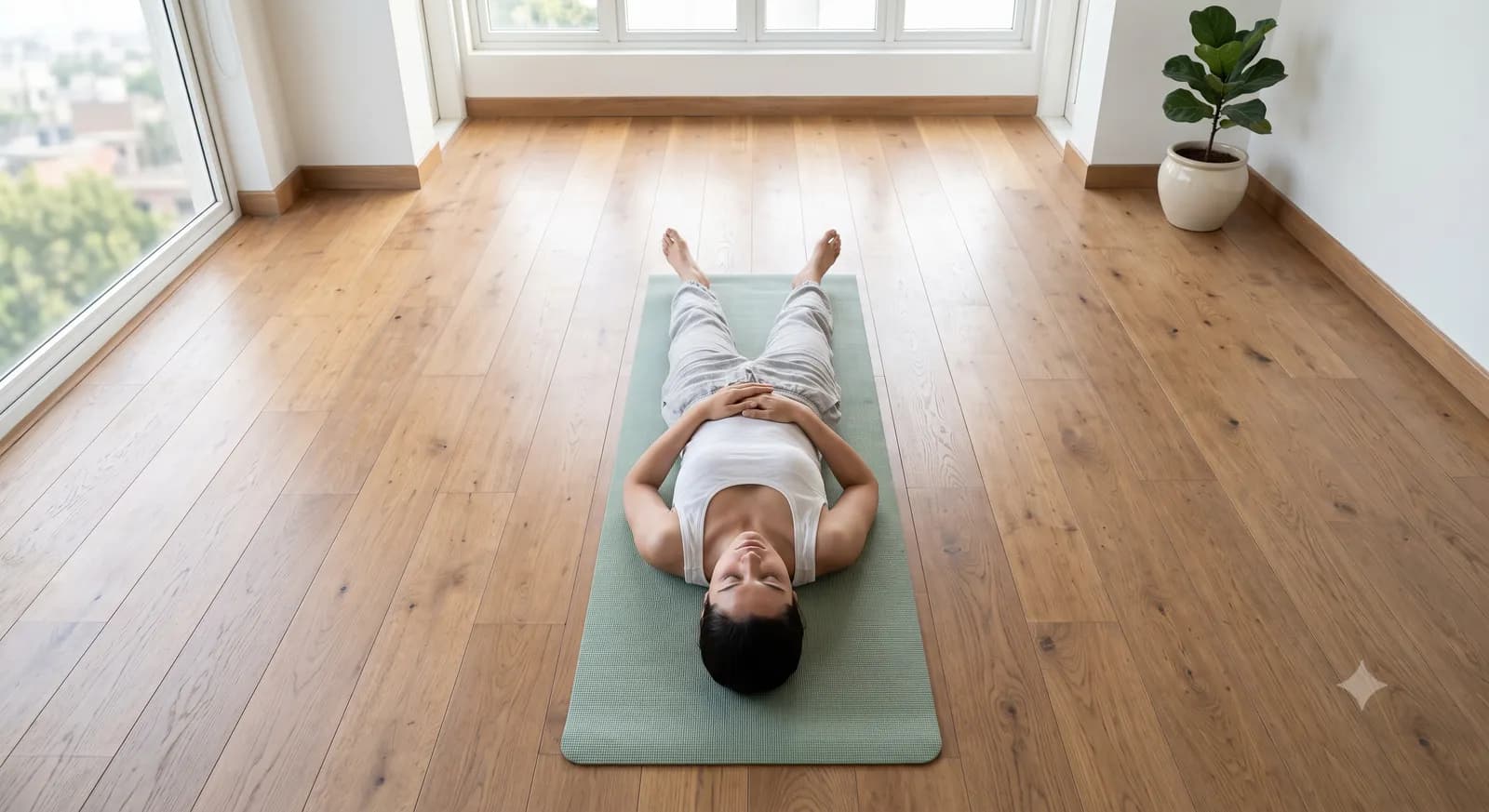
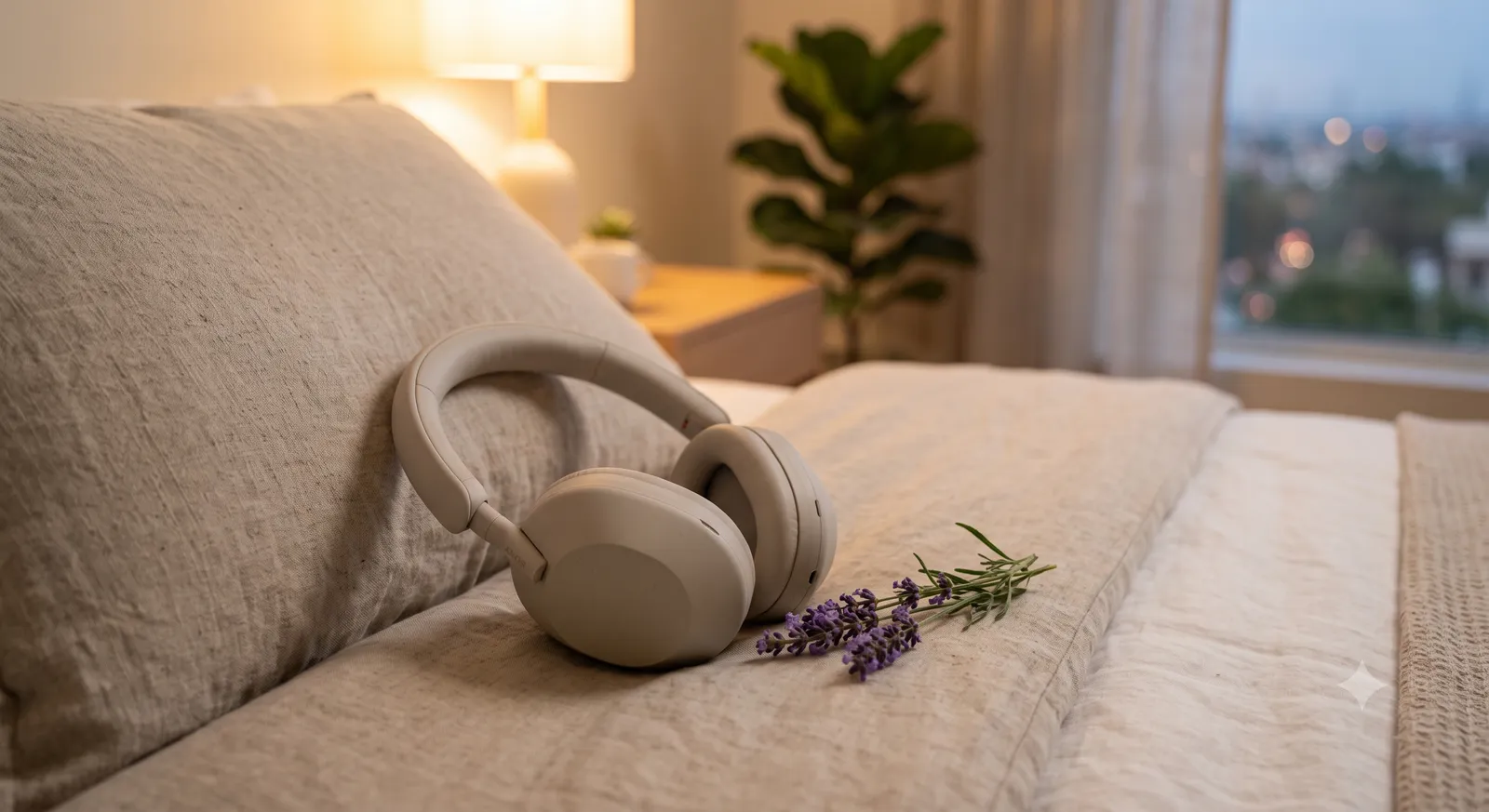
• Setup (Minutes 1–2): Find a quiet room with low lighting. Sit or lie down in a comfortable position, and put on high-quality over-ear headphones. Ensure your phone is set to "Do Not Disturb" to avoid interruptions. To clear digital stress, review our 48-hour digital detox guide.
• Acoustic Induction (Minutes 3–10): Play a track tuned to 432 Hz Solfeggio or a theta-frequency binaural beat (difference of 4–7 Hz). Close your eyes and focus on your breathing, applying a slow diaphragmatic cadence (inhale for 4 seconds, exhale for 6 seconds). This coordinates your heart rate with the sound.
• Somatic Integration (Minutes 11–18): As the sound continues, perform a slow somatic body scan. Focus on releasing muscular tension in your jaw, shoulders, and lower back. For structured somatic releases, see our guide on somatic movement exercises for beginners.
• Transition (Minutes 19–20): Remove your headphones. Sit quietly for 1 minute, allowing your brain to adjust to the ambient sounds of the room before returning to your evening activities.
Frequently Asked Questions About Sound Therapy
Do I need expensive headphones to use sound healing frequencies?
For Solfeggio tones or colored noise, standard speakers or basic headphones are sufficient. However, for binaural beats, you must use stereo headphones. This is because the brain must receive a different frequency in each ear to construct the target binaural beat.
Can I listen to sound healing frequencies while working?
Yes, but match the frequency to the task. Alpha frequencies (8–12 Hz) and pink noise are excellent for deep focus and reading. Theta (4–7 Hz) and delta (0.5–4 Hz) frequencies are best reserved for meditation, relaxation, and sleep prep, as they can cause drowsiness. For work resets, try our 10-minute micro-meditations.
How long does it take for acoustic entrainment to work?
Most people display shifts in brainwave activity on EEG monitors within 5 to 7 minutes of listening to a stable frequency. A 20-minute daily session is sufficient to induce deep parasympathetic relaxation and lower mental stress.
Cited Scientific Sources & Literature
- Chaieb, L., et al. (2015). Auditory beat stimulation and its effects on anxiety and focus. Frontiers in Psychiatry, 6, 70-74. [PubMed PMC]
- Goldsby, T. L., et al. (2017). Effects of singing bowl meditation on mood, tension, and well-being. Journal of Evidence-Based Integrative Medicine, 22(3), 401-408.
- Sapolsky, R. M. (2004). Why Zebras Don't Get Ulcers. Holt Paperbacks.