New this week:The Mirror Technique: Overcoming Self-Doubt in Business Meetings
Harmony Hub logo
Wellness
Growth
Lifestyle
Blog
Family & Relationships
Financial Wellness
Growth
Home & Haven
Lifestyle
Mindful Learning
Mindful Living
Mindful Shopping
Wellness
Women’s Wellness
About
Contact
Run Harmony Check
Loading...
 logo

Science-backed wellness, growth and lifestyle systems for modern professionals. Researched against primary sources, tested in real working weeks, edited by humans.

Library
Wellness library
Growth frameworks
Lifestyle design
Harmony Calculator
Company
About us
Contact us
All guides
Start here
Legal
Privacy policy
Terms of use
Legal information
© 2026 Harmony Hub. All rights reserved.
Growth

How to Audit Your Daily Schedule for Peak Energy

By Elena Vasquez-ReidPublished: May 23, 2026
How to Audit Your Daily Schedule for Peak Energy
Share:
#audit daily schedule
Learn how to audit your daily schedule for peak energy. Map your chronotype, log energy leaks for 7 days and rebuild your calendar around biology.

Why You Need to Audit Your Daily Schedule

In our highly structured professional lives, we organize our calendars around external requests. We accept meetings, respond to invitations, and allocate focus blocks based on default time slots. However, behavioral science shows that this is incorrect: your calendar should be organized around your biology. To protect your productivity, you must audit daily schedule markers.

An audit daily schedule process is a systematic, 7-day tracking sequence designed to expose where your biological energy is being spent—and wasted. Most time management systems treat time as a uniform resource, assuming that 10 a.m. is identical to 4 p.m.

But chronobiology reveals that your cognitive capacity, focus depth, and reaction times vary throughout the day, governed by your internal biological clocks. Trying to perform deep, analytical work during an energy trough leads to a sharp increase in fatigue and error rates. Auditing your schedule helps you align your most demanding tasks with your peak energy hours. To assess your current schedule alignment, try our interactive Daily Harmony Calculator.

Ultradian Rhythms and Cognitive Capacity

The human brain operates on ultradian rhythms—90-minute cycles of cognitive focus followed by a 15-minute period of glucose depletion and attention decay. Organizing your workday into structured 90-minute blocks followed by a rest window helps maintain steady cognitive energy.

The Science of Chronobiology and Energy Peaks

Every cell in your body houses a biological clock, synchronized by the suprachiasmatic nucleus (SCN) in the brain. The SCN regulates your body temperature, hormone output (primarily cortisol and melatonin), and blood pressure in response to environmental light.

Your chronotype is the genetic variation that governs the timing of these circadian cycles. Early morning larks experience an early cortisol peak, making them highly productive in the morning, while late night owls experience their peak energy later in the day.

According to clinical studies published by the National Institutes of Health (NIH), trying to work against your chronotype leads to chronic sleep debt and elevated cortisol baselines. To manage waking stress, read our guide on managing morning anxiety naturally, and explore somatic resets in our guide on somatic movements for beginners. You can also review stress remodeling pathways in our guide on chronic stress and brain chemistry.
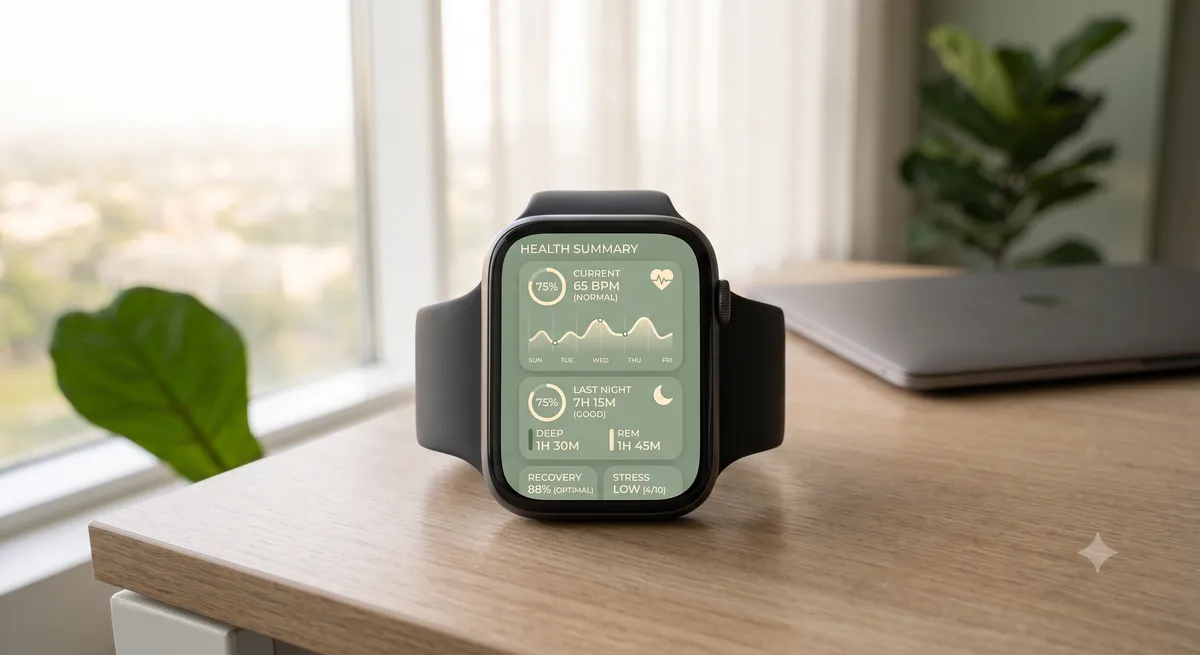
A smart watch displaying activity tracking metrics representing schedule audits

Image 2: Modern smartwatches and health dashboards help track biological indicators like heart rate to evaluate energy patterns.

A Step-by-Step Guide to Run an Energy Audit

To execute a successful audit daily schedule process, apply this structured 7-day tracking protocol:

Step 1: Map Your Chronotype

Complete a standardized chronotype assessment (such as the Munich Chronotype Questionnaire) to identify your biological profile (lark, owl, or intermediate).

This baseline helps you identify when your natural cortisol awakening response peaks.

Step 2: Log Energy Levels for 7 Days

Set a timer to go off every 2 hours during your waking day. On a physical notepad, score your energy, focus, and mood from 1 to 10.

Document the activity you were performing, who you were with, and your current environment. Do not skip days, as weekend data exposes sleep recovery patterns.

Step 3: Identify Energy Leaks

At the end of the week, review your logs to locate your energy troughs. Note the tasks or environments that consistently cause your score to drop below 5.

Common leaks include back-to-back video calls, checking messages during focus blocks, or working under poor artificial lighting. To clear digital strain, review our 48-hour digital detox guide.

Step 4: Rebuild Your Calendar Around Biology

Rebuild your schedule to match your biological peaks. Dedicate your peak energy hours (typically early morning for larks) to deep work, and move administrative tasks (emails, data entry) to your natural energy troughs (typically early afternoon). For schedule comparisons, read our guide on timeboxing vs time blocking.

Rebuilding Your Calendar for Autonomic Flow

Once your audit is complete, apply your findings to rebuild your daily calendar. Use focus blocks to protect your deep work periods from interruptions.

For focus rituals, see our guide on deep work rules. To manage transitions, practice the shutdown ritual daily, ensuring you unplug completely after your shift. To protect your downtime, see our guide on remote work boundaries.

Integrate breathing cadences into your workday to lower your mental load during focus transitions. Read our guide on daily breathwork rituals, and review somatic resets in our guide on vagal tone stimulation. Additionally, track your consistency using minimalist tools; see our review of minimalist habit tracking apps.

Frequently Asked Questions About Schedule Audits

What if my job schedule doesn't match my chronotype?

Focus on the variables you can control. If you are a night owl forced to work early hours, use sunrise light exposure to anchor your circadian rhythm, and dedicate your first 2 hours of the day to administrative tasks, saving deep work for your late-morning energy peak.

How often should I audit my daily schedule?

Perform an energy audit twice a year, or whenever you experience a major change in workload, environment, or health. Seasonal changes in sunlight also shift your circadian timing, requiring minor adjustments to your schedule.

Can tracking energy levels cause cognitive fatigue?

No, provided you keep the logging process simple. Keep a small notebook on your desk and write down three numbers (energy, focus, mood) twice a day. The entire log should take under 10 seconds.

Cited Scientific Sources & Literature

  1. Roenneberg, T., et al. (2007). The human chronotype: Genetics and environmental factors in circadian regulation. Journal of Biological Rhythms, 22(5), 358-369.
  2. Kleitman, N. (1963). Sleep and Wakefulness. University of Chicago Press. [PubMed PMC]
  3. Sapolsky, R. M. (2004). Why Zebras Don't Get Ulcers. Holt Paperbacks.

Elena Vasquez-Reid
Elena Vasquez-Reid
MSc Behavioural Science · Certified Workplace Wellbeing Consultant

Elena Vasquez-Reid spent nine years leading product teams in high-pressure tech environments before a personal burnout episode in 2019 redirected her career toward behavioural science. She completed her MSc in Behavioural Science, retrained as a certified workplace wellbeing consultant, and founded Harmony Hubs in 2024 to translate peer-reviewed stress, sleep and productivity research into practical systems that survive real working weeks. Every article on this site is researched against primary sources, tested in her own routine or with her coaching clients, and edited by a human before publishing. Based in Lisbon, Portugal.

About the Author

Elena Vasquez-Reid
Elena Vasquez-Reid
MSc Behavioural Science · Certified Workplace Wellbeing Consultant

Elena Vasquez-Reid spent nine years leading product teams in high-pressure tech environments before a personal burnout episode in 2019 redirected her career toward behavioural science. She completed her MSc in Behavioural Science, retrained as a certified workplace wellbeing consultant, and founded Harmony Hubs in 2024 to translate peer-reviewed stress, sleep and productivity research into practical systems that survive real working weeks. Every article on this site is researched against primary sources, tested in her own routine or with her coaching clients, and edited by a human before publishing. Based in Lisbon, Portugal.

Read Full Story

Related Articles

Growth

The Mirror Technique: Overcoming Self-Doubt in Business Meetings

The Mirror Technique: Overcoming Self-Doubt in Business Meetings

Updated: June 7, 2026 | Elena Vasquez-Reid
How to Set Metric-Driven Personal Development Goals for Work

How to Set Metric-Driven Personal Development Goals for Work

Updated: June 4, 2026 | Elena Vasquez-Reid
How to Overcome Overthinking and Streamline Decision Making

How to Overcome Overthinking and Streamline Decision Making

Updated: June 1, 2026 | Elena Vasquez-Reid
The Ultimate Guide to Setting Boundaries with Demanding Clients

The Ultimate Guide to Setting Boundaries with Demanding Clients

Updated: May 29, 2026 | Elena Vasquez-Reid
7 Micro-Habits That Double Your Productivity Safely

7 Micro-Habits That Double Your Productivity Safely

Updated: May 26, 2026 | Elena Vasquez-Reid
Remote Work Boundaries: How to Unplug After Your Shift

Remote Work Boundaries: How to Unplug After Your Shift

Updated: May 20, 2026 | Elena Vasquez-Reid
The Psychology of the 5-Second Rule for Execution

The Psychology of the 5-Second Rule for Execution

Updated: May 17, 2026 | Elena Vasquez-Reid
5 Minimalist Habit Tracking Apps That Eliminate Overwhelm

5 Minimalist Habit Tracking Apps That Eliminate Overwhelm

Updated: May 14, 2026 | Elena Vasquez-Reid
How to Overcome Imposter Syndrome in Leadership Roles

How to Overcome Imposter Syndrome in Leadership Roles

Updated: May 11, 2026 | Elena Vasquez-Reid
Deep Work Rules: Build 4 Hours of Uninterrupted Focus

Deep Work Rules: Build 4 Hours of Uninterrupted Focus

Updated: May 8, 2026 | Elena Vasquez-Reid
Timeboxing vs Time Blocking: Which Framework Beats Procrastination?

Timeboxing vs Time Blocking: Which Framework Beats Procrastination?

Updated: May 5, 2026 | Elena Vasquez-Reid
The Mirror Technique: Overcoming Self-Doubt in Business Meetings

The Mirror Technique: Overcoming Self-Doubt in Business Meetings

Updated: June 7, 2026 | Elena Vasquez-Reid
How to Set Metric-Driven Personal Development Goals for Work

How to Set Metric-Driven Personal Development Goals for Work

Updated: June 4, 2026 | Elena Vasquez-Reid
How to Overcome Overthinking and Streamline Decision Making

How to Overcome Overthinking and Streamline Decision Making

Updated: June 1, 2026 | Elena Vasquez-Reid
The Ultimate Guide to Setting Boundaries with Demanding Clients

The Ultimate Guide to Setting Boundaries with Demanding Clients

Updated: May 29, 2026 | Elena Vasquez-Reid
7 Micro-Habits That Double Your Productivity Safely

7 Micro-Habits That Double Your Productivity Safely

Updated: May 26, 2026 | Elena Vasquez-Reid
Remote Work Boundaries: How to Unplug After Your Shift

Remote Work Boundaries: How to Unplug After Your Shift

Updated: May 20, 2026 | Elena Vasquez-Reid
The Psychology of the 5-Second Rule for Execution

The Psychology of the 5-Second Rule for Execution

Updated: May 17, 2026 | Elena Vasquez-Reid
5 Minimalist Habit Tracking Apps That Eliminate Overwhelm

5 Minimalist Habit Tracking Apps That Eliminate Overwhelm

Updated: May 14, 2026 | Elena Vasquez-Reid
How to Overcome Imposter Syndrome in Leadership Roles

How to Overcome Imposter Syndrome in Leadership Roles

Updated: May 11, 2026 | Elena Vasquez-Reid
Deep Work Rules: Build 4 Hours of Uninterrupted Focus

Deep Work Rules: Build 4 Hours of Uninterrupted Focus

Updated: May 8, 2026 | Elena Vasquez-Reid
Timeboxing vs Time Blocking: Which Framework Beats Procrastination?

Timeboxing vs Time Blocking: Which Framework Beats Procrastination?

Updated: May 5, 2026 | Elena Vasquez-Reid