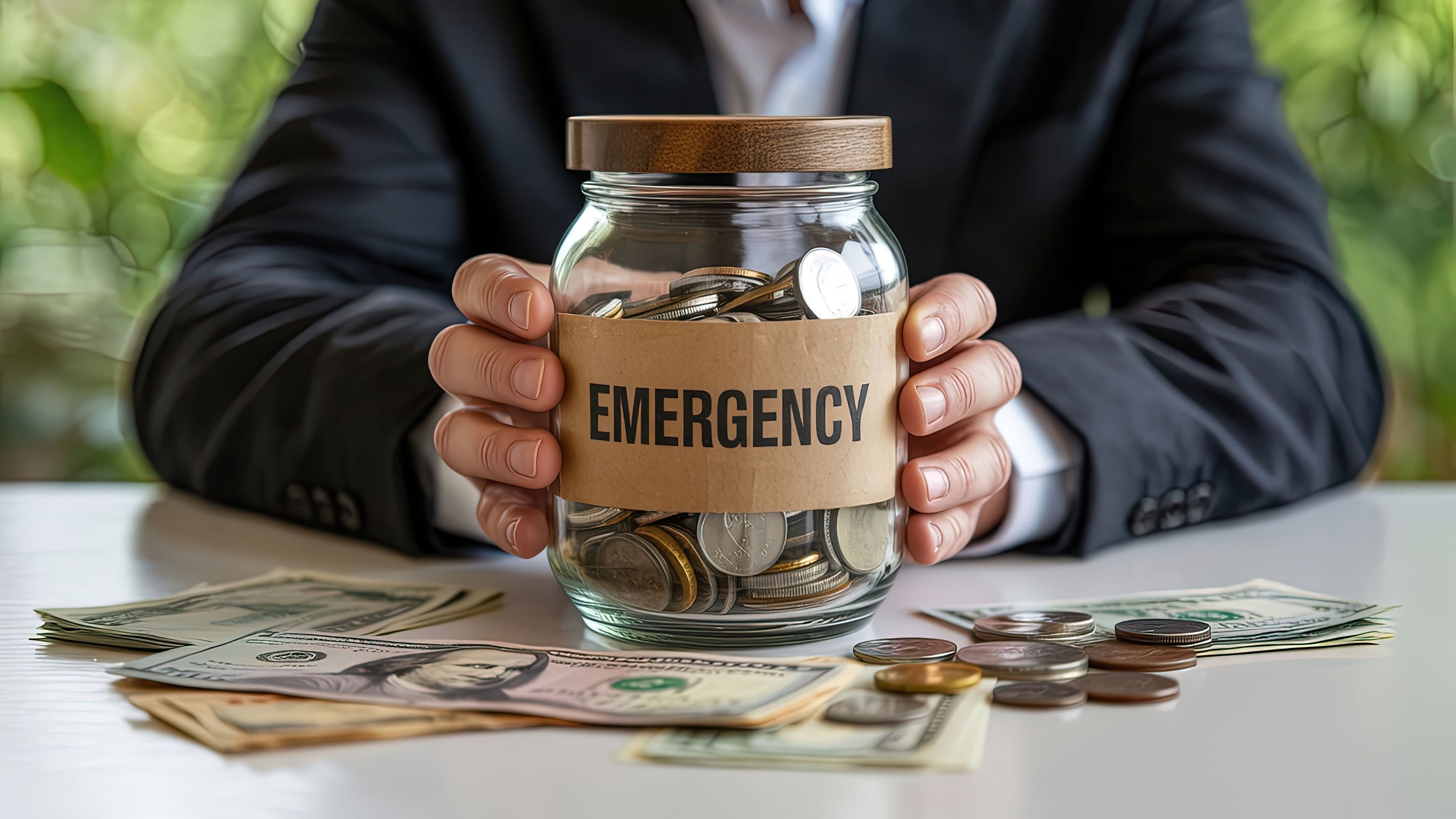
According to a 2023 Federal Reserve report, nearly 37% of Americans would struggle to cover an unexpected $400 expense without borrowing or selling something. That number is sobering, but it also means you are far from alone—and far from stuck. Let's walk through how to actually build that cushion, even when your budget is held together with good intentions and a prayer.
1. The "Annoyingly Small" Start
Here's the move that feels almost too small to matter: start with $5. Not $500. Not even $50. Five dollars. Put it in a separate savings account this week—one that's not attached to your checking so you're not tempted to casually swipe it on an iced coffee. The psychological magic of a first deposit, no matter how tiny, is that it transforms you from "someone who wants an emergency fund" into "someone who has one." That identity shift is everything.
Most people stall on emergency funds because they're waiting until they can save "a real amount." But savings accounts don't care about dignity—they just care about deposits. A jar, a high-yield savings account, a credit union account with a $25 minimum—pick your vessel and pour something into it. The water will rise.
2. The Subscription Audit (Feat. Your Banking App)
This one's a little like running into an ex at the grocery store—uncomfortable, but clarifying. Open your bank app and scroll through the last two months of transactions looking specifically for recurring charges. Streaming services you forgot you signed up for during a free trial. A fitness app you used exactly twice. That "premium" version of something you've never actually needed the premium version of. According to a 2022 C+R Research survey, the average American spends $219 per month on subscriptions—and underestimates that number by about $133.
Cancel two. Just two. If that frees up $20–$30 a month, you've just created your emergency fund contribution without touching a single "real" expense. Redirect those funds immediately—automate the transfer so it happens before your brain has time to negotiate. Out of sight, out of spending.
3. The "Future You" Envelope Trick
Picture Future You. She's calmer. He handled that car repair without going into debt. They didn't have to borrow money from a family member who will absolutely bring it up at Thanksgiving. Now imagine the $10 you're setting aside today is a direct gift to that version of yourself. It sounds a little woo-woo, but reframing savings as an act of self-care rather than deprivation genuinely shifts how it feels to do it.
The envelope method—or its digital equivalent, a labeled savings "bucket" in apps like Ally or YNAB—makes the money feel earmarked rather than available. Name it something visceral: "Don't Touch This," "Crisis Proof," or honestly, just "Peace of Mind." The label creates a psychological barrier between you and the urge to spend it.
4. The "Found Money" Pipeline
Tax refund coming? Birthday cash from your aunt? Sold something on Facebook Marketplace at 11pm while watching TV? That's found money—income that wasn't built into your regular budget, which means your lifestyle has already proven it doesn't need it. Before that money touches your checking account and gets absorbed into the ether of everyday spending, redirect half of it straight to your emergency fund.
This strategy works because it sidesteps the deprivation feeling entirely. You're not cutting anything. You're just catching money that was already falling through the cracks and giving it a purpose. Financial therapist Amanda Clayman calls this "paying yourself with windfalls"—using unexpected income as the fast lane to financial stability without squeezing an already tight month.
5. The $1-A-Day Dare
If the idea of saving a fixed monthly amount feels suffocating, try this instead: save $1 for every day of the month. Some days you save $1. Some days, if you skipped lunch out or found a coupon, you throw in $3. No guilt on the $1 days. No pressure to be consistent in a way that feels punishing. By the end of the month, you've got at least $28–$31 saved—and possibly more if the momentum carried you.
This gamified approach works especially well for people who resist rigid systems. It keeps the goal visible without making it feel like a sentence. Over a year, even at the bare minimum, that's roughly $365 sitting in your "Peace of Mind" account—enough to cover a car repair, an urgent prescription, or a last-minute flight without spiraling into debt.
6. The Side Hustle Earmark
You don't need to overhaul your career to find a little extra cash. Selling unused items, doing TaskRabbit gigs, dog-walking on weekends, or picking up a single freelance project a month can generate $50–$200 in income that your regular budget never counted on. The key is to decide before you earn it where it goes. Not "I'll figure it out when I get paid." Straight to the emergency fund, before it gets a chance to become a DoorDash order.
This approach also has a bonus psychological effect: you feel less like a victim of your budget and more like an active participant in your own financial story. That shift from helplessness to agency—even over small amounts—is genuinely mood-lifting. It's the financial equivalent of realizing you can control the temperature in the room.
7. The "Good Enough" Goal
Here's some permission you didn't know you needed: your emergency fund doesn't have to be three to six months of expenses right away. That number is the destination, not the starting line. Your first goal is $500. Then $1,000. Then one month of rent. Each milestone is its own win, and each win makes the next one feel less impossible.
Personal finance author Ramit Sethi puts it plainly in I Will Teach You To Be Rich: "The single most important thing you can do is automate your savings—even $20 a month." The size isn't the point at first. The habit is. Once saving becomes as routine as brushing your teeth, you'll start finding ways to do more of it—because your brain will have learned that it feels good to build something solid under your feet.
The Bigger Picture
Your emergency fund isn't just a financial tool—it's a feeling. It's the quiet confidence of knowing that if something goes sideways, you won't completely unravel. It's the difference between a bad day and a catastrophe. You don't need a perfect budget, a six-figure income, or a spreadsheet that would impress an accountant. You need a place to put money and the decision—made once, today—to start putting some there.
Your life doesn't need to be financially perfect. It just needs a little less chaos and a little more cushion. And that starts with five dollars and a savings account with a really good name.
📚 Sources
Board of Governors of the Federal Reserve System. (2023). Economic Well-Being of U.S. Households (SHED) Report. federalreserve.gov.
C+R Research. (2022). Subscription service spending survey. crresearch.com.
Sethi, R. (2009). I Will Teach You To Be Rich. Workman Publishing.
Clayman, A. Financial therapy and windfalls. Referenced in various financial wellness publications.