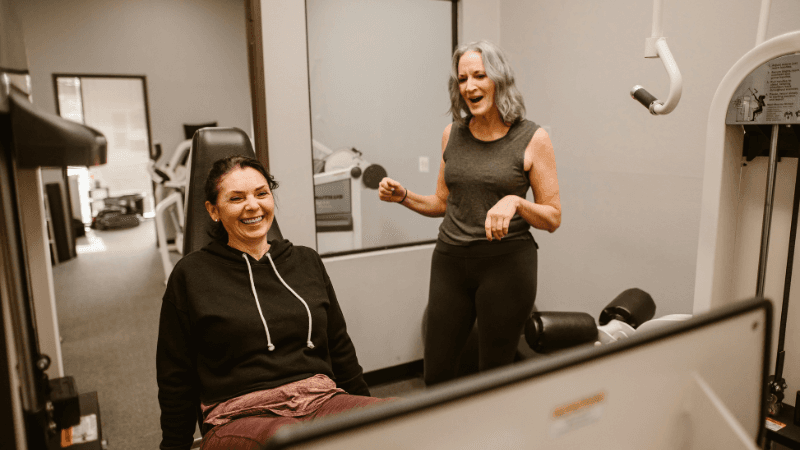
That gap between how we treat ourselves and how we treat others in their difficult moments is where self-compassion lives. Not as a concept, but as a practice – something you return to, imperfectly, in the moments when you need it most.
This isn't about pretending things are fine when they aren't. Self-compassion doesn't ask you to lower your standards or stop caring about growth. It asks you to stop making suffering a prerequisite for deserving kindness.
Why Self-Criticism Feels More Natural Than Self-Compassion
If treating yourself with kindness when you're struggling sounds simple, it's worth asking why most people find it genuinely difficult. The honest answer is that self-criticism has often been reinforced as a motivational tool. Many of us grew up in environments where high standards were enforced through critique rather than encouragement – where getting something wrong was met with correction or disappointment rather than curiosity and support.
Over time, that voice gets internalized. The external critic becomes the internal one, and it runs automatically, especially under stress. When you feel like you're failing, the inner critic tends to amplify: it catastrophizes, globalizes ("I always do this"), and speaks with a certainty that feels more like fact than opinion. The trouble is that research consistently shows chronic self-criticism doesn't actually improve performance or motivation – it increases anxiety, undermines resilience, and makes it harder to learn from mistakes, not easier.
Self-compassion, by contrast, has been linked in study after study to greater emotional resilience, more authentic motivation, and a stronger ability to recover from setbacks. It isn't softness. It's a more effective relationship with yourself.
What Self-Compassion Actually Means
The psychologist Dr. Kristin Neff, whose research laid much of the academic groundwork for modern self-compassion practice, describes it through three interconnected elements: self-kindness, common humanity, and mindfulness.
Self-kindness means responding to your own pain and perceived failure with warmth rather than harsh judgment – not excusing the behavior or the outcome, but recognizing that you are a person who is struggling and that struggling people deserve care.
Common humanity is the recognition that imperfection, difficulty, and failure are not signs that something is uniquely wrong with you. They are part of the shared experience of being human. When you feel like you're failing, there is a strong pull toward isolation – the sense that everyone else has it together and you alone are falling short. Common humanity interrupts that story. Every person you admire has known the feeling of not being enough in some moment.
Mindfulness in this context means meeting your painful feelings with openness rather than suppression or over-identification. It's the difference between noticing "I feel overwhelmed and ashamed right now" and either pushing those feelings away or spiraling into them. You acknowledge what is present without being consumed by it.
These three elements work together. Kindness without mindfulness can tip into denial. Mindfulness without kindness can become cold observation of your own suffering. Common humanity without either can feel abstract. Together, they create a grounded, honest, and genuinely compassionate response to your own difficulty.
Practices to Return To When You're Struggling
Speak to Yourself the Way You Would Speak to a Friend
This is one of the simplest and most consistently effective self-compassion exercises, and its power comes from how clearly it reveals the double standard most people apply to themselves. When a friend tells you they feel like they're failing – as a parent, in their work, in their relationships – you almost certainly don't respond by agreeing with their harshest self-assessment and listing their additional flaws. You acknowledge how hard it is. You remind them of what you see in them. You help them find perspective.
The next time you catch yourself in a spiral of self-criticism, pause and ask: what would I say to someone I love who was feeling exactly this way? Then say that to yourself. Write it down if it helps – many people find that putting it on paper makes the compassionate voice feel more real and less like something they're just telling themselves.
Name What You Are Feeling Without Expanding It
When you feel like you're failing, the feeling tends to grow if it isn't acknowledged. The inner critic uses that emotional energy to build a case, gathering evidence from the past and projecting it into the future. One of the most effective ways to interrupt that process is simple, direct acknowledgment of what is actually present.
Try saying, quietly or to yourself: This is a moment of pain. I am struggling right now. That's it – not an analysis, not a story about what it means, just recognition. This small act of naming creates a little distance between you and the feeling, which is enough to stop the spiral from accelerating. It also activates the part of the brain associated with self-regulation rather than threat response, which physiologically shifts how your nervous system processes the moment.
Place a Hand on Your Heart
It sounds almost too simple to mention, but physical touch – even self-directed – activates the body's care system in a measurable way. Placing one or both hands on your chest when you're in distress is a practice drawn directly from Neff's Compassion Break exercises, and it works because the body responds to warmth and pressure the way it responds to being held. The nervous system doesn't always distinguish between external comfort and self-directed comfort with the same precision the thinking mind does.
In a moment when you feel like you've failed, try this: place a hand on your heart, take a slow breath, and say something simple and true – this is hard or I'm doing my best or I'm allowed to struggle and still be okay. You may feel self-conscious the first few times. Do it anyway.
Write a Self-Compassionate Letter
This practice works particularly well for failures or shortcomings that have been sitting heavily for a while – the kind that resurface when you're trying to sleep, or that you find yourself mentally returning to. Write a letter to yourself from the perspective of a compassionate, wise friend who knows you fully and loves you anyway. This friend understands why you did what you did or didn't do. They can see the context you're in. They want you to be well, not just to perform better.
The letter doesn't need to be long or beautifully written. It needs to be honest and kind. Many people are surprised by what comes through when they give themselves permission to write from that voice – and more surprised to realize that voice was available all along.
Notice the Difference Between Accountability and Punishment
Self-compassion is sometimes misunderstood as an excuse to avoid responsibility. In practice, it tends to work in the opposite direction. When you aren't defending yourself against your own attacks, you have more capacity to look clearly at what happened, understand your part in it, and make a different choice going forward.
The distinction worth holding is this: accountability says, I can see what went wrong and I want to do better. Punishment says, I am bad and I deserve to feel terrible until I prove otherwise. One of these produces learning. The other produces shame, and shame tends to contract rather than expand your capacity to change. When you notice yourself in punishment mode – ruminating, berating, withdrawing – it's a signal to apply compassion, not a sign that you haven't suffered enough yet.
Common Pitfalls to Move Gently Past
The most common obstacle to self-compassion is the belief that you don't deserve it yet – that you'll be kind to yourself once you've fixed the thing you feel bad about. This is the logic of conditional self-worth, and it's worth noticing when it appears. The practices above are most needed precisely in the moments when you feel least entitled to them.
Another pitfall is treating self-compassion as a one-time intervention rather than an ongoing practice. You won't feel dramatically different after the first time you write a self-compassionate letter or speak kindly to yourself in a hard moment. The shift is cumulative. It happens over hundreds of small moments of choosing a different response to your own difficulty, and it builds into a different baseline relationship with yourself over time.
Finally, watch for the inner critic's rebranding itself as "just being realistic." Harsh self-judgment often presents itself as clear-eyed honesty – as the voice that tells you the truth that kindness would hide. In most cases, this isn't accurate. Compassionate honesty is still honest. It simply refuses to add unnecessary cruelty to the facts.
A Reflection to Sit With
Think about the last time you genuinely failed at something – not just struggled or fell short of your own standard, but actually made a mistake that had real consequences. Now think about how you spoke to yourself in the days after. Was that voice fair? Was it kind? Was it the voice you would have used with someone you loved in the same situation?
If there's a gap between those two things, you've already identified the practice. Closing that gap, slowly, imperfectly, over time – that's what self-compassion looks like in a real life.
FAQ
Isn't self-compassion just making excuses for yourself? This is the most common concern, and the research consistently shows the opposite. Self-compassion is associated with greater accountability, not less – because people who treat themselves with kindness don't need to defend their ego from the truth of what happened. They can look at it more clearly. Excuse-making tends to be a response to shame, which self-compassion actually reduces.
What if I genuinely did something wrong? Doesn't self-compassion let me off the hook? Self-compassion doesn't mean pretending a mistake didn't happen or that it didn't matter. It means you can acknowledge what went wrong, feel genuinely sorry if that's appropriate, make amends where possible, and then allow yourself to move forward – without adding prolonged self-punishment to the consequences. Suffering longer doesn't undo the error. It just costs you more.
How do I start if self-compassion feels completely foreign to me? Start with the simplest practice: the next time you catch yourself in harsh self-talk, ask what you would say to a friend in the same situation. That single step begins to build the neural pathway. You don't need to feel it immediately – you just need to practice the question consistently, and the feeling follows over time.
Can self-compassion coexist with high standards and ambition? Absolutely – and it tends to make both more sustainable. Research by Neff and others has found that self-compassionate people are not less motivated or less achievement-oriented. They tend to be more resilient after setbacks, more willing to try difficult things, and more able to learn from failure rather than being derailed by it.
What's the difference between self-compassion and self-pity? Self-pity tends to be self-isolating and self-focused – it involves feeling uniquely victimized and can become a loop that circles around itself. Self-compassion, by contrast, connects you to the shared experience of being human and tends to be forward-looking rather than stuck. It acknowledges pain without dramatizing or amplifying it.
📚 Sources
Kristin Neff, PhD – Self-Compassion: The Proven Power of Being Kind to Yourself (overview): https://self-compassion.org/the-three-elements-of-self-compassion-2/
Greater Good Science Center, UC Berkeley – What Is Self-Compassion?: https://greatergood.berkeley.edu/topic/self-compassion/definition
Neff, K.D. & Germer, C. – A Pilot Study and Randomized Controlled Trial of the Mindful Self-Compassion Program: https://self-compassion.org/wp-content/uploads/publications/MindfulSelfCompassionprogram.pdf
American Psychological Association – The Compassionate Mind: https://www.apa.org/monitor/2012/06/self-compassion
Neff, K.D. – Self-Compassion, Self-Esteem, and Well-Being (Social and Personality Psychology Compass): https://self-compassion.org/wp-content/uploads/publications/self-compassion.selfesteem.wellbeing.pdf
Greater Good Science Center – How Self-Compassion Beats Rumination: https://greatergood.berkeley.edu/article/item/how_self_compassion_beats_rumination
Harvard Health Publishing – The power of self-compassion: https://www.health.harvard.edu/mind-and-mood/the-power-of-self-compassion
Psychology Today – Why Self-Compassion Is More Important Than Self-Esteem: https://www.psychologytoday.com/us/blog/compassion-matters/201205/is-self-compassion-better-self-esteem
Mindful.org – How to Practice Self-Compassion: https://www.mindful.org/how-to-practice-self-compassion/
Neff, K.D. – Self-Compassion Exercises: https://self-compassion.org/self-compassion-exercises-benefits-self-compassion/