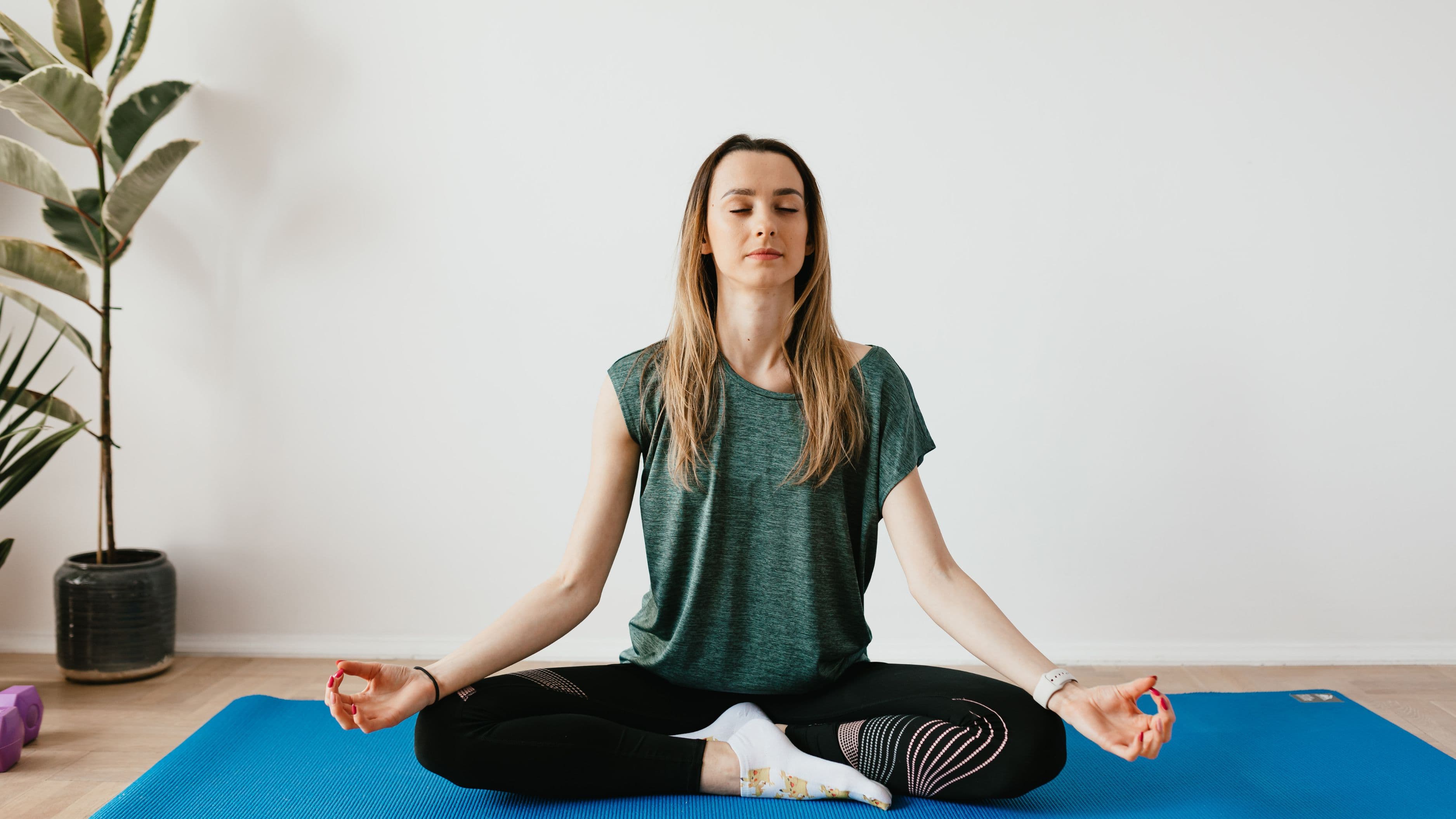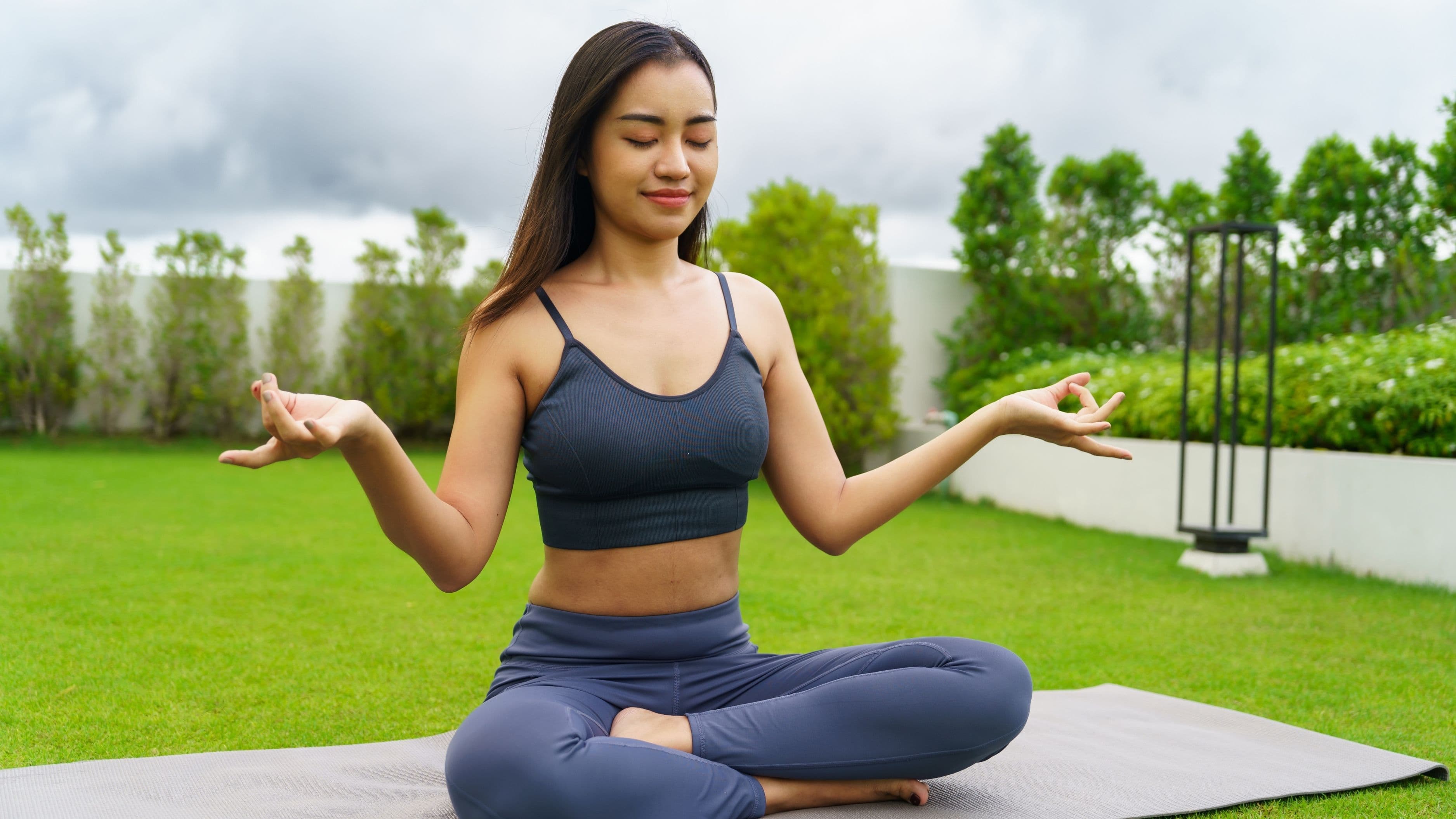
That's exactly where restorative yoga steps in. Not with a challenge, not with a "push through the burn" mentality, but with something far more radical in today's world: an invitation to stop. To breathe. To let the earth hold you for a little while.
If you've ever wondered whether restorative yoga is "real yoga," whether it's too gentle to count, or whether it's actually meant for you — you're in the right place. Let's pull back the curtain on this deeply healing practice and explore who it's truly for (hint: probably you).
What Restorative Yoga Actually Is
Restorative yoga is a style of yoga focused entirely on passive rest and nervous system recovery. Unlike Vinyasa, Ashtanga, or even Hatha yoga — where you're actively engaging muscles, building heat, or flowing through sequences — restorative yoga invites your body to be completely supported and still. Poses are held for anywhere from 5 to 20 minutes, propped up with blankets, bolsters, blocks, and straps so your muscles can fully release without any effort.
The practice draws heavily from the teachings of B.K.S. Iyengar, the legendary Indian yoga master who championed the therapeutic use of props to make poses accessible to every body. His student Judith Hanson Lasater later brought restorative yoga to the West, refining it into the deeply nourishing practice it's known as today. It isn't about flexibility, strength, or even "mindfulness" in the buzzy sense — it's about activating your parasympathetic nervous system, the branch responsible for rest, digestion, and healing.
Put simply: restorative yoga is the practice of doing less so your body can do more.
1. It's the Antidote to Chronic Stress
We're living through what some researchers are calling a "stress pandemic." According to the American Psychological Association's 2023 Stress in America report, nearly 76% of adults reported experiencing at least one symptom of stress in the previous month. That's not surprising — but what is surprising is how poorly most of us are actually recovering from it.
Exercise helps. Meditation helps. But sometimes the nervous system is so wound up that even a yoga class with movement can feel like yet another thing to do. Restorative yoga sidesteps that trap entirely. By holding supported poses like Supta Baddha Konasana (reclined bound angle) or Viparita Karani (legs up the wall), the body gets a clear physiological signal: you are safe, you can let go now. Cortisol levels drop. Heart rate slows. The jaw unclenches. Feel the tension leave your shoulders like a coat sliding off a hanger — that's the parasympathetic response at work, and it's quietly revolutionary for chronically stressed people.
If you've been running on empty and can't quite figure out why rest doesn't feel restful anymore, this is worth exploring.
2. It Heals What Movement Can't Reach
Physical yoga practices are wonderful, but they work primarily on the muscular and cardiovascular systems. Restorative yoga goes deeper — into the connective tissue, the fascia, and the autonomic nervous system. When you hold a gentle, supported forward fold for ten minutes, you're not stretching a muscle; you're allowing the fascia surrounding it to slowly hydrate and release. It's the difference between wringing out a wet towel in a hurry and letting it soak in warm water.
This has real implications for people dealing with chronic pain, fibromyalgia, autoimmune conditions, or post-surgical recovery. Dr. Timothy McCall, a physician and author of Yoga as Medicine, has written extensively about how restorative yoga can support recovery by reducing inflammation and improving sleep quality. While it's not a replacement for medical treatment, it can be a powerful and gentle complement. The healing here isn't loud or dramatic — it whispers through the tissues, slow and sure.
3. It's a Gateway for Beginners
If you've ever tried a yoga class and felt like everyone else had a secret decoder ring you weren't given, restorative yoga offers a genuinely welcoming entry point. There are no complicated sequences to memorize, no fear of falling out of a balance pose, and no competitive edge to the room. The "goal," if there is one, is simply to get comfortable and stay there.
This makes it ideal for anyone who is intimidated by yoga, dealing with body image concerns, or just not sure where to start with a wellness practice. You don't need to be flexible. You don't need special clothes or a particular body type. You need a mat, a couple of pillows, and the willingness to lie still long enough for something to shift. Many people who start with restorative yoga find it becomes the foundation from which they explore other styles — or they discover it's exactly the practice they needed all along.
4. It's Tailor-Made for Busy, Burned-Out Minds
Here's something counterintuitive: restorative yoga is actually harder for overachievers than an intense workout. Why? Because it asks you to do the one thing high achievers struggle with most — nothing. Letting thoughts drift without chasing them. Staying present in a body that you've been treating like a vehicle rather than a home. If your brain immediately starts composing grocery lists the moment you lie down, you're not doing it wrong. That restlessness is the work.
Over time, the practice teaches you to tolerate stillness, which builds a kind of emotional resilience that no amount of hustle can manufacture. A 2017 study published in the Journal of Alternative and Complementary Medicine found that restorative yoga significantly reduced psychological stress and anxiety in women over a 10-week period. That's not a small thing. Learning to be at ease in stillness is, in many ways, the most important skill a busy person can develop.
5. It Supports People in Emotional Transition
Grief, heartbreak, burnout, identity shifts, life transitions — these are moments when the body holds what the mind can't fully process. Restorative yoga doesn't ask you to talk about any of it. It simply gives you a container: a bolster under your chest, a blanket over your legs, dim lighting, and permission to feel whatever's there without having to fix it.
This somatic dimension of the practice — the idea that the body stores emotional experience and can release it through supported rest — is increasingly supported by research in trauma and neuroscience. Bessel van der Kolk, author of The Body Keeps the Score, has long argued that healing from trauma requires engaging the body, not just the mind. While restorative yoga isn't trauma therapy, its gentle, bottom-up approach to nervous system regulation can be profoundly supportive for people navigating emotionally heavy seasons. Sometimes the most healing thing isn't a breakthrough — it's just being held.
6. It Deepens Any Existing Wellness Practice
Whether you're a seasoned meditator, a long-distance runner, a breathwork enthusiast, or someone who journals every morning — restorative yoga can deepen what you're already doing. Think of it as the connective tissue of your wellness life. Runners and athletes benefit from the deep fascial release after intense training. Meditators find that restorative poses help them access stillness in the body before sitting practice. Even those who journal report that a restorative session before writing opens up a different quality of self-reflection — slower, more honest, more embodied.
It layers beautifully with other practices without competing with them. There's no "you can only do one thing" energy here. Instead, restorative yoga acts as an amplifier, helping the rest of your wellness work land more deeply, because you're practicing from a place of genuine rest rather than depletion.
7. It Works for Every Age and Ability
One of restorative yoga's most beautiful qualities is its radical inclusivity. Because the practice is entirely prop-supported and non-weight-bearing in most poses, it can be adapted for elderly individuals, pregnant women, people with disabilities, and those recovering from illness or surgery. A chair can substitute for a bolster. A wall becomes a prop. A folded blanket replaces a block.
This adaptability makes it one of the most genuinely accessible yoga styles in existence — not in the watered-down way that word is sometimes used, but in a real, functional sense. Older adults dealing with joint pain or limited mobility can find meaningful movement and nervous system regulation without risk. Pregnant women in the second and third trimester often find it one of the few forms of physical practice that feels genuinely good. The practice meets you where you are, every single time, which is more than most things in life can promise.
8. It Teaches You How to Rest — Really Rest
There's a difference between collapse and conscious rest. Collapsing on the couch after a long day — phone in hand, Netflix on, mind still spinning — is not restorative. It's just stopping. Restorative yoga teaches you the art of intentional rest: how to enter it, how to stay in it, and how to recognize what your body actually needs to recover. This is a learnable skill, not a personality trait.
And in a culture that monetizes exhaustion and sells productivity as identity, choosing to learn this skill is quietly radical. You're opting out of the idea that your worth is tied to your output. You're reclaiming time for your nervous system. You're practicing what it means to live from a place of fullness rather than depletion. That sounds like philosophy, but it has a very practical effect: people who rest well tend to show up better — in their relationships, their work, their creative lives. The mat just becomes the classroom.
Who Shouldn't Skip This Practice
Let's be direct: almost no one falls outside the reach of restorative yoga's benefits. But if any of these descriptions resonate with you, consider it less of an option and more of a prescription:
You feel exhausted but can't sleep well
You've been dealing with chronic pain or fatigue
You're navigating a major life change or emotional upheaval
You've tried meditation and "can't slow your mind down"
You're a high-performer running on adrenaline
You're new to yoga and want to start gently
You're an athlete or active person who never prioritizes recovery
You feel disconnected from your body
If even two of those land for you, restorative yoga might be one of the most useful things you try this year.
How to Start (Without a Studio)
You don't need a fancy yoga studio or a full props kit to begin. Here's a simple starter setup you can try at home tonight:
Legs Up the Wall (Viparita Karani): Scoot your hips close to a wall and extend your legs straight up. Place a folded blanket under your lower back if needed. Set a timer for 10 minutes. Close your eyes. Breathe slowly. That's it. That's the practice.
The sensation of warmth spreading through your legs, the gradual softening of your belly, the way your thoughts start to drift rather than demand — that's the practice doing exactly what it's supposed to do. You don't need to understand it to benefit from it. You just need to show up and stay.
The Bigger Picture
In a world that glorifies doing, restorative yoga is an act of quiet rebellion. It says: your worth is not your output. Your body deserves care, not just performance. Your nervous system is not a machine. And stillness is not laziness — it is, in fact, one of the most sophisticated things a human being can practice.
Whether you're burned out, in pain, emotionally raw, curious, or simply tired of yoga classes that feel like auditions — restorative yoga has something real to offer. Not a transformation in six weeks. Not a before-and-after photo. Just the slow, honest experience of coming home to yourself, one supported breath at a time.
What might shift for you if rest became as non-negotiable as the rest of your wellness routine?
📚 Sources
American Psychological Association. (2023). Stress in America 2023. https://www.apa.org/news/press/releases/stress
Bower, J. E., Woolery, A., Sternlieb, B., & Garet, D. (2017). Yoga for cancer patients and survivors. Cancer Control.
Lasater, J. H. (2011). Relax and Renew: Restful Yoga for Stressful Times. Rodmell Press.
McCall, T. (2007). Yoga as Medicine: The Yogic Prescription for Health and Healing. Bantam Books.
van der Kolk, B. (2014). The Body Keeps the Score: Brain, Mind, and Body in the Healing of Trauma. Viking.
Parkinson, L., Waters, L., & Horstmanshof, L. (2017). Restorative yoga for psychological stress and anxiety in women. Journal of Alternative and Complementary Medicine, 23(7).