Price anchoring is the cognitive phenomenon where the first number you see becomes the mental reference point — the "anchor" — against which every subsequent price is judged. It doesn't matter whether that original number is realistic, inflated, or completely made up. Once it's in your head, it shapes how you perceive value, fairness, and even your own satisfaction with a purchase. In a world where every brand, app, and storefront is vying for a piece of your budget, understanding this mechanism isn't just interesting — it's genuinely protective.
1. The Brain's Lazy Shortcut
To understand why anchoring works so reliably, you have to understand a little about how the brain handles numbers. Our minds are remarkable pattern-recognition machines, but they're also deeply lazy when it comes to calculation. Rather than independently evaluate whether something is worth its price, the brain looks for a reference point and works from there — a cognitive shortcut psychologists call a heuristic.
The anchor provides exactly that shortcut. When you see "$400 crossed out, now $180," your brain doesn't actually ask: Is this jacket worth $180? It asks: Is this jacket worth $180 compared to $400? That's a completely different question, and it's one the original price has already rigged in favor of the sale. Behavioral economists Daniel Kahneman and Amos Tversky first documented this effect in the 1970s, and decades of research have confirmed it holds across cultures, income levels, and product categories. You're not naive for falling for it — you're human.
2. Where You See It Every Single Day
Price anchoring isn't confined to department store sales racks. Once you know what to look for, you'll spot it absolutely everywhere — and realizing just how pervasive it is can feel a little like taking a pair of glasses off and finally reading the fine print.
Retail "original prices" are the most obvious form. A tag that reads Was $299 — Now $149 plants the $299 anchor firmly before you evaluate the $149. Restaurant menus use it too: premium items are often placed at the top or far right of a menu not because they're the most popular, but because their high prices make everything below them feel reasonable by comparison. Software pricing tiers almost always feature an expensive "Enterprise" option alongside a mid-range plan — the enterprise tier exists largely to make the middle option look like a smart, value-conscious choice. Real estate listings routinely open negotiations at above-market prices so that the eventual "reduction" feels like a concession.
Even your salary negotiation is vulnerable. Studies show that whoever names a number first in a negotiation sets an anchor that influences the final outcome — which is why knowing this dynamic is genuinely useful career knowledge, not just shopping trivia.
3. The "Decoy Effect" Is Anchoring's Cousin
Closely related to price anchoring is something called the decoy effect, and the two often work in tandem to steer your decisions without you realizing it. The decoy effect involves introducing a third, strategically inferior option that makes one of the other two look significantly more attractive.
Think about popcorn pricing at a movie theater: a small for $5, a medium for $8, and a large for $8.50. The medium exists as a decoy — its price anchors you to the large, which suddenly seems like an almost irrational bargain. You weren't planning to spend $8.50 on popcorn, but now it feels like the obviously smart move. In subscription services, the same logic plays out: a basic plan at $9/month, a standard plan at $15/month, and a premium plan at $16/month. The premium plan anchors perception of the standard plan as the sweet spot, driving the majority of sign-ups exactly where the company wants them.
The decoy isn't a real option — it's a prop. And once you start noticing it, you'll find it tucked into almost every tiered pricing structure you encounter.
4. Sale Culture and the "Perpetual Markdown"
Here's an uncomfortable truth about modern retail: many items are never actually sold at their "original" price. The original price is simply the anchor — it exists to make the sale price feel like a steal. Some retailers list products at inflated "list prices" for days or even hours before immediately marking them down, satisfying the technical requirements of sale advertising while manufacturing an illusion of discount.
The Federal Trade Commission has guidelines around deceptive pricing practices, but enforcement is inconsistent, and the strategy remains widespread. A 2015 investigation by The Wall Street Journal found that a significant number of "original prices" at major retailers were prices at which the item had rarely, if ever, been sold. The anchor wasn't a history of real value — it was a piece of theater. Knowing this reframes the thrill of a deal: the question worth asking is never "How much am I saving?" but rather "Is this price good for this item, right now, in today's market?" — a question that requires ignoring the anchor entirely.
5. Luxury Pricing as Social Anchoring
Price anchoring doesn't just operate within a single transaction — it can shape entire categories of perception over time. Luxury brands understand this intuitively. When a brand introduces a $5,000 handbag or a $50,000 watch, they aren't primarily trying to sell that item at volume. They're setting an anchor for the entire brand. Everything below that price point — the $800 wallet, the $1,200 belt — feels accessible by comparison, even though those prices are objectively very high.
This is sometimes called aspirational anchoring, and it's one of the reasons luxury brands resist discounting with such fierce consistency. The moment a $5,000 bag goes on sale for $1,500, the anchor is damaged. Suddenly $5,000 feels like an inflated starting point rather than a statement of value, and the entire psychological architecture of the brand begins to wobble. The price isn't just communicating cost — it's communicating identity, exclusivity, and social meaning. And anchoring is doing most of that heavy lifting.
6. How Online Shopping Amplifies the Effect
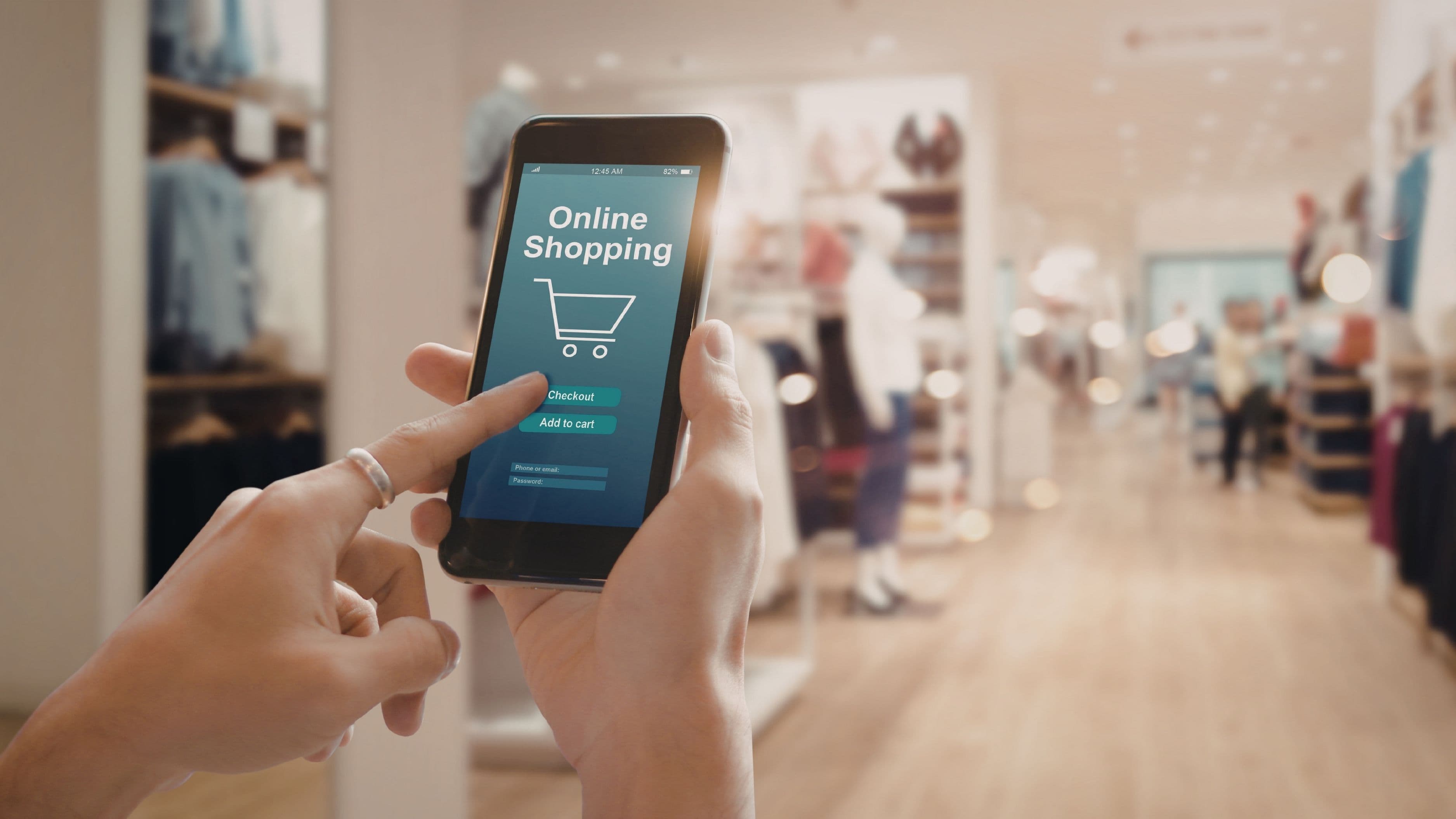
If brick-and-mortar retail uses price anchoring skillfully, e-commerce has turned it into an art form. Amazon's product pages typically display a "List Price" alongside the current price, even when the "List Price" bears little relationship to what the item actually sells for anywhere. Third-party sellers on marketplace platforms often inflate their own "original" prices to manufacture dramatic percentage-off badges. Flash sale sites like Wayfair and Overstock built entire business models around the perception of constant, significant markdowns.
The digital environment also introduces temporal anchoring — prices that you saw yesterday that influence how you feel about prices today. If you checked a flight last Tuesday and it was $380, and today it's $420, you'll experience that $420 as expensive — even if it's actually a perfectly normal price for that route. The $380 is your anchor, even though you didn't buy at $380 and the airline has no obligation to honor it. Browser price-tracking extensions like Honey or CamelCamelCamel exist precisely to counteract this by showing you historical pricing data, giving you a more honest anchor to work from.
7. Anchoring in Negotiations (And How to Flip It)
Understanding price anchoring doesn't just make you a better shopper — it makes you a more effective negotiator in any context where price is being discussed. The research is consistent: the party that sets the anchor first has a measurable advantage in the outcome. This applies to buying a car, negotiating a freelance contract, haggling at a market, or discussing a raise.
When you're the buyer, one of the most empowering things you can do is introduce a counter-anchor early and confidently. If a car dealership opens at $35,000, responding with "$27,000" doesn't just express your preference — it restructures the entire psychological field of the negotiation. The final number will likely land somewhere between the two anchors, which means the lower your opening counter-anchor, the better your likely outcome. This isn't aggression — it's strategy. And knowing that the other party is using anchoring consciously makes it far easier to respond to it consciously.
8. The Emotional Layer Nobody Talks About
There's a dimension of price anchoring that gets less attention than the cognitive mechanics: the emotional one. When we feel like we've beaten an anchor — gotten something for less than the "original" price — there's a genuine neurological reward. Dopamine is released. We feel clever, resourceful, victorious. Retail and marketing industries have studied and exploited this response for decades, which is why "limited time offers" and countdown clocks are so common. They're not just creating urgency — they're creating the conditions for an emotional win that makes the purchase feel good regardless of whether the item was actually needed.
This emotional layer is worth sitting with, because it's where the real unconscious spending happens. The question "Do I want this thing?" gets quietly replaced by "Do I want to win this deal?" — and those are very different motivations with very different long-term consequences for your wallet and your sense of intentionality around money. Mindful spending starts with noticing that shift as it happens.
9. Protecting Yourself Without Becoming Paranoid
Knowing that price anchoring exists doesn't mean you have to approach every purchase with suspicion or spend three hours researching a $30 candle. The goal isn't paranoia — it's awareness. A few practical habits can go a long way toward grounding your decisions in genuine value rather than manufactured comparison.
Before evaluating a sale price, ask yourself: What would I think this was worth if I saw no original price? Mentally strip the anchor and assess the item on its own terms. Do a quick price comparison before purchasing anything significant — even a 30-second search can reveal whether the "original price" has any basis in market reality. And when you feel that particular thrill of getting a deal, pause for just a moment and ask honestly: Would I be buying this at this price if I hadn't seen the higher one? That question alone can save you more money per year than any budgeting app.
10. The Deeper Invitation
Here's what price anchoring ultimately reveals: our sense of value is rarely absolute. It's almost always relational, contextual, and deeply influenced by the information — and misinformation — we're handed first. That's a humbling truth, but it's also a liberating one, because the moment you see the mechanism, you reclaim a little more agency over it.
Living intentionally means applying the same curious, non-reactive awareness to your financial decisions that you might bring to your breath in meditation or your thoughts in a journaling practice. Not with rigidity, but with presence. The goal isn't to never be influenced — that's impossible. The goal is to notice when you're being led, and to make sure the decision you ultimately make is genuinely yours.
The Bigger Picture
Price anchoring is a mirror. It reflects back something true and slightly uncomfortable about human cognition: we don't evaluate things in isolation — we evaluate them in relation to something else. Marketers know this. Negotiators know this. Now you know it too. And that knowledge doesn't have to make shopping joyless. It can make it more honest — a space where you choose deliberately, spend aligned with your actual values, and feel genuinely good about what you bring home, not just because it was marked down, but because it was right.
What if the next time you see a "sale," you paused long enough to ask whose reference point you're actually using?
📚 Sources
Kahneman, D., & Tversky, A. (1974). "Judgment under Uncertainty: Heuristics and Biases." Science, 185(4157), 1124–1131.
Kahneman, D. (2011). Thinking, Fast and Slow. Farrar, Straus and Giroux.
Ariely, D. (2008). Predictably Irrational: The Hidden Forces That Shape Our Decisions. HarperCollins.
Stiving, M., & Winer, R. S. (1997). "An Empirical Analysis of Price Endings with Scanner Data." Journal of Consumer Research, 24(1), 57–67.
Federal Trade Commission. (2014). "Guides Against Deceptive Pricing." ftc.gov
Kestenbaum, R. (2015). "The Truth About Fake Discounts." The Wall Street Journal.