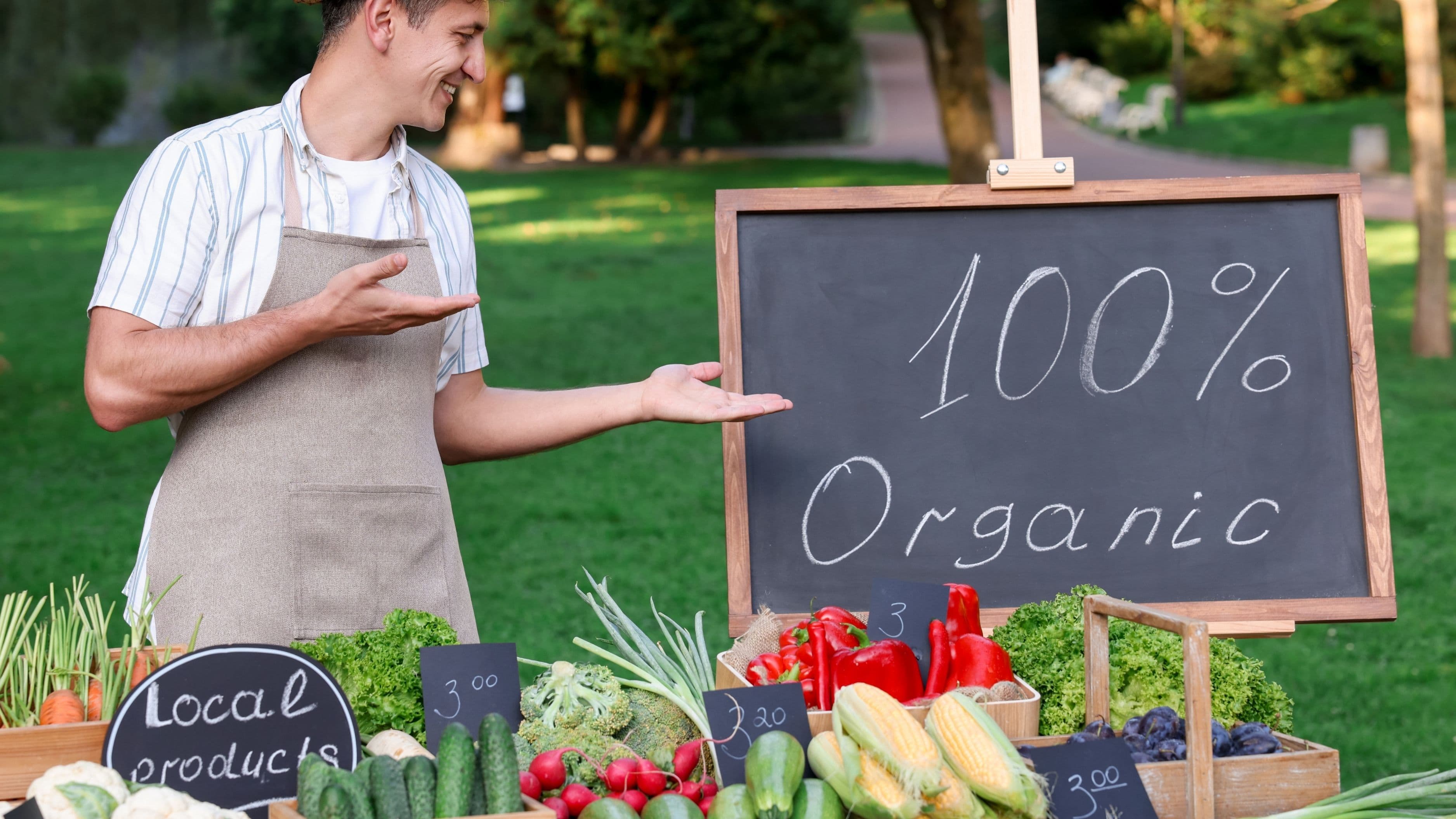
Here's the gentle truth this article works toward: buying organic is neither essential for a healthy family nor a waste of money. It's a choice with real trade-offs, and the most peaceful way through it is understanding what organic actually delivers, where it matters most, and where your money is better spent elsewhere.
What "Organic" Actually Means
Before weighing the cost, it helps to know what you're paying for. In the United States, the USDA Organic label means food was grown without synthetic pesticides and fertilizers, without genetically modified ingredients, and – for animal products – without routine antibiotics or added hormones, with requirements around animal living conditions.
What the label does not mean is just as important. Organic doesn't mean pesticide-free; organic farming uses approved natural pesticides. It doesn't automatically mean more nutritious, more local, or more ethical. And it certainly doesn't mean that conventional food is unsafe – conventional produce in the US is monitored, and residue levels overwhelmingly fall within established safety limits.
Holding both of these truths at once takes some of the charge out of the decision. You're not choosing between "safe" and "dangerous." You're choosing between two reasonable options with different trade-offs.
What the Evidence Says About Health
This is where many families expect a dramatic answer, and the honest one is quieter. Large reviews of the research – including a widely cited Stanford analysis of more than 200 studies – have found that organic foods are not meaningfully more nutritious than conventional ones. The vitamins in an organic carrot and a conventional carrot are essentially the same.
Where organic does show a clear, measurable difference is pesticide exposure. People who eat organic have lower levels of pesticide residues in their bodies. What science hasn't settled is whether the small residues on conventional produce cause harm at the levels typically consumed. Regulators say those levels are safe; some researchers argue we should be more cautious, particularly for young children, whose developing bodies process exposures differently.
So the health case for organic isn't "organic food will make your family healthier." It's closer to "organic reduces one specific exposure, and reasonable people weigh that reduction differently." That's a softer claim – and a more truthful one to build decisions on.
The One Thing That Matters More Than Organic
Here is the finding worth holding onto above everything else: eating plenty of fruits and vegetables – organic or not – is one of the most consistently supported health habits in all of nutrition research. The benefits of eating conventional produce far outweigh the theoretical risks of its pesticide residues.
This matters because of a pattern researchers have noticed: when people worry about pesticides but can't afford organic, some respond by buying fewer fruits and vegetables altogether. That trade is backwards. A family eating seven conventional vegetables a week is in a far better place than a family eating three organic ones.
If the organic question has been adding stress to your shopping trips, let this be the pressure release: the produce itself is the win. The label is a refinement.
A Middle Path: Spend Where It Counts
If you'd like the benefits of organic without the full grocery-bill impact, there's a well-worn middle path: prioritize organic for the foods where it makes the biggest difference, and buy conventional everywhere else.
The Environmental Working Group publishes an annual guide that makes this practical. Their "Dirty Dozen" lists the conventional produce items that tend to carry the highest pesticide residues – typically thin-skinned items you eat whole, like strawberries, spinach, kale, grapes, peaches, and apples. Their "Clean Fifteen" lists items with consistently low residues – usually thick-skinned or protected produce like avocados, sweet corn, pineapple, onions, and melons.
A calm strategy looks like this: go organic for the handful of Dirty Dozen items your family actually eats often, and buy conventional for everything on the Clean Fifteen without a second thought. For a typical family, this captures most of the residue reduction at a fraction of the all-organic cost. Peeling and washing produce thoroughly helps further, whichever version you buy.
One gentle note for balance: the EWG's methodology has its critics, who point out that even the "dirtiest" conventional items test well within safety limits. Treat the list as a prioritization tool, not a danger ranking.
Where Organic Is Usually Not Worth It
A few categories where the organic premium buys you very little:
Anything with a thick peel you discard – bananas, avocados, citrus, melons – since the residues stay largely on the skin you don't eat.
Processed organic foods deserve special mention: organic cookies, crackers, and snacks are still cookies, crackers, and snacks. The organic label says nothing about sugar, salt, or how processed something is, and paying 40% more for organic fruit gummies is the kind of purchase the label was never meant to justify.
Organic seafood is another quiet trap – the USDA doesn't actually certify seafood as organic, so labels there mean far less than they appear to.
The Budget Conversation
Organic food typically costs somewhere between 20% and 50% more than conventional, depending on the item and where you shop. For a family of four, going fully organic can add well over a hundred dollars a month – money that, for many households, would do more for family wellness spent on more produce overall, better sleep, or simply less financial stress.
Financial stress is itself a health factor, and a real one. A grocery budget that leaves you anxious every week is not a wellness win, whatever the labels in the cart say. If full organic fits comfortably in your budget and aligns with your values – perhaps for environmental reasons, which are a legitimate part of this choice – that's a lovely place to be. If it doesn't, the selective approach above, or simply buying conventional and washing well, is a genuinely sound choice you don't need to apologize for.
A few ways to soften the premium if you do want more organic in your cart: store-brand organic lines are often dramatically cheaper than name brands, frozen organic produce routinely costs less than fresh with the same nutrition, and seasonal buying narrows the price gap considerably. Local farmers' markets sometimes offer low-spray produce from small farms that can't afford organic certification but follow similar practices – asking the grower directly costs nothing.
Common Pitfalls to Step Around
The most common misstep is all-or-nothing thinking: deciding that if you can't buy everything organic, there's no point buying any. The selective approach exists precisely because the benefits aren't evenly distributed across foods.
Another is letting the label replace attention. An organic snack aisle can fill a cart with expensive, ultra-processed food while feeling virtuous. The shape of your family's diet – mostly whole foods, plenty of plants, reasonable sugar – matters enormously more than the certification on any single item.
And perhaps the gentlest pitfall to name: judgment, in either direction. Families buying conventional aren't being careless, and families buying organic aren't being precious. Both are doing the same thing – trying to feed people well within real constraints.
FAQ
Is organic food more nutritious? Not meaningfully. Large research reviews find little to no nutritional difference. The main measurable difference is lower pesticide residue exposure.
Is conventional produce safe for kids? Residue levels on conventional produce fall within regulatory safety limits, and pediatric nutrition guidance emphasizes that eating plenty of produce matters far more than whether it's organic. Families who want extra caution for young children often apply the Dirty Dozen approach to the items kids eat most.
Does washing produce remove pesticides? Washing under running water reduces surface residues meaningfully, though it doesn't remove everything. It's a worthwhile habit for all produce, organic included.
Is organic better for the environment? It's mixed. Organic farming avoids synthetic pesticides and can support soil health and biodiversity, but it typically requires more land per unit of food. If environmental impact drives your choice, it's a reasonable motivation – just know the picture is nuanced rather than absolute.
What about organic milk and meat? These carry some of the larger price premiums. The "no routine antibiotics, no added hormones" standards matter to many families, though conventional milk in the US is also tested and cannot be sold with antibiotic residues. This is a values call more than a clear-cut health one.
A Gentle Takeaway
Buying organic is worth it when it aligns with your values and fits your budget without strain – and it's most worth it for the handful of high-residue foods your family eats constantly. It is not a requirement for raising healthy children, and the produce drawer that gets filled and eaten, whatever its labels, is the one doing the real work.
Choose your few organic priorities if you'd like them, buy the rest with a clear conscience, and let the grocery store be one less place where guilt rides along in the cart.
📚 Sources
USDA – Organic Agriculture Overview: https://www.usda.gov/topics/organic
Mayo Clinic – Organic Foods: Are They Safer? More Nutritious?: https://www.mayoclinic.org/healthy-lifestyle/nutrition-and-healthy-eating/in-depth/organic-food/art-20043880
Harvard T.H. Chan School of Public Health – The Nutrition Source: Organic Foods: https://www.hsph.harvard.edu/nutritionsource/organic-foods/
Environmental Working Group – Shopper's Guide to Pesticides in Produce: https://www.ewg.org/foodnews/
Stanford Medicine – Little Evidence of Health Benefits from Organic Foods: https://med.stanford.edu/news/all-news/2012/09/little-evidence-of-health-benefits-from-organic-foods-study-finds.html
FDA – Pesticide Residue Monitoring Program: https://www.fda.gov/food/chemical-contaminants-pesticides/pesticide-residue-monitoring-program