Picture a long table set outdoors somewhere along the Aegean coast. There's olive oil pooling in a shallow dish, a glass of deep red wine catching the evening light, bowls of hummus and warm bread, fish grilled simply with lemon and herbs, laughter passing between people who aren't in any hurry to leave. This isn't a fantasy — it's a daily ritual for millions of people across Southern Europe and the Middle East. And it turns out this way of eating may be one of the most powerful tools we have not just for physical health, but for the health of the mind.
Mental health challenges are at an all-time high. According to the World Health Organization, depression is now the leading cause of disability worldwide, affecting more than 280 million people. Anxiety disorders follow closely behind. And yet, one of the most researched, most accessible interventions hiding in plain sight isn't a prescription pill or a cutting-edge therapy — it's a bowl of lentil soup and a handful of walnuts. The Mediterranean diet has been studied for decades, but its relationship to mental health is a conversation that's only just beginning to reach mainstream wellness culture. It's time we had it fully.
Myth #1: "It's Just a Diet"
Myth: The Mediterranean diet is a weight-loss plan with a fancy name.
Truth: It's a living philosophy — one that treats food as nourishment, pleasure, and connection all at once.
The Mediterranean diet doesn't come with a calorie counter or a list of forbidden foods. It emerged organically from the eating traditions of countries bordering the Mediterranean Sea — Greece, Italy, Spain, Morocco, Turkey, Lebanon — and was first formally studied in the 1950s by American physiologist Ancel Keys, who noticed that people in these regions had remarkably low rates of cardiovascular disease despite eating diets rich in fat. What he found challenged everything Western medicine thought it knew about nutrition at the time.
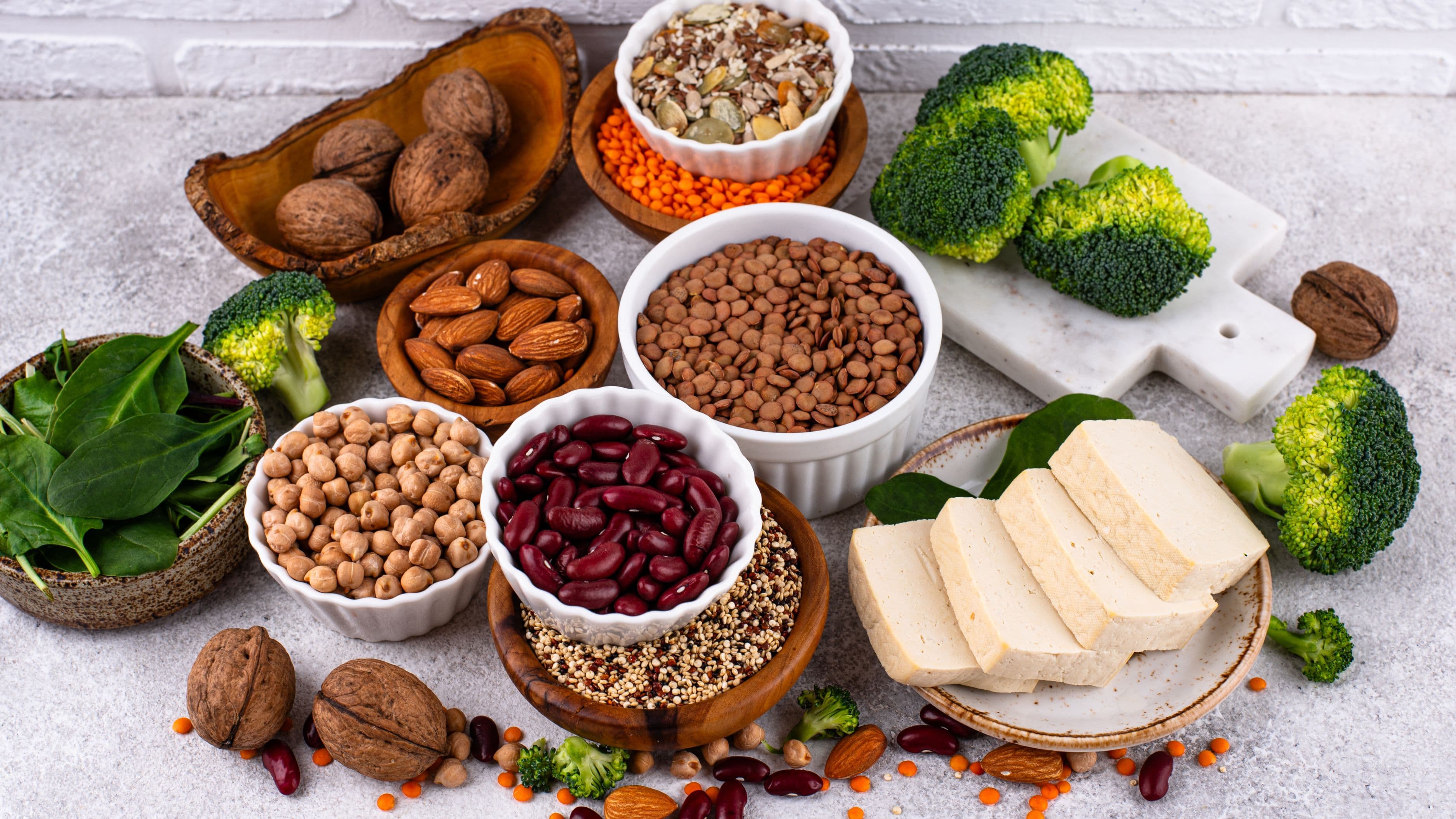
At its core, the Mediterranean diet is built on whole, minimally processed foods: abundant fruits and vegetables, legumes, whole grains, nuts, seeds, and olive oil as the primary fat source. Fish and seafood are eaten regularly, poultry and eggs in moderation, and red meat only occasionally. Dairy — mostly yogurt and cheese — is present but not dominant. Red wine is consumed in moderation, usually with meals. What's largely absent: refined sugars, ultra-processed foods, and the kind of industrial seed oils that dominate the modern Western diet. It's not a deprivation plan — it's a richness plan.
Myth #2: "Food Only Affects Your Body"
Myth: What you eat impacts your waistline, not your mood.
Truth: Your gut and your brain are in constant, intimate conversation.
The gut-brain axis is one of the most exciting frontiers in neuroscience. The enteric nervous system — sometimes called the "second brain" — lines the gastrointestinal tract and contains approximately 500 million neurons. It communicates bidirectionally with the central nervous system via the vagus nerve, meaning your gut is constantly sending signals to your brain and vice versa. What you feed that gut directly shapes the quality of those signals. Feel the difference between the mental fog after a fast-food binge and the quiet clarity after a meal of roasted vegetables and fish — that's the gut-brain axis in real time.
Around 90% of the body's serotonin — the neurotransmitter most associated with mood stability, calm, and emotional resilience — is produced in the gut, not the brain, according to research from Caltech. The diversity and health of your gut microbiome plays a significant role in how much serotonin gets produced and how effectively it's used. The Mediterranean diet is extraordinarily rich in prebiotic fiber (from vegetables, legumes, and whole grains) and fermented foods (like yogurt and aged cheeses) that feed and diversify the gut microbiome. In short: a healthier gut is a happier brain, and the Mediterranean diet is one of the most powerful ways to cultivate both.
Myth #3: "No Single Diet Can Affect Depression"
Myth: Depression is a brain chemistry problem — food can't touch it.
Truth: Large-scale research now links the Mediterranean diet directly to reduced depression risk.
The SMILES trial — a landmark 2017 randomized controlled study published in BMC Medicine — put this question to the test directly. Researchers assigned participants with moderate-to-severe depression to either a Mediterranean-style dietary intervention or a social support control group. After 12 weeks, 32% of those in the dietary group achieved remission from depression, compared to just 8% in the control group. These weren't people with mild blues — they had clinically diagnosed depression, and a change in eating patterns moved the needle more than social support alone.
A 2019 meta-analysis published in Molecular Psychiatry, which reviewed data from over 45,000 participants across multiple studies, found that greater adherence to a Mediterranean dietary pattern was associated with a 33% lower risk of developing depression. That's not a marginal finding — that's a statistic worth pausing on. Nutritional psychiatry, the emerging field that studies the relationship between diet and mental health, is increasingly pointing to the Mediterranean pattern as one of the most evidence-based dietary approaches for brain health. This doesn't mean food replaces therapy or medication — it means it belongs at the table alongside them.
Myth #4: "Healthy Fats Are Still Just… Fat"
Myth: Olive oil and nuts are indulgences you should minimize.
Truth: The fats central to the Mediterranean diet are precisely what the brain needs to thrive.
The human brain is approximately 60% fat by dry weight, and it requires a steady supply of healthy dietary fats to function — to build cell membranes, produce neurotransmitters, regulate inflammation, and maintain the myelin sheaths that allow nerve signals to travel quickly and cleanly. When we strip fat from our diet in the name of health, we're inadvertently starving the organ that runs everything. The Mediterranean diet gets this right intuitively — it never demonized fat, it just prioritized the right kinds.
Extra virgin olive oil, the liquid gold at the center of this dietary pattern, is rich in oleocanthal, a natural compound with anti-inflammatory properties comparable to ibuprofen at regular culinary doses, according to research from the Monell Chemical Senses Center. Chronic inflammation in the brain has been increasingly linked to depression, anxiety, and cognitive decline. Walnuts, another Mediterranean staple, are one of the richest plant-based sources of omega-3 fatty acids, which are directly involved in serotonin and dopamine signaling. Eating a small handful of walnuts isn't a guilty pleasure — it's an act of neurological self-care.
Myth #5: "Anxiety Is All in Your Head"
Myth: Anxiety is purely psychological, so diet couldn't possibly help.
Truth: Inflammation, blood sugar dysregulation, and gut imbalance all feed the anxiety cycle — and diet addresses all three.
Anxiety isn't just a thought pattern — it has a deeply physiological dimension. Chronic low-grade inflammation has been identified as a significant driver of anxiety symptoms, with inflammatory cytokines directly affecting the brain regions responsible for fear, threat response, and emotional regulation. Blood sugar instability — the sharp spikes and crashes that come from a diet heavy in refined carbohydrates and sugar — triggers the release of cortisol and adrenaline, the very stress hormones that mimic and amplify anxiety. And an imbalanced gut microbiome, now understood to influence the production of GABA (the brain's primary calming neurotransmitter), can leave the nervous system chronically on edge.
The Mediterranean diet tackles all three pathways simultaneously. Its anti-inflammatory profile — built on polyphenol-rich olive oil, colorful produce, and omega-3-loaded fish — quiets the inflammatory fire. Its emphasis on fiber-rich whole grains and legumes over refined carbohydrates keeps blood sugar smooth and steady, reducing those cortisol-spiking crashes. And its gut-nourishing fiber and fermented foods support the microbial balance that keeps GABA flowing. It's not magic — it's biology working the way it was always designed to.
Myth #6: "You Have to Eat Perfectly to See Benefits"
Myth: If you can't follow the Mediterranean diet perfectly, there's no point starting.
Truth: Even partial adoption creates meaningful change — progress, not perfection, is the entry point.
One of the most liberating findings in Mediterranean diet research is that the benefits appear to be dose-dependent — meaning the more closely you align with the pattern, the greater the benefit, but even modest shifts in the right direction produce measurable results. A 2020 study in Nutrients found that increasing Mediterranean diet adherence by even a moderate amount was associated with improvements in mood and reduced psychological distress. You don't have to overhaul your entire kitchen on a Tuesday to start experiencing a difference.
Start by swapping your cooking oil to extra virgin olive oil. Add a serving of fatty fish — salmon, sardines, mackerel — twice a week. Let legumes (lentils, chickpeas, black beans) replace meat at a few meals. Reach for a small handful of walnuts instead of a processed snack. These aren't dramatic sacrifices — they're small, sensory pleasures that also happen to be neurologically restorative. Let the Mediterranean diet be an invitation, not a sentence. The table is warm, the olive oil is waiting, and there's always room for one more.
Myth #7: "Eating Well Is a Luxury"
Myth: The Mediterranean diet is expensive, time-consuming, and inaccessible.
Truth: Its most powerful ingredients are among the most affordable foods on earth.
It's a persistent irony that the health-food industry has convinced us that wellness requires expensive supplements, exotic superfoods, and specialty store runs. But the backbone of the Mediterranean diet — dried lentils, canned chickpeas, sardines, frozen spinach, olive oil, eggs, oats, brown rice, seasonal vegetables — is budget-friendly and available in nearly every grocery store in America. The costliest items (fresh fish, high-quality olive oil) can be used strategically without making every meal a financial stretch.
The time investment is also more flexible than it sounds. Many Mediterranean staples require minimal preparation: a can of chickpeas tossed with olive oil, lemon, cumin, and greens is a meal in under five minutes. A batch of lentil soup made on Sunday feeds you through Thursday. The Mediterranean approach to cooking isn't fussy — it's built on simplicity, freshness, and letting good ingredients speak for themselves. Wellness doesn't have to be a luxury brand. Sometimes it's a ten-dollar bag of lentils and a bottle of olive oil.
Feed Your Mind, Free Your Life
Let go of the idea that mental wellness lives only in your head — in the thoughts you think, the meditations you maintain, the affirmations you recite. Your brain lives in a body, and that body is shaped, cell by cell, by what you choose to put into it. The Mediterranean diet isn't a rigid rulebook or a trending wellness hack — it's one of the oldest, most human ways of eating on earth, and science is only now catching up to what generations of sun-soaked, olive-oil-drenched grandmothers already knew.
Nourishing your mind through food is not a replacement for therapy, medication, or the deep inner work that personal growth demands. It is a foundation — quiet, daily, cumulative — that makes all of the other work more possible. When your gut is fed well, your thoughts arrive a little clearer. When your inflammation is low, the world feels a little less sharp. When you sit down to a meal that is both beautiful and alive with nutrients, something in you exhales.
That exhale? That's your nervous system saying thank you. Listen to it.
📚 Sources
World Health Organization. (2023). Depressive disorder (depression). https://www.who.int/news-room/fact-sheets/detail/depression
Jacka, F. N., et al. (2017). A randomised controlled trial of dietary improvement for adults with major depression (the 'SMILES' trial). BMC Medicine, 15(1), 23. https://doi.org/10.1186/s12916-017-0791-y
Lassale, C., et al. (2019). Healthy dietary indices and risk of depressive outcomes: a systematic review and meta-analysis of observational studies. Molecular Psychiatry, 24, 965–986. https://doi.org/10.1038/s41380-018-0237-8
Mayer, E. A., Tillisch, K., & Gupta, A. (2015). Gut/brain axis and the microbiota. Journal of Clinical Investigation, 125(3), 926–938.
Gershon, M. D. (1998). The Second Brain. HarperCollins.
Beaumont, W. (Caltech Research). Serotonin production in the gut. Proceedings of the National Academy of Sciences, 2015.
Beauchamp, G. K., et al. (2005). Ibuprofen-like activity in extra-virgin olive oil. Nature, 437, 45–46.
Eleftheriou, D., et al. (2020). Mediterranean diet and its components in relation to all-cause mortality. Nutrients, 12(5), 1322.