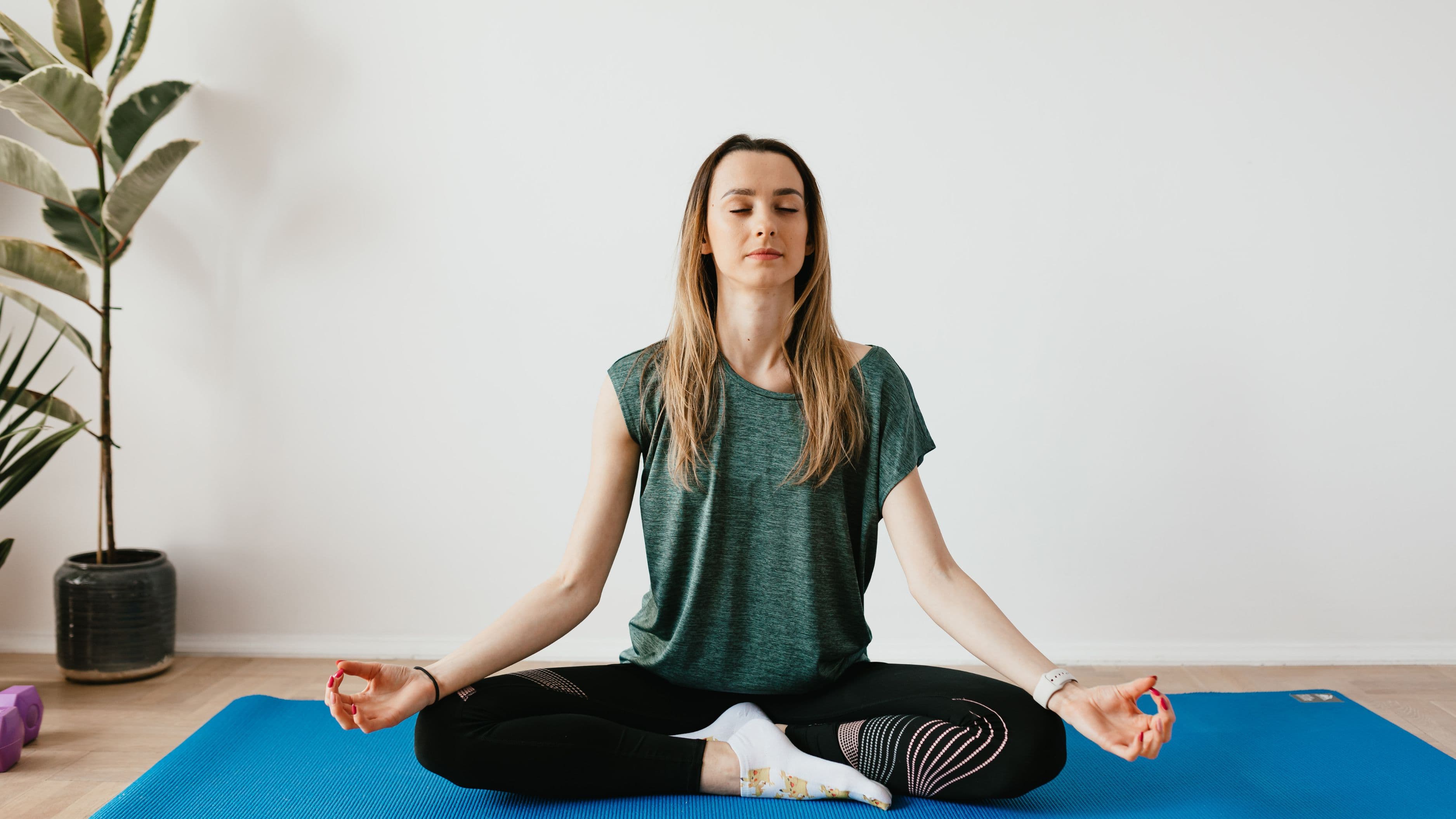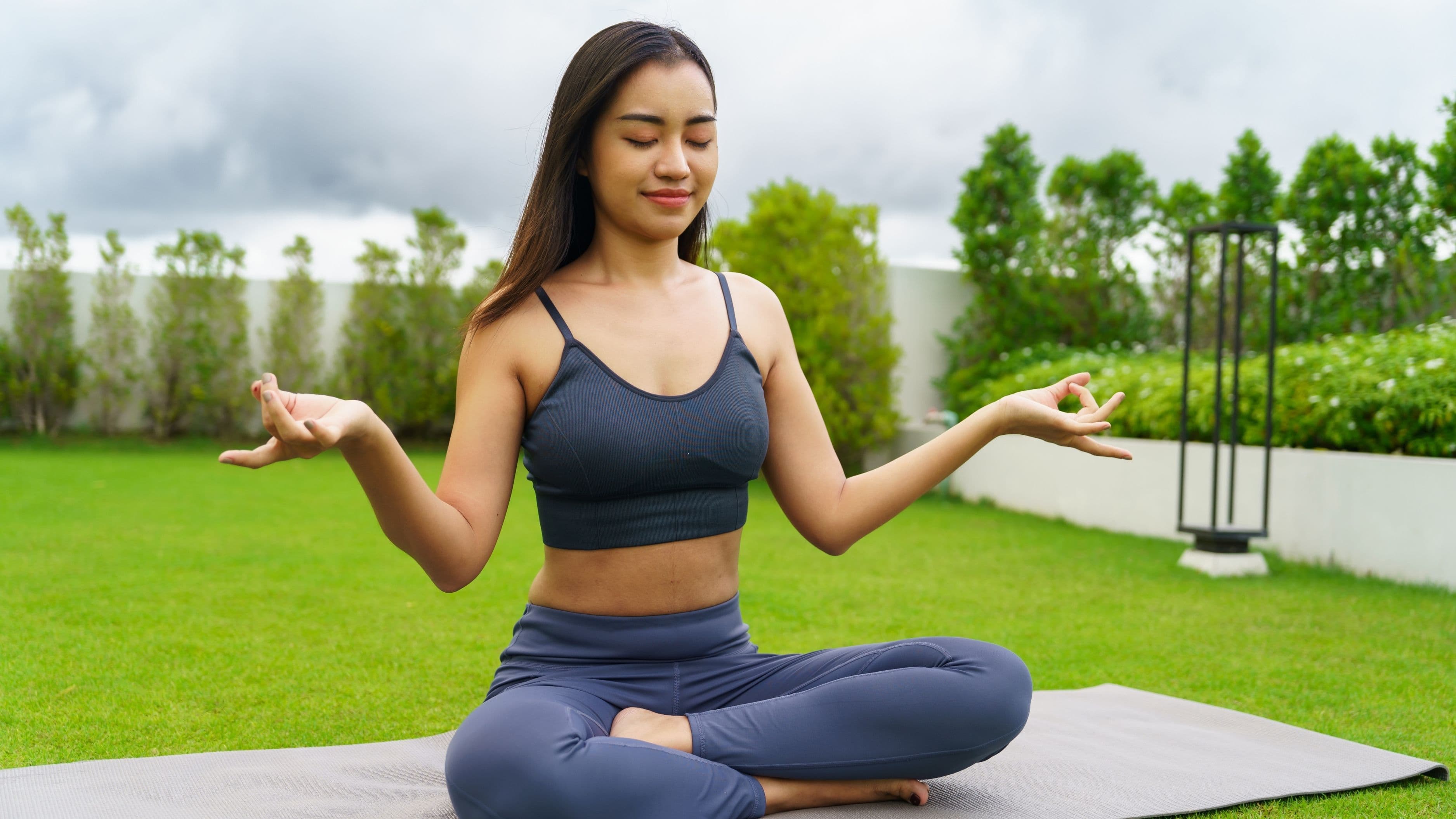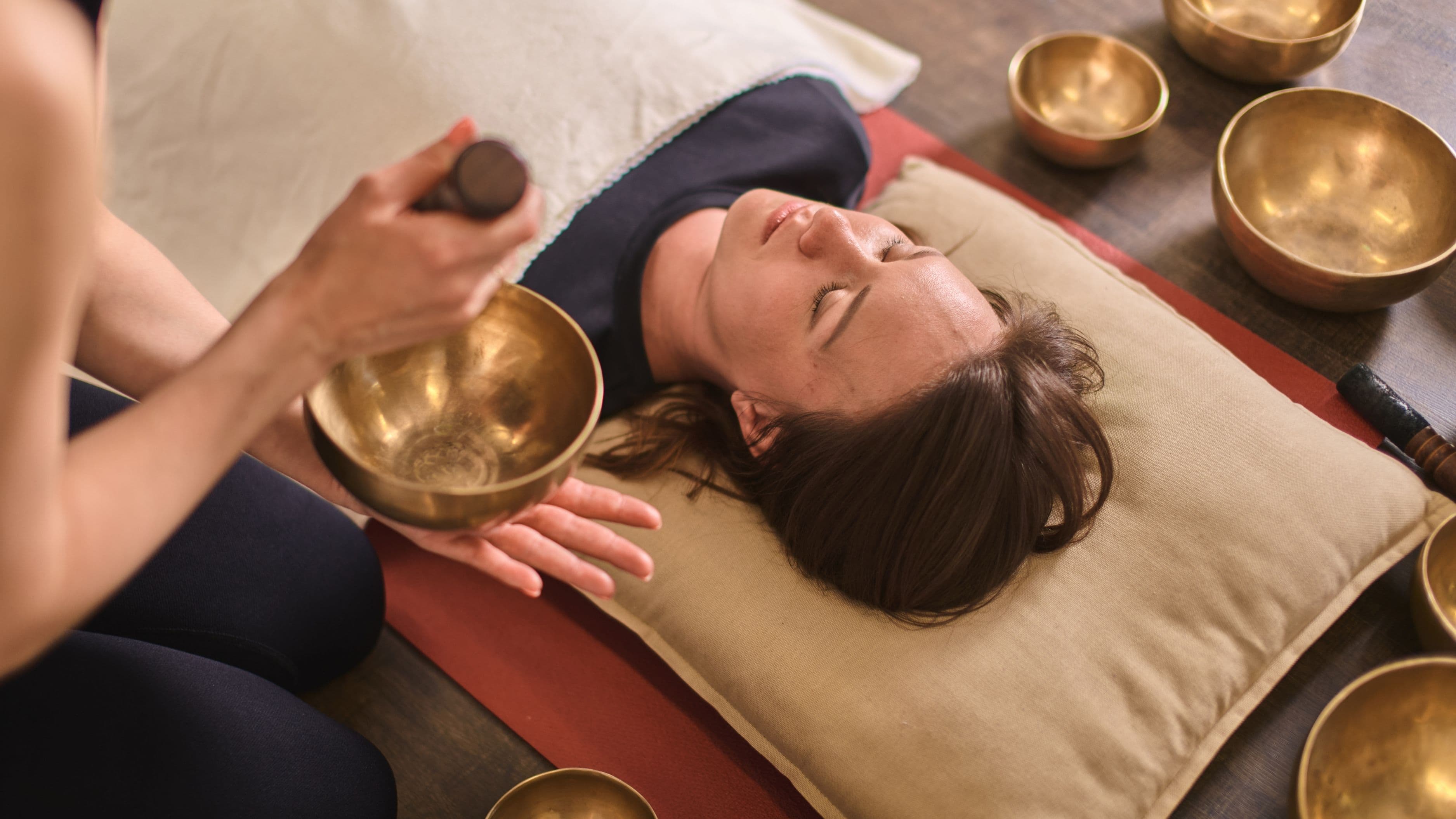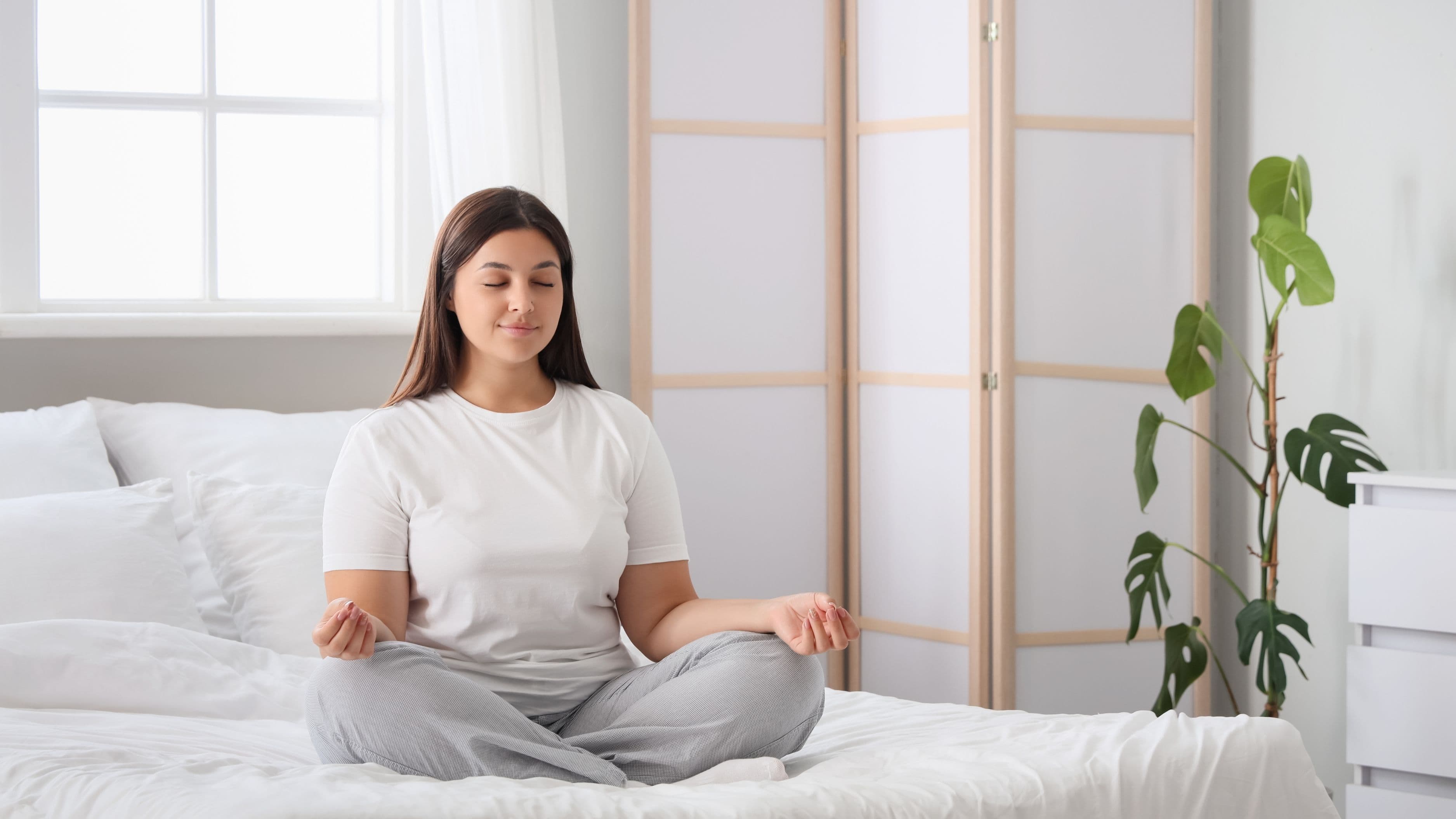
Meditation can help, and not in a vague, abstract way. There's a growing body of research showing that specific meditation practices meaningfully improve sleep quality – reducing the time it takes to fall asleep, decreasing nighttime waking, and improving how rested people feel in the morning. The key is understanding which practices work, how to apply them, and what to expect as you build the habit.
Why the Restless Mind Struggles to Sleep
Sleep requires a particular state of nervous system calm that's hard to manufacture on demand, especially when stress and stimulation have been running high all day. Your body has two primary nervous system modes: the sympathetic (fight-or-flight) mode, which is activated by stress, urgency, and mental busyness, and the parasympathetic (rest-and-digest) mode, which supports relaxation, recovery, and sleep. Most people arrive at bedtime still running in sympathetic mode – wired from screens, unfinished thoughts, or the cumulative tension of the day.
Meditation works directly on this. Regular practice trains the nervous system to shift more easily into parasympathetic mode and lowers the baseline level of physiological arousal that keeps sleep at bay. Over time, it also changes your relationship to thoughts themselves – instead of getting caught in mental loops at night, you develop the ability to notice thoughts without following them, which is one of the most practical sleep skills there is.
The effects aren't limited to the moment of practice. Research published in JAMA Internal Medicine found that mindfulness meditation significantly improved sleep quality in older adults with moderate sleep disturbances, outperforming sleep hygiene education in several key measures. The practice changes how the mind and body respond to the conditions of rest, not just how relaxed you feel in a given moment.
The Types of Meditation Most Useful for Sleep
Not all meditation is equally suited to improving sleep. Some practices are more activating and are better suited to daytime use. For sleep, the approaches that tend to work best are those that calm the nervous system, reduce mental chatter, and bring attention gently inward.
Body Scan Meditation
Body scan is one of the most effective and accessible practices for sleep. You lie down comfortably and slowly move your attention through each part of your body – starting at the feet and working upward, or from the top of the head downward – noticing sensations without trying to change them. The practice draws attention away from anxious thinking and anchors it in physical sensation, which is much harder to sustain an anxious narrative around.
Most people find that a full body scan takes anywhere from 10 to 30 minutes, and many fall asleep before they finish it. That's not a failure – it's the practice working exactly as intended. Guided body scan recordings are widely available through apps like Insight Timer, Calm, and the UCLA Mindful app, which makes it easy to get started without any prior meditation experience.
Breath-Focused Meditation
Simply bringing attention to the natural rhythm of breathing is one of the oldest and most well-researched meditation techniques. For sleep, the goal isn't to control the breath dramatically but to observe it – the sensation of air entering and leaving the body, the slight rise and fall of the chest or belly, the brief pause between inhale and exhale.
When the mind wanders – and it will – you gently return attention to the breath without frustration. That returning is the practice. Over time, this builds a mental reflex that's enormously useful at night: the ability to notice when you've been pulled into thinking and to choose, gently, to come back to something simpler.
A variation worth trying is the 4-7-8 breath pattern, developed by integrative medicine physician Dr. Andrew Weil: inhale for four counts, hold for seven, exhale slowly for eight. The extended exhale activates the parasympathetic nervous system and can produce a notable calming effect relatively quickly.
Loving-Kindness Meditation (Metta)
Loving-kindness meditation involves silently repeating phrases of goodwill – toward yourself, toward people you care about, and eventually toward all beings. It sounds simple, but it has a meaningful effect on the emotional quality of your inner state. Research has linked it to reductions in anxiety and rumination, two of the most common culprits behind nighttime wakefulness.
If you tend to lie awake with a busy, self-critical inner voice – replaying what you said wrong, worrying about what others think, rehearsing difficult conversations – loving-kindness practice can gradually quiet that tone. Starting with just a few minutes of wishing yourself ease and rest before sleep can shift the emotional atmosphere of bedtime in a way that's both subtle and real.
Yoga Nidra (Yogic Sleep)
Yoga nidra is a guided practice that systematically brings you to the threshold between wakefulness and sleep – a state called hypnagogia – and holds you there. It combines body awareness, breath awareness, and visualization in a structure that's almost universally described as deeply restoring. Many practitioners find that 20 minutes of yoga nidra leaves them feeling as rested as several hours of regular sleep, though claims like that are worth holding loosely.
What's well established is that yoga nidra is excellent for people who struggle to quiet the mind enough to fall asleep, and it requires no prior meditation experience. You simply lie down and follow the guide's voice. The iRest Institute and Insight Timer both offer high-quality free recordings.
Building a Pre-Sleep Meditation Routine
Consistency matters more than duration. Five minutes of the same practice each night before bed will do more for your sleep over time than an occasional 30-minute session. The goal is to train your nervous system to associate the practice with the transition into rest, which is why doing it at the same time and in the same way each night amplifies its effectiveness.
A simple routine that works well for most people looks something like this: about 20 to 30 minutes before you want to sleep, dim the lights and put screens away. Lie down or sit comfortably in bed. Spend five to ten minutes with a breath-focused or body scan practice. Allow the mind to quiet gradually rather than forcing it. Let sleep come when it's ready rather than trying to make it happen.
The trying-to-make-it-happen quality is worth addressing directly. Sleep, like relaxation, can't be forced – and the effort of forcing it creates exactly the kind of arousal that keeps it away. Meditation helps because it gives the mind something gentle to do instead of straining toward unconsciousness. It replaces the effort of trying to sleep with the ease of simply resting.
Daytime Meditation and Its Effect on Night Sleep
Your sleep is shaped by everything that happens in the hours before you lie down – and also by the cumulative state of your nervous system built up over days and weeks. Meditating during the day, even briefly, has a measurable effect on nighttime sleep quality because it lowers overall stress reactivity and trains the mind's capacity for sustained calm.
Even ten minutes of mindful breathing during a lunch break or a brief body scan in the afternoon adds up. You're not just relaxing in that moment – you're building the neural pathways that make it easier to let go at night. Think of it as maintenance rather than emergency repair. The sleep benefits of regular daytime meditation tend to become more noticeable after two to four weeks of consistent practice.
What to Do When Sleep Still Doesn't Come
Some nights, even with a meditation practice, sleep is elusive. The most useful thing you can do in those moments is resist the urge to fight it. Lying in bed tense and frustrated about not sleeping makes the problem worse. Instead, return to your practice – not as a strategy to knock yourself unconscious, but as a way to rest the mind even if the body isn't fully asleep.
There's real restorative value in quiet, relaxed wakefulness – something often called "rest without sleep." Your body is still recovering, your nervous system is still calming, and the physiological cost of a restless night is lower when you're spending it in gentle awareness rather than anxious wakefulness. That reframe alone – that rest counts even when sleep doesn't fully arrive – reduces a significant amount of the secondary suffering that comes from insomnia.
If sleep difficulties are persistent, significant, or accompanied by other symptoms, it's always worth speaking with a healthcare provider. Meditation is a meaningful support, not a substitute for medical evaluation of genuine sleep disorders.
Common Pitfalls to Avoid
Expecting instant results is probably the most common source of discouragement. Sleep meditation works, but it works gradually. If your mind has been running at high intensity for years, it won't fully quiet after three nights of practice. Give it four to six weeks before evaluating whether it's helping.
Doing it on your phone with notifications on undermines the practice before it starts. If you're using an app for guided meditation, put your phone on Do Not Disturb, screen-down, with the display as dim as possible. The blue light and intermittent alerts keep your nervous system alert in exactly the way you're trying to move away from.
Trying too many techniques at once can dilute the effect. Choose one practice and stick with it for at least two weeks before trying something different. Consistency with one approach builds the associative conditioning that makes it work.
A Closing Thought
Sleep is one of the most natural things a human body does, and yet for many people it has become a source of anxiety. Meditation offers a path back to a simpler relationship with rest – one where you're not fighting your own mind at the end of the day, but gently setting it down. That shift doesn't happen all at once. It happens in small accumulations, night by night, practice by practice, until lying down feels like coming home rather than starting a battle.
Start small. Stay gentle with yourself. The rest – quite literally – will follow.
FAQ
How long should I meditate before bed? Even five to ten minutes is enough to have a meaningful effect on sleep onset. Longer sessions of 20 to 30 minutes can be beneficial, but duration matters less than consistency. A short practice every night outperforms a long one done occasionally.
What if I fall asleep during the meditation? That's often the goal for bedtime practice. If you're using sleep-focused meditation and you fall asleep mid-session, the practice has done its job. Don't worry about "completing" it.
Can meditation replace sleep medication? Not directly, and any changes to medication should be discussed with your doctor. That said, mindfulness-based approaches have been shown in research to reduce reliance on sleep aids over time when practiced consistently. Always work with a healthcare provider on medication decisions.
I can't stop my thoughts during meditation. Does that mean it isn't working? No. Having thoughts during meditation is completely normal – it's not a sign of failure. The practice is not about having a blank mind but about noticing when thoughts have pulled your attention and gently returning to your anchor (breath, body, sound). Every return is the practice working.
Are meditation apps worth using for sleep? Yes, for most beginners. Apps like Insight Timer (free), Calm, and Headspace offer guided sleep meditations, body scans, and yoga nidra recordings that make it easy to start without any prior experience. The guided format removes the pressure of having to "do it right" on your own.
📚 Sources
JAMA Internal Medicine – Mindfulness Meditation and Improved Sleep Quality – https://jamanetwork.com/journals/jamainternalmedicine/fullarticle/2110998
Harvard Health Publishing – Relaxation Techniques for Better Sleep – https://www.health.harvard.edu/mind-and-mood/relaxation-techniques-breath-control-helps-quell-errant-stress-response
UCLA Mindful – Free Guided Meditations – https://www.uclahealth.org/programs/uclamindful/free-guided-meditations
Greater Good Science Center – What Is Loving-Kindness Meditation? – https://greatergood.berkeley.edu/topic/mindfulness/definition/loving_kindness_meditation
iRest Institute – Yoga Nidra Research and Practice – https://irest.org/about-irest/research/
National Sleep Foundation – Meditation and Sleep – https://www.thensf.org/sleep-topics/meditation-and-sleep/