Menopause is not a breakdown. It's a biological recalibration, and the emotional turbulence that comes with it deserves more than a dismissive shrug. The plummeting estrogen and progesterone levels that define this transition directly affect serotonin and dopamine — the brain's feel-good messengers. So when you burst into tears over a slow Wi-Fi connection or feel inexplicably furious at 2 p.m., that's not weakness. That's neurochemistry doing something very real inside you.
This article is for the women who are done white-knuckling it. It's for anyone craving tools that actually meet the body where it is — not where we wish it were. What follows are some of the most persistent myths about menopause mood swings, the truths that replace them, and the natural, grounded practices that can genuinely shift how you feel.
Myth 1: It's All in Your Head
Truth: It's in your hormones — and your hormones are in your head.
This one stings, because for years women have been dismissed with exactly that phrase. "It's all in your head" has been used to minimize, medicate, and silence. But here's the twist: your head is the problem — just not in the way they meant. The brain is packed with estrogen receptors, particularly in the amygdala, the region responsible for processing fear and emotional memory. When estrogen drops, the amygdala becomes hyperreactive — more easily triggered, slower to calm down.
A 2018 study published in Menopause: The Journal of The Menopause Society found that perimenopausal women showed significantly higher rates of mood disturbance compared to premenopausal women, even when controlling for life stressors. This isn't a mental health crisis born of weakness — it's a physiological shift happening in real time. Acknowledging that distinction is the first act of self-compassion.
What helps: Start tracking your mood in relation to your cycle (if you're still having one) or time of day. Patterns often emerge — certain hours, certain foods, certain triggers — and knowledge is the beginning of agency.
Myth 2: You Just Need to Relax
Truth: Vague advice doesn't calm a dysregulated nervous system.
"Just relax" is one of the least useful instructions a human being can receive. If you could simply decide to relax, you would have. The menopausal nervous system isn't being dramatic — it's often stuck in a state of sympathetic overdrive, unable to shift into the parasympathetic "rest and digest" mode without deliberate help.
The good news is that specific, targeted practices can physically move your nervous system out of fight-or-flight. Diaphragmatic breathing — slow, belly-deep breaths that extend the exhale — directly stimulates the vagus nerve, the primary highway of the parasympathetic system. Feel the breath drop into your belly, your ribs expand sideways, your exhale release like a long, slow unraveling. Even five minutes of this daily can measurably lower cortisol levels and reduce the spike of emotional reactivity.
What helps: Try box breathing (inhale 4 counts, hold 4, exhale 4, hold 4) or the physiological sigh (double inhale through the nose, long exhale through the mouth). These aren't spa-day luxuries — they're neurological tools.
Myth 3: Hormones Are the Only Fix
Truth: Your gut, your sleep, and your plate all vote on your mood.
Hormone therapy has its place, and for many women it's genuinely life-changing. But framing hormones as the only lever worth pulling misses a much richer picture. The gut microbiome — that teeming ecosystem in your digestive tract — produces roughly 90% of the body's serotonin. Menopause-related hormonal shifts can disrupt gut flora, which in turn disrupts mood regulation. Your digestion and your emotional state are in constant, intimate conversation.
Food becomes medicine during this transition in ways that feel almost personal. Phytoestrogen-rich foods like flaxseeds, edamame, and fermented soy introduce plant-based estrogen-like compounds that gently buffer hormonal dips. Magnesium-rich foods — dark leafy greens, pumpkin seeds, dark chocolate — help regulate the nervous system and support sleep. Meanwhile, blood sugar spikes from refined carbohydrates act like emotional landmines, triggering sharp irritability that feels entirely disproportionate to circumstances but makes perfect biochemical sense.
What helps: Eat protein with every meal to stabilize blood sugar. Add fermented foods like kimchi or kefir to support gut diversity. Reduce caffeine and alcohol, both of which amplify the nervous system's volatility during this season.
Myth 4: Exercise Will Exhaust You Further
Truth: Movement is one of the most potent mood-stabilizers available.
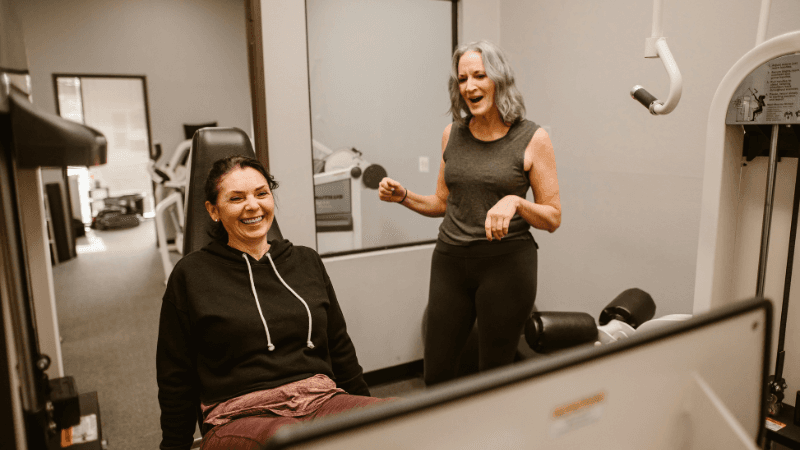
There's a particularly cruel irony in menopause fatigue: the thing most likely to restore your energy — movement — feels impossible when you're depleted. But the research here is striking. A 2019 review in Maturitas found that regular aerobic exercise significantly reduced depression and anxiety symptoms in menopausal women, with benefits comparable in some cases to antidepressant medication.
The key is ditching the all-or-nothing approach. You don't need a grueling HIIT class. A 20-minute brisk walk in morning sunlight does something remarkable — it regulates your circadian rhythm, boosts serotonin, and signals your body that it's safe to be awake and alert. Yoga, specifically restorative and yin styles, lowers cortisol while building body awareness. Strength training, perhaps surprisingly, has been shown to reduce anxiety and improve emotional resilience — and it also protects bone density, a practical bonus.
What helps: Move your body daily, even briefly. Prioritize consistency over intensity. Walking outside counts. Dancing in your kitchen counts. The nervous system doesn't care about your step count — it cares that you moved.
Myth 5: Mindfulness Is Just Meditation
Truth: Mindfulness is a way of living — and it rewires the brain.
The word "mindfulness" has been packaged, marketed, and sold so aggressively that it's lost some of its genuine power. But underneath the wellness-industry noise is a practice with decades of neuroscientific backing — and a particularly meaningful application for menopausal mood swings. Mindfulness-Based Stress Reduction (MBSR) has been studied specifically in menopausal women, with research published in Maturitas showing significant reductions in perceived stress, hot flashes, and mood disturbance.
Mindfulness, at its core, is the practice of noticing without reacting. When a wave of irritability or sadness rises, the untrained mind treats it as a command: act now, say the sharp thing, spiral into the fear. The practiced mind notices: there's a wave, and waves pass. This isn't detachment — it's presence. It's the difference between being swept away by the current and watching it move through you with both feet on the ground.
Beyond seated meditation, mindfulness shows up in the kitchen (eating without your phone), in conversation (listening without composing your reply), and in the body (noticing tension before it becomes a headache). Every moment of intentional presence is a vote for a calmer, more regulated nervous system.
What helps: Start with five minutes of guided meditation — apps like Insight Timer or Ten Percent Happier offer free content. Then look for one daily activity you can do with full attention: your morning coffee, your evening walk, the feel of warm water on your hands.
Myth 6: Herbs and Supplements Are Pseudoscience
Truth: Some adaptogens and botanicals have real, studied effects.
Skepticism about supplements is healthy — the market is flooded with overpriced powders making miraculous claims. But dismissing all botanical support as snake oil misses a nuanced, growing body of evidence. Several herbs have demonstrated genuine promise for menopausal mood symptoms, and women have been using them across cultures for centuries.
Ashwagandha (Withania somnifera) is an adaptogen — a class of herbs that help the body resist stress by modulating the HPA (hypothalamic-pituitary-adrenal) axis. A double-blind study published in Medicine (2019) found it significantly reduced anxiety and cortisol in adults under chronic stress. Black cohosh has a longer history of study for menopause symptoms; while evidence on mood is mixed, many women report meaningful relief from irritability and sleep disturbance. Rhodiola rosea has shown promise in reducing fatigue-related emotional dysregulation. St. John's Wort, one of the most studied botanicals for low mood, has evidence to support its use for mild depression — though it interacts with several medications and requires professional guidance.
What helps: Work with a naturopath, integrative physician, or herbalist before adding supplements, especially if you take prescription medications. Let the evidence and your individual body guide you — not the label claims.
Myth 7: This Is Just Who You Are Now
Truth: Your identity is not your hormones.
Perhaps the cruelest myth of all is the one whispered internally: this is just me now. The short fuse, the tearfulness, the fog, the feeling of being a stranger in your own emotional life — these become internalized as permanent features rather than temporary symptoms of a system in transition. This is where the psychological toll of menopause can be the deepest, and the least talked about.
Identity continuity — the sense that you are still fundamentally you — is something worth consciously tending during this season. Journaling is a surprisingly powerful tool here, not because it fixes hormones, but because it creates a witness to your own inner life that doesn't catastrophize. Writing "I felt very irritable today and I think it's hormonal" is categorically different from believing "I am an angry person." One is a weather report; the other is a life sentence.
Community matters too. Peer support among menopausal women — in-person groups, online communities, even candid conversations with a trusted friend — reduces shame and restores perspective. You are not alone in this, and you are not broken.
What helps: Write in a journal, even briefly. Find one person you can speak honestly with. Separate what you're feeling from who you are. That space between stimulus and story is where freedom lives.
Let Go of the Gritting-Through Mentality
You don't have to white-knuckle menopause. You don't have to perform calm while privately drowning, or apologize for the emotional weather that passes through you, or accept "just push through it" as the sum total of available wisdom.
The shift begins when you stop treating your body as the enemy and start treating it as a messenger. Mood swings during menopause are not a character flaw or a mental weakness — they're a signal, sometimes urgent and uncomfortable, from a system undergoing real and significant change. When you hear that signal with curiosity instead of shame, everything opens up.
Let go of the myth that strength means suffering silently. Let go of the idea that managing your mood naturally is a lesser option. Let go of outdated advice that leaves you more depleted than when you started — and begin making intentional moves that actually honor where you are.
The calm you're looking for isn't on the other side of menopause. It's available right now, in small, deliberate, deeply human practices. Feel that possibility settle into your body. It's already yours.
📚 Sources
Freeman, E. W., et al. (2006). Associations of hormones and menopausal status with depressed mood in women with no history of depression. Archives of General Psychiatry, 63(4), 375–382.
Bromberger, J. T., & Epperson, C. N. (2018). Depression during and after the perimenopause: Impact of hormones, sleep, and menopause symptoms. Obstetrics and Gynecology Clinics, 45(4), 663–678.
Daley, A., et al. (2019). Exercise for vasomotor menopausal symptoms. Cochrane Database of Systematic Reviews. [Updated review referenced in Maturitas, 2019.]
Carmody, J. F., et al. (2011). Mindfulness training for coping with hot flashes: Results of a randomized trial. Menopause, 18(6), 611–620.
Chandrasekhar, K., et al. (2012). A prospective, randomized double-blind, placebo-controlled study of safety and efficacy of a high-concentration full-spectrum extract of Ashwagandha root. Indian Journal of Psychological Medicine, 34(3), 255–262.
Linde, K., et al. (2008). St John's wort for major depression. Cochrane Database of Systematic Reviews, (4).
Cramer, H., et al. (2012). Yoga for menopausal symptoms—A systematic review and meta-analysis. Maturitas, 73(4), 374–387.