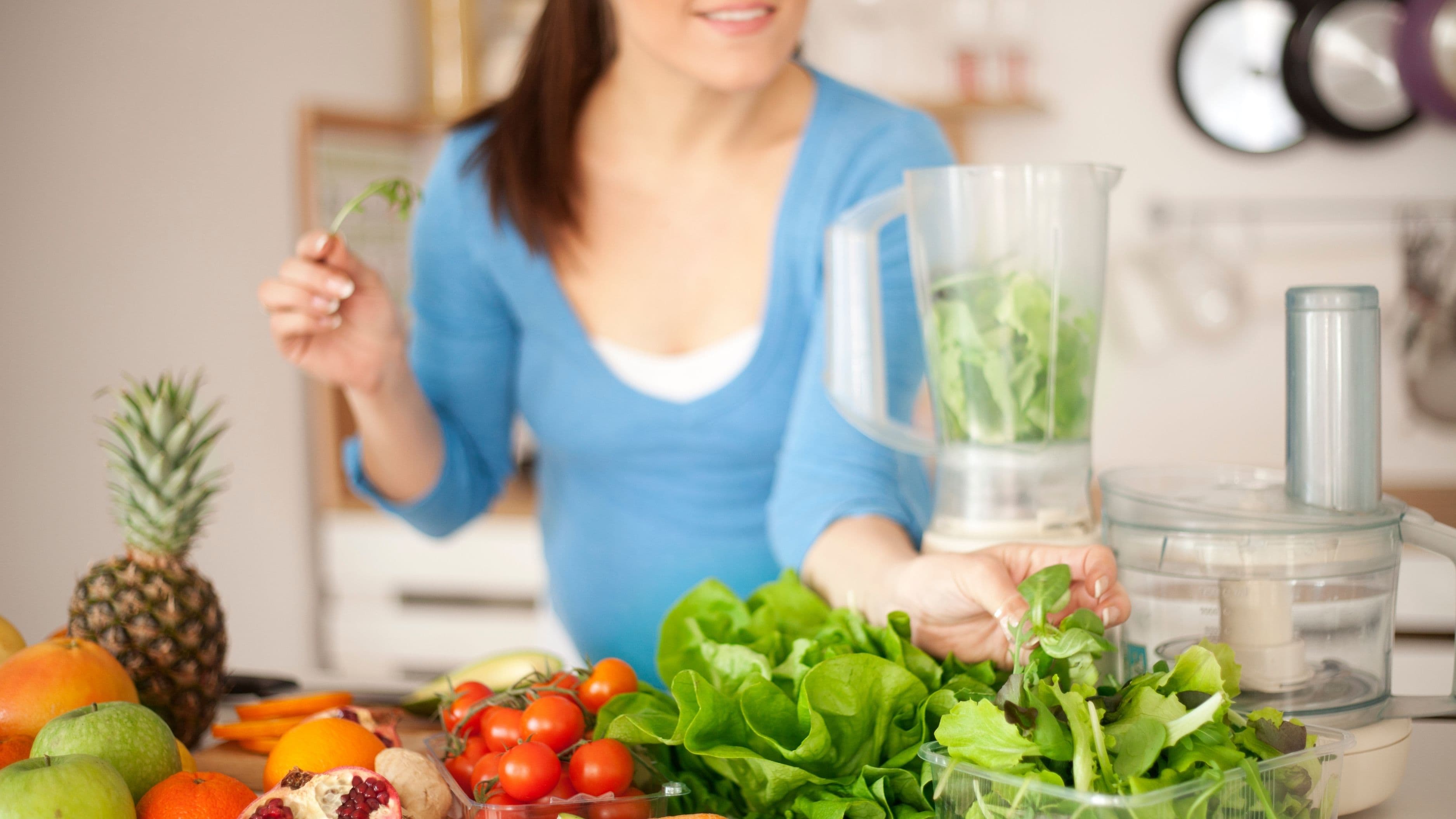
Intuitive eating offers a different path. Not a diet – and not a free-for-all, either. It's a practice of returning to the internal signals your body was always sending, and learning to trust them again. For many women, that process is less about learning something new and more about unlearning something they've been taught for most of their lives.
What Intuitive Eating Actually Is
Intuitive eating is a self-care framework developed in 1995 by two registered dietitians, Evelyn Tribole and Elyse Resch. It's built on ten core principles that collectively guide you away from external food rules and toward your own body's hunger, fullness, and satisfaction cues. It's been studied extensively in the years since its introduction, and the research consistently shows improvements in psychological well-being, reduced disordered eating behaviors, and a more positive body image among people who practice it.
What it is not: permission to eat recklessly or ignore your health. The framework includes a principle called "gentle nutrition" specifically because physical health matters – it's just that health is addressed last, after the psychological relationship with food has been stabilized. You can't make genuinely nourishing food choices from a place of shame, restriction, and chronic deprivation. Intuitive eating addresses that foundation first.
Why So Many Women Struggle With Food
Diet culture doesn't affect everyone equally, and women bear a disproportionate share of its weight. From a very young age, many girls receive messages – from family, media, peers, and healthcare providers – that their body needs to be managed, controlled, and shrunk. Food becomes tied to morality: being "good" means eating less or eating certain things; being "bad" means eating too much or the wrong things. These associations are absorbed so early that they feel like personal values rather than cultural conditioning.
By adulthood, many women have an internal food critic running in the background of almost every meal. They may restrict during the day and overeat at night. They might feel genuine anxiety around social eating, "healthy" eating that has quietly tipped into obsession, or a persistent feeling of being out of control around certain foods – followed by guilt and renewed restriction. These patterns aren't character flaws. They're the predictable psychological result of years of on-and-off dieting, which research consistently shows disrupts hunger signaling, erodes body trust, and increases preoccupation with food over time.
The Ten Principles of Intuitive Eating
The framework is organized around ten principles, each addressing a different layer of the diet culture conditioning that makes eating complicated. You don't need to tackle them in order or master each one before moving forward – they tend to work together and reinforce each other over time.
Reject the Diet Mentality
This first principle asks you to let go of the belief that there is a diet out there that will finally work – the one that will make you feel worthy, healthy, and at peace with your body. That belief keeps you in a cycle of hope and failure that is the diet industry's most profitable product. Rejecting the diet mentality doesn't mean giving up on health. It means recognizing that chronic dieting is itself harmful, and that the pursuit of a smaller body at any cost is not the same as the pursuit of genuine well-being.
Honor Your Hunger
Your body's hunger signals are intelligent and biological. They exist to keep you fed, energized, and alive. When you consistently ignore, override, or delay hunger, you erode your ability to read those signals accurately, and you set up the conditions for reactive overeating later in the day. Honoring hunger means responding to early hunger cues with food – not pushing through, not waiting until you're ravenous, not negotiating with yourself about whether you've "earned" it.
Make Peace With Food
This principle is often the most confronting for women who have years of food rules behind them. Making peace with food means giving yourself unconditional permission to eat all foods – including the ones that feel scary, the ones you've been restricting, the ones you tend to binge on when you "slip." The mechanism behind this is well-established: forbidden foods hold an outsized psychological pull precisely because they're forbidden. When restriction is removed, the urgency and obsession tend to gradually diminish. This process takes time, and it isn't always linear, but it consistently moves in the right direction.
Challenge the Food Police
The food police is the internal voice that assigns moral value to food choices – that calls you "bad" for eating dessert and "good" for eating salad. This voice is often so internalized that it feels like your own thoughts, but it's borrowed. It came from diet culture, family messaging, wellness content, and decades of marketing. Challenging the food police means noticing that voice without automatically believing it, and gently questioning the rules it enforces.
Discover the Satisfaction Factor
One of the most overlooked elements of eating well is satisfaction – not just fullness, but genuine pleasure in what you've eaten. When you eat foods you actually enjoy, in an environment that feels comfortable, at a pace that lets you taste what you're eating, you need less food to feel genuinely satisfied. Many women eat quickly, distractedly, or from a list of "safe" foods that they don't particularly enjoy – and then feel vaguely dissatisfied despite being full, which drives continued eating. Satisfaction is not a luxury. It's a legitimate and important part of eating in a way that feels good.
Feel Your Fullness
Alongside honoring hunger, intuitive eating asks you to develop awareness of fullness signals – the comfortable sense of having had enough – and to respect them. This requires slowing down, checking in during meals, and allowing yourself to stop eating at a place of comfortable satisfaction rather than pushing through to a feeling of being stuffed, or stopping prematurely out of restriction-based rules. Fullness attunement improves significantly over time, especially as the urgency and scarcity mindset around food begins to ease.
Cope With Your Emotions With Kindness
Emotional eating gets a lot of negative attention, but the truth is that it's a normal human behavior. Food provides comfort, and there's nothing inherently wrong with that. The issue arises when food is the only coping tool available, and when it's followed by shame that adds another emotional burden on top of the original feeling. This principle isn't about eliminating emotional eating – it's about expanding your emotional toolkit so that food is one option among many, chosen with intention rather than used automatically.
Respect Your Body
You don't have to love your body to respect it. Respect means treating it with basic dignity, feeding it adequately, moving it in ways that feel good, and releasing the belief that it needs to look different before it deserves care. For many women, body respect is the hardest principle – particularly if they've spent years in a relationship with their body defined primarily by criticism and attempted change. This is a gradual shift, not an overnight transformation, and that's entirely okay.
Movement – Feel the Difference
Intuitive movement asks you to shift your relationship with exercise away from calorie burning or body change and toward how movement actually feels. Exercise pursued primarily as punishment for eating or as a means of earning food is a form of compulsion that increases psychological stress and often leads to burnout. Movement you genuinely enjoy – walking, dancing, swimming, stretching, cycling – is something you're far more likely to sustain long-term. The difference between "I have to exercise" and "I want to move my body" is not just motivational – it reflects a fundamentally different relationship with yourself.
Honor Your Health With Gentle Nutrition
This final principle brings nutrition back in – not as a rigid ruleset, but as one consideration among many. Gentle nutrition acknowledges that food choices have real effects on your physical health, and that it's worth caring about what you eat. But it holds that information lightly, alongside pleasure, accessibility, culture, convenience, and all the other real factors that shape how and what we eat. No single food or meal defines your health, and consistent overall patterns matter far more than any individual choice.
What Healing Actually Looks Like
Healing your relationship with food is rarely a clean or linear process. Some women experience a honeymoon phase when they first remove restrictions – a period of eating previously forbidden foods more frequently before things settle. This is normal and temporary. Others find that certain principles click immediately while others take months to feel genuine. Body image work, in particular, often lags behind the behavioral shifts – you might eat with more ease long before you feel truly at peace with how your body looks.
What tends to emerge over time, with patient practice, is something quieter and more sustainable than any diet has ever offered: eating becomes less consuming. Food stops being the enemy and starts being, mostly, just food. Meals become something you look forward to rather than manage. Your internal voice gradually loses its critical edge. These changes are subtle at first, but they compound – and for many women, they represent a form of freedom they hadn't realized they were missing.
A Few Things to Watch Out For
Intuitive eating can be misappropriated. You may encounter versions of it that strip away the anti-diet core and use the language of "body wisdom" as a cover for thinly disguised restriction. True intuitive eating is explicitly weight-neutral – it does not promise weight loss as an outcome and it doesn't use weight management as a goal. If something is calling itself intuitive eating while also promising to help you lose weight, it has missed the point.
It's also worth knowing that intuitive eating is not the right starting point for active eating disorder recovery. If you are currently struggling with anorexia, bulimia, or binge eating disorder at a clinical level, working with a specialized therapist and dietitian who is trained in eating disorder treatment is the appropriate first step. Intuitive eating principles can be woven into recovery under professional guidance – but the framework alone is not a substitute for eating disorder treatment.
FAQ
Is intuitive eating only for women? Not at all – the research and practice apply to anyone with a complicated relationship with food. Women are specifically named in this context because diet culture disproportionately affects women, and because the topic was framed that way. The ten principles are universal.
Will I gain weight if I start intuitive eating? Some people gain weight, some lose weight, and many stay roughly the same – because the goal is returning to your body's natural set point, whatever that is. Weight change is not the measure of whether intuitive eating is working. Improved well-being, reduced food preoccupation, and a more peaceful relationship with eating are the relevant markers.
How long does it take to see a change? Some shifts – like reduced guilt after eating – can happen relatively quickly, within the first few weeks of consistent practice. Deeper changes, like rebuilding hunger and fullness attunement after years of dieting, can take six months to a year or longer. There's no set timeline, and comparison to others isn't useful here. This is a personal process.
Are there books or resources to start with? The original book, Intuitive Eating by Evelyn Tribole and Elyse Resch, is the foundational text and still the most comprehensive starting point. The Intuitive Eating Workbook by the same authors provides a practical, structured way to work through the principles. The website intuitiveeating.org also has a provider directory if you're looking for professional support.
Can I practice intuitive eating if I have a health condition that requires dietary management? Yes, though the nuance matters. Intuitive eating's gentle nutrition principle is compatible with managing conditions like diabetes, celiac disease, or food allergies – it just means working with those real physical constraints while still aiming for a non-punitive, non-restrictive mindset around food. A registered dietitian familiar with both intuitive eating and your specific condition is the best guide here.
Healing your relationship with food takes time, and it asks something of you that diet culture never did: patience with yourself, and a willingness to trust a process that doesn't come with a before-and-after photo. But what's on the other side – a quieter mind, a more honest relationship with your body, meals that feel like nourishment rather than negotiation – is worth every step of the work.
📚 Sources
Tribole, E. & Resch, E. Intuitive Eating: A Revolutionary Anti-Diet Approach. intuitiveeating.org. https://www.intuitiveeating.org/what-is-intuitive-eating/
Van Dyke, N. & Drinkwater, E.J. (2014). Relationships between intuitive eating and health indicators. Public Health Nutrition. https://pubmed.ncbi.nlm.nih.gov/24735328/
Tylka, T.L. & Wood-Barcalow, N.L. (2015). What is and what is not positive body image? Body Image. https://pubmed.ncbi.nlm.nih.gov/25985729/
Mann, T. et al. (2007). Medicare's search for effective obesity treatments: Diets are not the answer. American Psychologist. https://pubmed.ncbi.nlm.nih.gov/17469900/
Neumark-Sztainer, D. et al. (2006). Obesity, disordered eating, and eating disorders in a longitudinal study. Journal of the American Dietetic Association. https://pubmed.ncbi.nlm.nih.gov/16567152/
Bacon, L. & Aphramor, L. (2011). Weight science: Evaluating the evidence for a paradigm shift. Nutrition Journal. https://nutritionj.biomedcentral.com/articles/10.1186/1475-2891-10-9
Denny, K.N. et al. (2013). Intuitive eating in young adults. Appetite. https://pubmed.ncbi.nlm.nih.gov/23274191/
National Eating Disorders Association. What Are Eating Disorders? https://www.nationaleatingdisorders.org/what-are-eating-disorders
Tylka, T.L. (2006). Development and psychometric evaluation of a measure of intuitive eating. Journal of Counseling Psychology. https://psycnet.apa.org/record/2006-08435-001
Harvard T.H. Chan School of Public Health. Diet Review: Intuitive Eating. https://www.hsph.harvard.edu/nutritionsource/healthy-weight/diet-reviews/intuitive-eating/