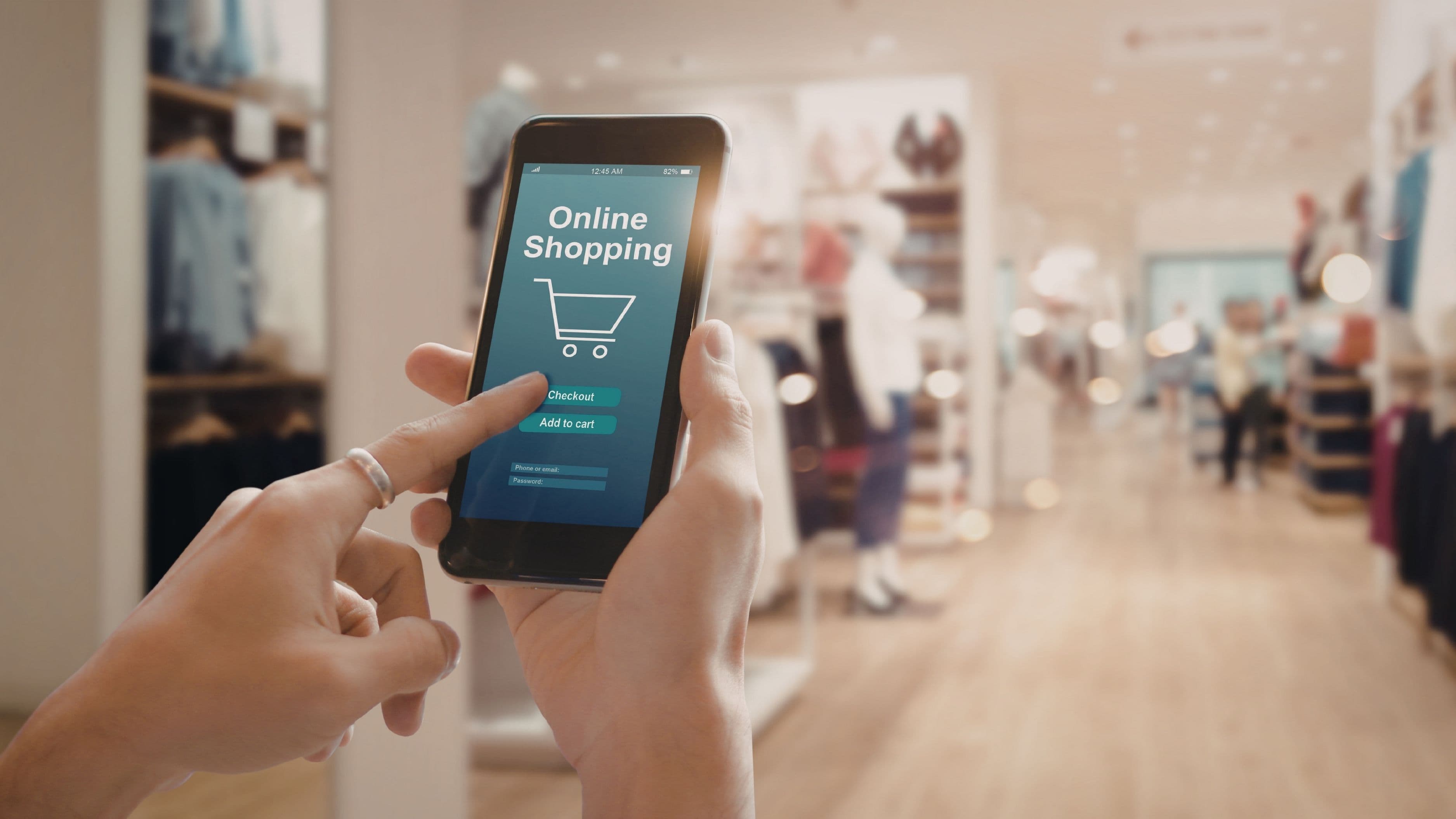
We've all been that person in the parking lot. The culture of modern retail — the sensory overload of bright displays, the psychological choreography of store layouts, the frictionless scroll of online shopping at midnight — is engineered to separate you from your money before your conscious mind has a chance to weigh in. Intentional shopping is the quiet rebellion against all of that. It's the practice of letting your values, not the algorithm, decide what comes home with you. And beyond the financial savings — which are very real — it has a way of making your whole life feel calmer, lighter, and more like yours.
Here's what my sister's waffle maker moment taught me, one lesson at a time.
1. The store is not your friend
Retail environments — physical and digital — are designed by people whose entire job is to make you buy more than you planned. Warm lighting, strategically placed "sale" signs, the satisfying click of adding to cart: none of it is accidental. The average American household spends over $1,800 per year on impulse purchases, according to a survey by Slickdeals, and a significant chunk of that happens inside stores like the one my sister walked into for dish soap.
Intentional shopping starts with this honest reckoning: the environment is working against you, and awareness is your only real defense. When you walk into a store (or open an app) with a written list and a fixed budget, you've already changed the game. You're no longer a passive participant in someone else's sales strategy — you're a decision-maker with a plan. That shift in posture, subtle as it sounds, is where the savings begin.
2. Wanting and needing are two very different feelings
My sister didn't need a waffle maker. But in that store, surrounded by cheerful kitchen displays and a "limited time" price tag, she wanted one with real intensity. That want felt legitimate in the moment — urgent, even. This is the emotional core of unintentional shopping: desire dressed up as necessity, and the two can feel almost identical until the dopamine fades in the parking lot.
Intentional shoppers learn to pause at this exact junction — the moment between wanting and buying — and ask: What is this purchase actually solving? Sometimes the answer is genuinely practical. More often, especially with impulse buys, it's something softer: boredom, stress, the fantasy of a slightly different version of your life. Neither answer is shameful, but only one of them justifies the purchase. Sitting with that question for even thirty seconds can redirect hundreds of dollars a year back into your pocket.
3. Lists are a form of self-respect
There is something deeply grounding about walking into a store with a handwritten list. It sounds almost laughably simple, but the list is a declaration: I know what I came here for. It's a boundary you set with yourself before the sensory noise of retail kicks in and starts rewriting your intentions. The list also makes the "no" easier — when you're holding a mini waffle maker and your list says dish soap, the list gives you permission to put it back without guilt.
For intentional living practitioners, the shopping list becomes an extension of the same mindfulness applied everywhere else — in meditation, in journaling, in how you structure your mornings. You are deciding in advance, from a calm and grounded place, rather than reacting in real-time to manufactured desire. That's not deprivation. That's agency. And agency, in a world designed to strip it from you quietly, is worth protecting.
4. The "future self" test cuts through the noise
One of the most effective tools in intentional shopping is deceptively simple: picture yourself three weeks from now, living with this purchase. Not the excitement of buying it — the reality of owning it. Is it in regular use? Does it have a home in your space? Or is it sitting on a shelf, slightly in the way, quietly generating that low-level clutter-guilt that accumulates in overstuffed homes? This mental projection takes about ten seconds and has an almost magical ability to clarify what's worth buying.
The waffle maker, imagined three weeks out, would have been in a cabinet my sister never opens, next to the bread maker she used twice in 2021. The future self test makes that visible before the purchase, not after. It's the difference between buying with your whole self — present desires and future reality — rather than just the excited, in-store version of you who thinks Sunday brunch is about to become a whole lifestyle.
5. Spending slowly is spending less
Intentional shopping has a pace to it — deliberate, unhurried, free of urgency. And that pace is financially protective in ways that compound over time. Flash sales, countdown timers, "only 3 left in stock" warnings: all of these are urgency triggers, designed to make you act before you think. When you practice shopping slowly — researching before you need something, comparing options without a deadline, sleeping on non-essential purchases — you sidestep the entire urgency trap.
Author and financial therapist Bari Tessler, in her book The Art of Money, describes conscious spending as "bringing the same care and attention to your finances that you bring to other meaningful areas of your life." That reframe is quietly transformative. Your money is not separate from your values — it's an expression of them, every single day. Spending slowly is one way of making sure that expression is intentional.
6. Less stuff, more spaciousness
Here's the part that nobody talks about enough: intentional shopping doesn't just save money — it changes how your home feels. Every unnecessary purchase is future clutter, future decision fatigue, future guilt. When you stop buying things that don't earn their place, your space begins to breathe. Drawers close properly. Counters stay clear. You can actually find things. That physical spaciousness has a direct effect on mental clarity that's hard to overstate until you've experienced it.
Research published in the Personality and Social Psychology Bulletin found that people who described their homes as cluttered showed higher levels of cortisol — the stress hormone — throughout the day. The objects you bring home carry weight, literally and energetically. Intentional shopping is, in this sense, a form of home care and self-care at once. Every mindful "no" at the store is a quiet "yes" to the peaceful, uncluttered home you're trying to build.
The parking lot moment, revisited
My sister now keeps a note in her phone labeled "Before I Buy." It has three questions: Do I need it? Does it fit my life as it actually is? Can I wait 24 hours? She told me recently that she hasn't had a parking lot moment since. Not because she stopped shopping — but because she stopped outsourcing her decisions to the store.
That's the whole of it, really. Intentional shopping isn't about restriction or scarcity. It's about reclaiming the quiet authority to decide what enters your life, your home, your budget. It's about spending money in ways that feel aligned rather than accidental. The savings are real and they add up fast — but the deeper gift is something harder to quantify: the calm that settles in when your choices finally feel like yours.
📚 Sources
Slickdeals. (2022). Annual Impulse Spending Survey. Retrieved from slickdeals.net
Tessler, B. (2016). The Art of Money: A Life-Changing Guide to Financial Happiness. Parallax Press.
Saxbe, D. E., & Repetti, R. (2010). No place like home: Home tours correlate with daily patterns of mood and cortisol. Personality and Social Psychology Bulletin, 36(1), 71–81.