The good news is that meaningful improvement doesn't require an expensive whole-home filtration system or an air quality specialist. Most of what moves the needle is surprisingly simple, and a lot of it costs very little or nothing at all.
Here are eight approaches that actually work.
1. Open your windows strategically
It sounds almost too obvious, but consistent, intentional ventilation is one of the most effective things you can do for indoor air quality — and most people don't do it regularly enough.
Ten to fifteen minutes of cross-ventilation (opening windows on opposite sides of your home) in the morning flushes overnight accumulation of CO2, moisture, and VOCs that built up while you were sleeping. Your body releases carbon dioxide all night, and in a sealed bedroom that concentration rises steadily, contributing to grogginess and poor sleep quality.
The key word is strategic. If you live near a busy road, opening windows during peak traffic hours (typically 7-9am and 4-7pm) brings in more pollutants than it clears. Early morning or late evening tends to be cleaner. On high pollen days, keep windows closed and rely on other methods instead.
Real-life application: pair your morning window-opening with something you already do — making coffee, doing a short stretch. Two minutes of cross-ventilation while the kettle boils costs nothing and makes a measurable difference.
2. Add a few well-chosen houseplants
The research here is more nuanced than the famous "plants clean your air" headline suggests. NASA's original 1989 plant study is frequently cited but was conducted in sealed chambers — not realistic home conditions. More recent research, including a 2019 meta-analysis in the Journal of Exposure Science & Environmental Epidemiology, found that you'd need a very large number of plants to match what basic ventilation achieves.
That said, plants do contribute meaningfully to air quality in enclosed spaces, particularly in rooms with limited ventilation. They absorb some VOCs, add humidity to dry air, and — perhaps most importantly — they create an environment that feels calmer and more considered, which shapes how you interact with your space.
Spider plants, peace lilies, snake plants, and pothos are consistently cited as the most low-maintenance options with the most studied benefits. Start with one or two in rooms where you spend the most time, particularly the bedroom and home office.
Real-life application: a single snake plant on your desk requires almost no care, tolerates low light, and contributes to a calmer visual environment alongside whatever air quality benefit it offers.
3. Switch to fragrance-free or naturally scented cleaning products
Most conventional cleaning products — sprays, floor cleaners, furniture polish, air fresheners — release VOCs into your air every time you use them. Synthetic fragrances in particular are a significant source of indoor chemical pollution. A 2019 study published in Environmental Science & Technology found that scented consumer products contribute as much to urban air pollution as vehicle emissions in some areas.
This doesn't mean your home needs to smell like nothing. It means choosing products where the scent comes from actual plant-derived ingredients rather than synthetic fragrance compounds. Unscented products are often the simplest swap.
Air fresheners and plug-in diffusers using synthetic fragrance are worth retiring entirely if air quality is a concern. They don't clean the air — they mask odors while adding chemical load to it. Opening a window or placing a small bowl of baking soda in a room absorbs odors without adding anything new to your air.
Real-life application: the next time a cleaning product runs out, replace it with a fragrance-free or plant-based version. You don't need to overhaul everything at once — just swap as you go.
4. Control moisture to prevent mold
Mold spores are one of the most common and impactful indoor air quality problems, and they thrive in one condition: excess moisture. Bathrooms, kitchens, and basements are the most vulnerable areas. Once mold establishes itself — even the small patches that appear around window frames or in shower grout — it continuously releases spores into your air.
Keeping indoor humidity between 30% and 50% is the single most effective prevention measure, according to the EPA. A small digital hygrometer (usually under $15) tells you where you stand.
Practical steps: run the bathroom exhaust fan during and for 15-20 minutes after every shower. Use your kitchen exhaust fan when cooking. If you dry laundry indoors, do it in a well-ventilated room with a window cracked. Wipe down window condensation in winter rather than letting it sit.
Real-life application: if you don't already use your bathroom exhaust fan consistently, that single habit change is one of the most impactful things you can do. Leave it running for longer than feels necessary — most people turn it off too early.
5. Vacuum with a HEPA-filter vacuum
Standard vacuum cleaners without HEPA filtration can actually worsen air quality — they capture large particles but exhaust smaller ones (including fine dust and allergens) back into the air through the exhaust. You can see this in practice: a poorly filtered vacuum leaves a faint dusty smell in the room even after you've finished.
A HEPA-filter vacuum traps particles down to 0.3 microns, which means allergens, dust mite debris, and fine particulate matter stay captured rather than being redistributed.
Vacuuming frequency matters too. In a home with pets, two to three times per week is realistic for meaningful reduction in airborne dander. In a lower-traffic home, once a week is usually sufficient. Pay particular attention to upholstered furniture, rugs, and mattresses — these are where the most settled particulate matter lives.
Real-life application: if you're due a new vacuum, a HEPA-certified model is worth prioritizing over other features. If you have an existing vacuum, check whether it has a HEPA filter — many mid-range models now do.
6. Be intentional about candles and incense
Both are beloved for creating atmosphere, and both release combustion byproducts into your indoor air. Paraffin candles in particular emit toluene and benzene — known VOCs — along with soot particles when burned. Incense, particularly stick incense burned in an enclosed room, produces particulate matter at levels that can exceed outdoor pollution standards.
This isn't a reason to never light a candle. It's a reason to be thoughtful about when, where, and what you burn.
Beeswax or soy candles burn significantly cleaner than paraffin. Essential oil diffusers (cold-mist ultrasonic diffusers rather than heat-based ones) create atmosphere without combustion. And when you do burn candles or incense, do it in a ventilated space — a window cracked open, or a room with airflow — rather than a sealed room.
Real-life application: if candles are a regular part of your evening routine, making the switch to beeswax or soy is a small cost for a meaningful reduction in what you're breathing during those hours.
7. Wash bedding and soft furnishings regularly
Your bed is one of the highest concentrations of dust mites, dead skin cells, and allergens in your entire home. Dust mites — microscopic organisms that feed on shed skin — thrive in the warm, humid environment of a mattress and bedding. Their waste particles are a leading trigger for indoor allergies and can affect sleep quality even in people who don't consider themselves allergy sufferers.
Washing sheets and pillowcases weekly in water at 60°C (140°F) or above kills dust mites and removes their debris. Pillow protectors and mattress encasements create an additional barrier and are worth adding if dust sensitivity is a concern.
Soft furnishings - rugs, curtains, cushion covers - accumulate the same particles and benefit from regular washing or vacuuming. They're easy to overlook because they don't look dirty even when they're contributing to air quality problems.
Real-life application: if weekly washing feels like too much, every ten to fourteen days is still a significant improvement over monthly. Set a calendar reminder until it becomes habit.
8. Bring in a standalone HEPA air purifier for high-traffic rooms
If you want one device that does meaningful work without a whole-home system, a mid-range standalone HEPA air purifier in your bedroom or main living space is the most targeted investment you can make. A well-chosen unit in a properly sized room can turn over the air four to five times per hour, catching what ventilation and cleaning practices miss.
You don't need to purify your entire home. Start with the room where you spend the most consecutive hours — usually the bedroom, since you're there for seven to nine hours at a time. Running a quality HEPA unit in that one room overnight has a compounding effect on sleep quality, allergy symptoms, and how you feel in the morning.
As covered in a recent guide here on Harmony-Hubs, the key things to look for are a true HEPA certification (not "HEPA-type"), a CADR rating matched to your room size, and a filter replacement cost you're comfortable maintaining. Brands like Coway, Winix, and Levoit offer reliable mid-range options that don't require a large upfront investment.
Real-life application: you don't need to run it on full power all day. A consistent low or medium setting running continuously does more than intermittent high-power sessions.
A note on realistic expectations
None of these approaches will make your indoor air perfect — that's not a realistic or necessary goal. What they will do, applied consistently over a few weeks, is noticeably reduce the concentration of the things most likely to affect how you feel at home: allergens, chemical irritants, excess moisture, and fine particulate matter.
Start with two or three changes that feel most accessible for your situation. Let those become habits before adding more. Your home's air quality is one of those things that responds well to steady, patient attention — not to dramatic overhauls.
FAQ
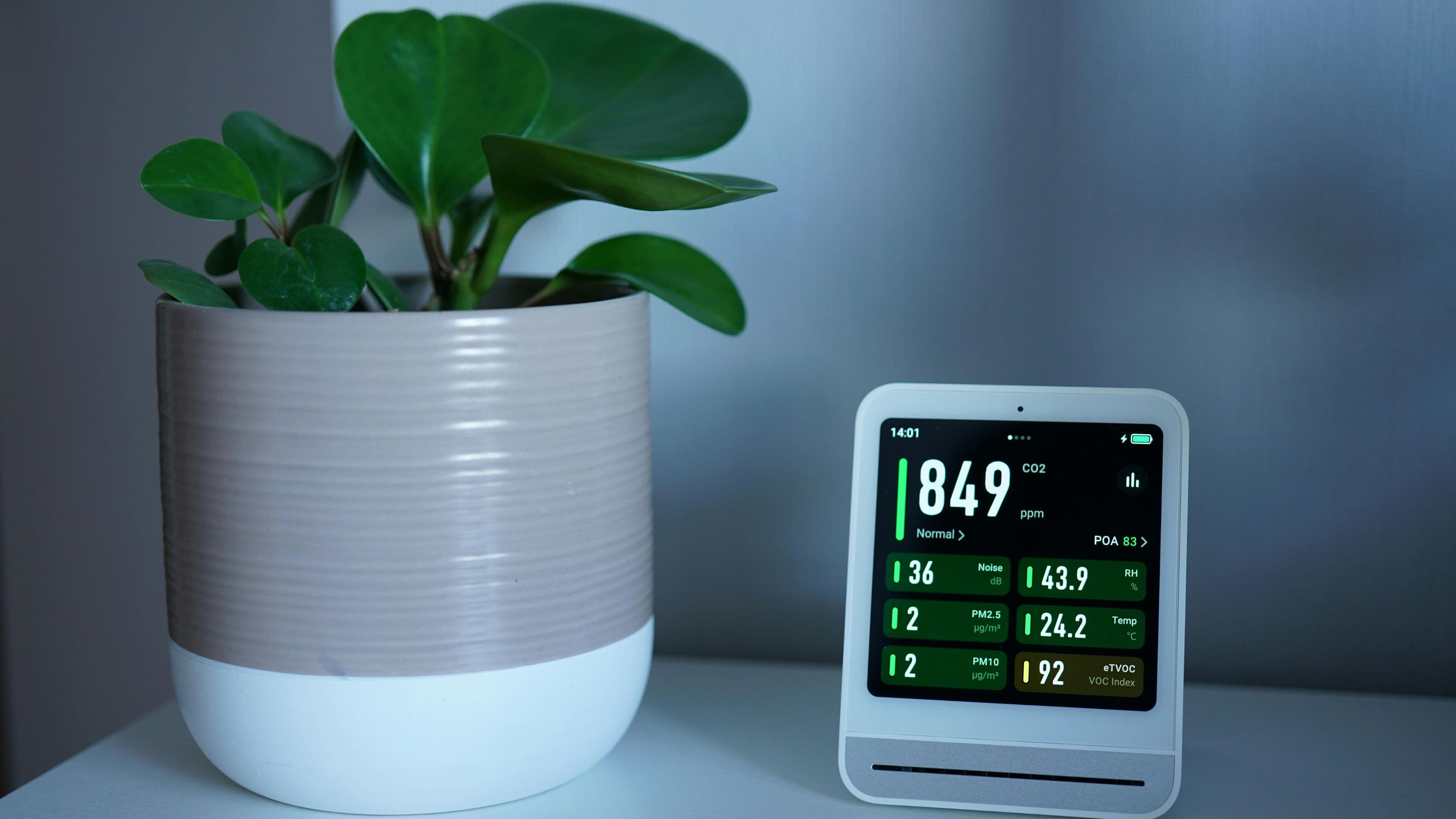
How do I know if my indoor air quality is actually poor? Common signs include frequent headaches that improve when you go outside, worsening allergy or asthma symptoms indoors, a persistent musty smell, or condensation regularly appearing on windows. A basic indoor air quality monitor (around $30-80) can measure VOC levels, humidity, CO2, and particulate matter if you want objective data.
Does cooking affect indoor air quality? Significantly. Gas stoves in particular release nitrogen dioxide and carbon monoxide during use. Always use your kitchen exhaust fan when cooking, and if possible, open a nearby window. This applies to both gas and electric cooking — the act of heating oils and foods produces fine particles regardless of the heat source.
Are air-purifying sprays or "negative ion generators" worth it? Generally no. Most air-purifying sprays simply mask odors with fragrance. Negative ion generators can cause some particles to settle out of the air temporarily, but many also produce ozone as a byproduct — avoid these entirely if you have respiratory sensitivities.
How quickly will I notice a difference? Ventilation and reduced chemical load tend to show effects within days. HEPA filtration running consistently shows results within one to two weeks for allergy sufferers. Mold control takes longer because it's as much about prevention as correction.
Can poor indoor air quality affect sleep? Yes, directly. Elevated CO2 in a sealed bedroom, allergens that irritate airways overnight, and VOCs from synthetic materials have all been linked to reduced sleep quality and more nighttime waking. The bedroom is usually the best room to prioritize.