The problem often isn't your willpower or your routine. It's the environment around you. Your home holds a surprising number of subtle distractions that never announce themselves loudly – they simply drain your attention slowly, in the background, without you ever quite noticing. Once you learn to see them, you can start to do something about them.
Here are seven hidden home distractions that are likely affecting your focus more than you realize.
1. Visual Clutter in Your Peripheral Vision
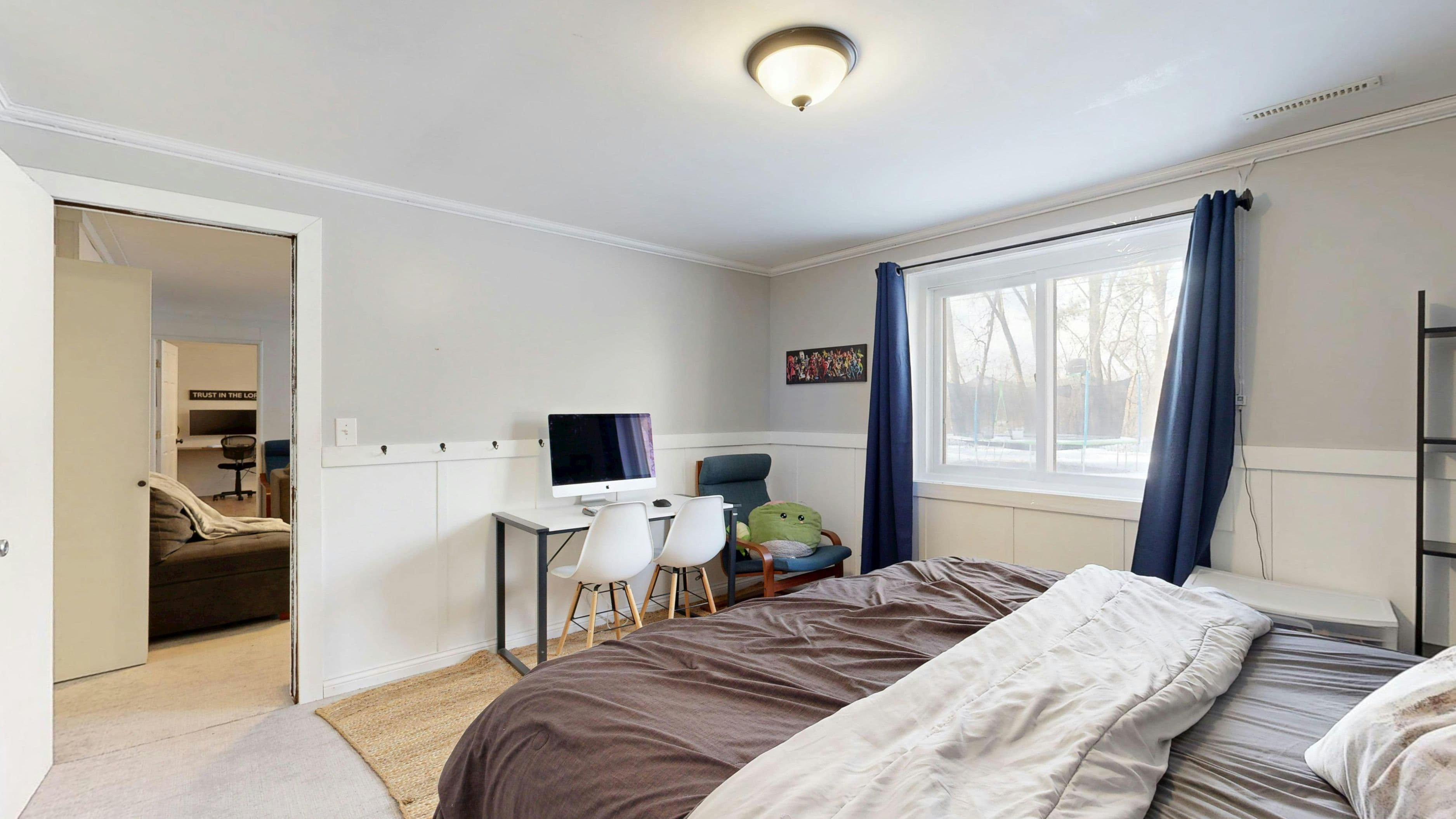
You might think clutter only bothers you when you're actively looking at it. But your brain registers everything within your field of vision, even when you're not consciously paying attention to it. Piles of unfolded laundry, a stack of papers on the corner of the desk, dishes in the sink visible from your workspace – each of these creates a low-level cognitive signal that something is unfinished, undone, or waiting for your attention.
Research from the Princeton Neuroscience Institute found that physical clutter in your environment competes for your attention at a neurological level, reducing your ability to focus and process information. The visual noise isn't neutral – it actively pulls on mental resources you'd rather be directing toward your work. A simple fix is to clear just the surfaces within your direct line of sight before you sit down to focus. You don't have to clean the entire house. You just need to reduce what your eyes are unintentionally tracking.
2. Background Noise You've Stopped Noticing
There's a particular kind of noise that's easy to overlook precisely because you're so used to it – the hum of a neighbor's TV through the wall, the distant sound of traffic, the intermittent ping of a household appliance, a family member's phone calls in the next room. Because these sounds aren't new or alarming, your conscious mind has learned to filter them out. But your nervous system hasn't.
Inconsistent or unpredictable sounds are especially disruptive to focused work. Your brain is wired to pay attention to changes in the auditory environment – it's a survival mechanism – and every unexpected sound triggers a tiny involuntary shift in attention, even when you don't consciously register it. If you work in a noisy environment, consistent background sound like white noise, brown noise, or ambient nature soundscapes can actually help by giving your brain something steady to anchor to, reducing the impact of irregular interruptions.
3. Poor or Harsh Lighting
Lighting affects your mood and cognitive performance more than most people appreciate. Working under harsh overhead fluorescent lighting, or in a space that's too dim for the time of day, creates low-grade physical strain that compounds over hours. Eye fatigue sets in quietly, your posture shifts to compensate, and your ability to sustain attention gradually deteriorates – all without any obvious single cause.
Natural light is the most supportive for focus during daytime hours. If your workspace doesn't get much of it, warm white bulbs in the 4000–5000 Kelvin range offer a reasonable alternative for task lighting. Equally important is where the light is coming from. Light positioned directly behind your screen or directly in front of your eyes creates glare and contrast issues that subtly exhaust your visual system.
Adjusting your workspace so your light source comes from the side is a small change that pays dividends over a full working day.
4. Temperature That's Slightly Off
A room that's too warm makes you sluggish. A room that's too cold keeps part of your brain occupied with physical discomfort. Neither state is dramatic enough to make you stop and fix it immediately, but both are quiet drains on the attentional resources you need for focused work. This one tends to go unaddressed for a long time because the discomfort is never sharp enough to feel like an emergency.
Research from Helsinki University of Technology suggests the optimal temperature range for cognitive work sits between 70–77°F (21–25°C), with most people performing best somewhere in the middle of that range. The right temperature for you depends on your personal baseline, but the point is worth taking seriously: if you regularly feel a vague heaviness or restlessness during work sessions, check the room temperature before blaming your motivation. It's an easy variable to rule out and an even easier one to fix.
5. Digital Notifications You Haven't Fully Silenced
You've probably already turned your phone face-down or put it in another room – good. But notifications have a way of persisting through channels you haven't thought to close. A smartwatch that buzzes when a message arrives. A laptop that chimes when an email lands. A browser tab left open to a messaging app. A smart speaker waiting to light up. Each of these is a small but real interruption, and the research on interruption recovery is humbling: it takes an average of around 23 minutes to fully return to a deep state of focus after being pulled out of it.
The issue isn't just the distraction itself – it's the mental overhead of anticipating the next one. When you know a notification could arrive at any moment, part of your attention is always hovering at the edge of awareness, ready to respond. Genuinely distraction-free focus requires closing that loop completely, not just partially. Going through your devices and turning off non-essential notifications entirely – rather than just muting them temporarily – is more effective than it sounds.
6. An Uncomfortable or Poorly Positioned Chair
Physical discomfort is one of the most underestimated focus disruptors there is, partly because it tends to build gradually rather than arriving all at once. You sit down feeling fine. After forty-five minutes, you're unconsciously shifting in your seat, your lower back is grumbling quietly, and your shoulders have crept up toward your ears. None of it is bad enough to make you stop – but all of it is pulling your attention away from the task in front of you.
Poor seating posture also affects your breathing. Slouched or compressed positions restrict the diaphragm, leading to shallower breaths and subtly lower oxygen intake – which doesn't help with the kind of sustained, clear-headed thinking that focused work requires. You don't necessarily need an expensive ergonomic chair to address this. A rolled towel or small lumbar cushion placed at the curve of your lower back, combined with a screen positioned at eye level, can significantly change how you feel after a long work session.
7. The Mental Weight of Unfinished Tasks Nearby
This last one is less physical than the others, but no less real. When you sit down to focus on one thing while being able to see – or simply being aware of – other unfinished tasks nearby, your brain struggles to stay fully present. An unmade bed in the room where you work, a to-do list pinned to the wall, a pile of items waiting to be dealt with on the corner of your desk. None of these things require action right now, but their presence sends a quiet, persistent signal that keeps a part of your mind occupied.
David Allen, whose Getting Things Done system has shaped how millions of people approach productivity, calls this phenomenon "open loops" – mental commitments that drain energy simply by remaining unresolved. The fix isn't necessarily to do the tasks immediately. It's to get them out of your visual field and into a trusted system – a list, a note, a closed drawer – so your brain can release the background tension of holding onto them. Even moving unfinished items out of sight before a focused work session can noticeably shift how settled and present you feel.
A Gentle Reflection
None of these distractions is dramatic. That's exactly what makes them so persistent – they don't feel urgent enough to address, and so they accumulate quietly in the background of your days, creating a kind of low-level static that makes sustained focus harder than it needs to be.
You don't need to fix all seven at once. Pick the one that resonates most, make one small adjustment this week, and notice how it feels. Environmental change is often more powerful than motivational change – and it's far more sustainable.
FAQ
Do I need to completely redesign my home workspace to see a difference? Not at all. Even small adjustments – clearing your desk surface, adding a side lamp, closing unnecessary tabs – can make a meaningful difference to how focused you feel. Start with one change and observe the effect before adding more.
What if I live with other people and can't control the noise level? You may not be able to eliminate background noise, but you can mask it. Consistent ambient sound – white noise, brown noise, or instrumental music without lyrics – helps reduce the cognitive impact of unpredictable sounds. Over-ear headphones are particularly effective at creating a psychological boundary around your workspace, even in a shared home.
How quickly will I notice an improvement? Most people notice a difference within the first focused session after making environmental changes. The effects are often clearest when you compare a distraction-reduced session with how you usually feel, rather than expecting a dramatic shift in isolation.
Is visual clutter really that impactful, or is that overstated? The research is consistent on this point. Visual complexity in your environment does compete for attentional resources, particularly in people who are already managing cognitive load from complex work. That said, some people are more sensitive to it than others. If you've never tried working with a genuinely clear desk and clean sightline, it's worth experimenting with.
Your home can either support your focus or quietly undermine it. The good news is that once you know what to look for, most of these distractions are well within your ability to address – without a major overhaul, and without adding more to your to-do list than is already there.
📚 Sources
Princeton Neuroscience Institute – Visual Clutter and Attention: https://pni.princeton.edu/news/2011/01/visual-cortex-clutter
Gloria Mark, UC Irvine – The Cost of Interrupted Work: https://www.ics.uci.edu/~gmark/chi08-mark.pdf
Helsinki University of Technology – Temperature and Cognitive Performance: https://www.sciencedirect.com/science/article/pii/S036013230600163X
David Allen – Getting Things Done Overview: https://gettingthingsdone.com/what-is-gtd/
Sleep Foundation – How Lighting Affects Mood and Performance: https://www.sleepfoundation.org/bedroom-environment/light-and-sleep
American Optometric Association – Digital Eye Strain: https://www.aoa.org/healthy-eyes/eye-and-vision-conditions/computer-vision-syndrome