What I stumbled into that evening was the territory of growth mindset — a concept that sounds deceptively simple but holds profound implications for how children (and the adults raising them) relate to challenge, failure, and their own potential. It's not about being positive. It's not about telling kids they're special. It's something quieter, more honest, and ultimately far more powerful than either of those things.
1. Your Brain Is a Garden, Not a Report Card
The term "growth mindset" was coined by Stanford psychologist Dr. Carol Dweck, whose decades of research on achievement and motivation produced one of the most cited ideas in modern psychology. In her landmark book Mindset: The New Psychology of Success, Dweck describes two fundamental orientations: a fixed mindset, which holds that intelligence and talent are static traits you either have or don't, and a growth mindset, which understands that abilities can be developed through effort, strategy, and good mentorship.
Here's what struck me as I read her work: a fixed mindset isn't a personality flaw. It's a protective story. When children (or adults) say "I'm just not good at this," they're often trying to avoid the sting of trying hard and still falling short. The fixed mindset offers a kind of emotional insurance policy — if you never fully try, you never fully fail. But the price of that protection is steep: it keeps you from growing, from stretching, from discovering what you're actually capable of when you stay in the game long enough.
Teaching a growth mindset means helping children understand that the brain — like a garden — responds to what you feed it. Struggle isn't a sign that you've hit your limit. It's a sign that something new is taking root.
2. "Yet" Is One of the Most Powerful Words in the English Language
One of the simplest, most immediately applicable tools in Dweck's framework is a single three-letter word: yet. When your child says "I can't do this," the instinct might be to reassure them — "Of course you can!" But that kind of blanket positivity can feel hollow, especially to a child who has genuinely tried and still struggled. It also subtly dismisses their real experience.
Instead, try: "You can't do this yet." That tiny addition reframes the moment entirely. It doesn't deny the difficulty. It doesn't pretend the frustration isn't real. It simply refuses to let the present moment become a permanent verdict. "Yet" is a door held open. It says: this story isn't over.
The research behind this is striking. In a study published in Psychological Science, children who were praised for their effort rather than their intelligence showed significantly greater resilience when faced with challenging tasks — they tried harder, chose more difficult problems, and enjoyed the process more. Children praised for being "smart," on the other hand, tended to avoid challenges, fearing that failure would expose them as not actually smart after all. The word "yet" belongs to the effort camp. It teaches children that their current ability is a starting point, not a ceiling.
3. How You Praise Matters More Than How Much You Praise
Here's something that might feel counterintuitive at first: telling your child they're brilliant could actually be working against them. This isn't about withholding love or validation — it's about being precise with your encouragement in a way that actually builds something lasting. Praise aimed at identity ("You're so smart!") feels wonderful in the moment but creates a fragile foundation. Children who are repeatedly told they're naturally gifted often become terrified of any situation that might prove otherwise.
Effort-based praise — "I noticed how hard you worked on that," or "You kept trying even when it got frustrating — that's what makes the difference" — does something different. It tells a child that the process is what matters, and that the process is something they control. This is enormously empowering, because intelligence can feel like something that just happens to you, but effort is something you actively choose.
The shift in how we praise isn't about manufacturing false enthusiasm. It's about paying closer attention — noticing the moments of persistence, the small acts of courage, the willingness to try again after something didn't work. Those are the moments worth celebrating loudly.
4. Failure Isn't the Opposite of Learning — It Is Learning
There's a particular quality of silence that falls over a child when they've made a mistake and are bracing for a reaction. You can feel the tension in the air, that held-breath moment before they find out what their failure means. What happens in that silence matters enormously. If the message they receive — spoken or unspoken — is that mistakes are shameful, dangerous, or disappointing, they will begin to shrink away from anything that carries a risk of being wrong.
But when failure is treated as information rather than indictment, everything changes. Some of the most innovative schools and educators around the world have started using the phrase "not yet" on assignments rather than failing grades, creating what amounts to a culture of iteration rather than judgment. When Thomas Edison was asked about his many failed attempts to invent the lightbulb, he reportedly said: "I have not failed. I've just found 10,000 ways that won't work." That's growth mindset in its most elemental form — the refusal to let a setback write the final sentence.
Practically speaking, this means creating a home environment where it's safe to say "I got it wrong" without it becoming a defining moment. Talk about your own mistakes openly. Let your children see you struggle with something and keep going. Model the kind of relationship with failure that you want them to internalize — one where mistakes are just detours, not dead ends.
5. The Classroom Isn't the Only Classroom
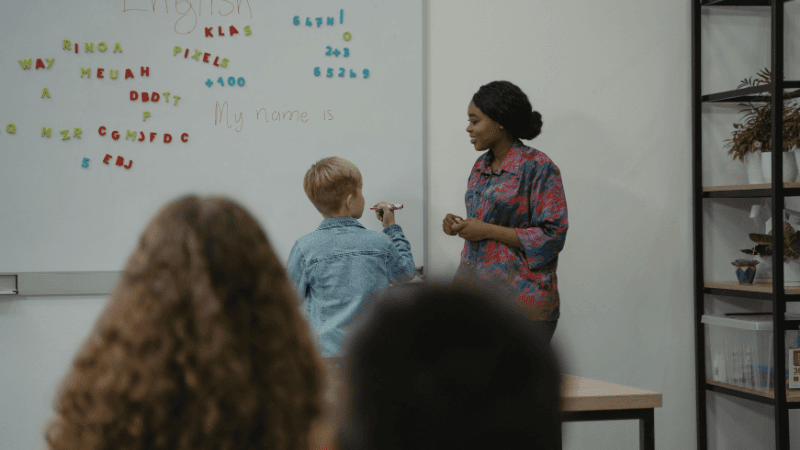
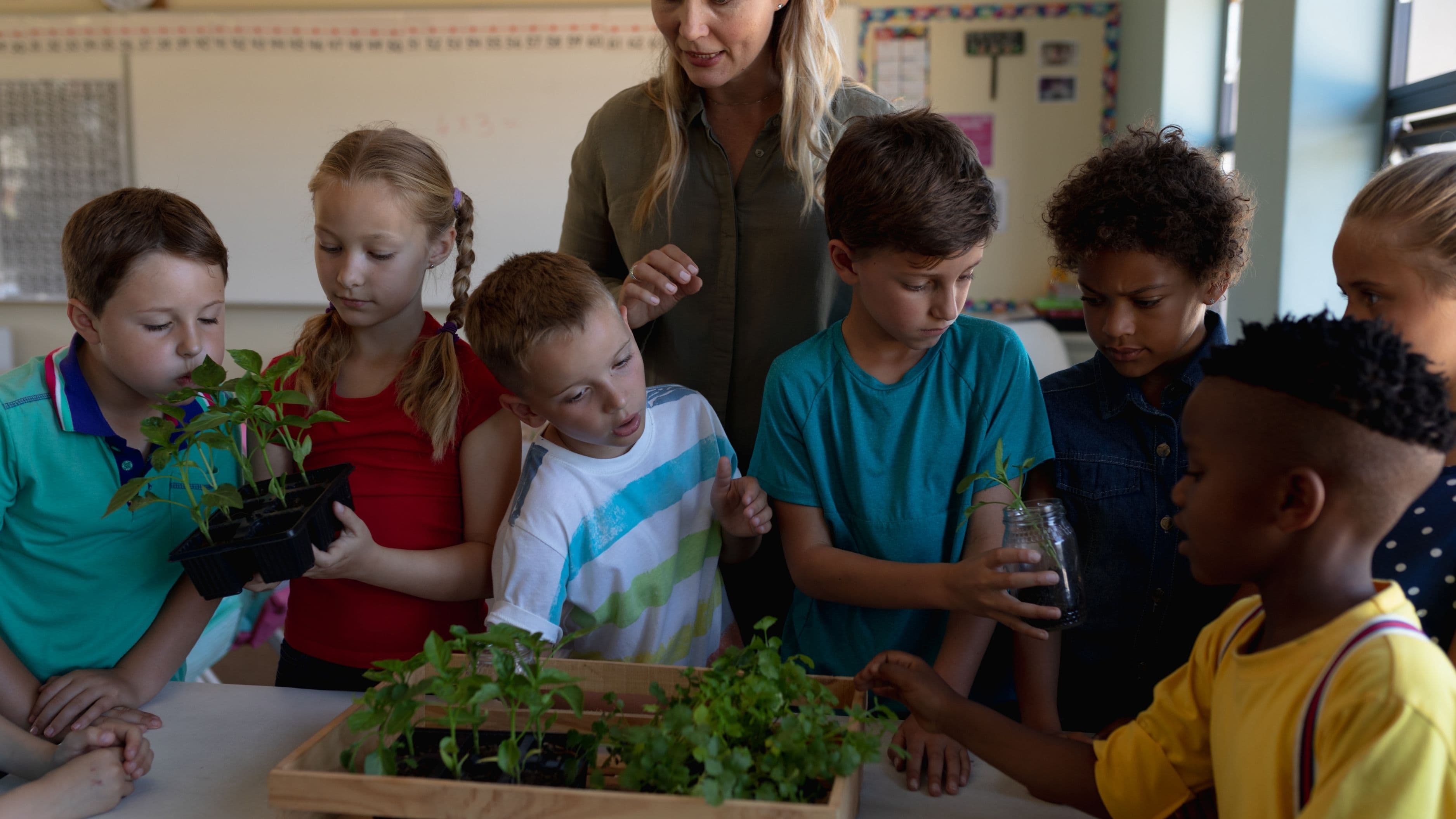
Schools are increasingly integrating growth mindset principles into their curriculum, and that's genuinely encouraging. But the most formative growth mindset lessons don't happen during a structured lesson about neuroplasticity. They happen at the dinner table, in the car after a rough sports practice, in the quiet moment before bed when a child confesses something they're worried about. The unofficial curriculum of daily life is where mindset is actually shaped.
Think about the texture of ordinary conversations in your household. When your child comes home frustrated after a hard day, what's the first thing out of your mouth? When they want to quit an activity because it's gotten difficult, how do you respond? These micro-moments accumulate into a worldview. They form the invisible architecture of how a child understands their own capacity. You don't have to have a formal "growth mindset talk" — in fact, the organic moments tend to be more powerful precisely because they're real.
Consider bringing mindfulness into these exchanges. Before reacting to a frustrated child, take one slow breath — not to suppress your response, but to choose it more intentionally. That small pause creates space for connection rather than correction, and it models emotional regulation alongside resilience.
6. Let Them Struggle — But Don't Leave Them Alone in It
One of the hardest things about parenting with a growth mindset is resisting the urge to rescue. When you watch your child wrestle with something difficult — a puzzle, a difficult friendship, a piece of music that won't come together — every loving instinct tells you to step in and make it easier. And sometimes, of course, that's exactly right. The skill lies in knowing the difference between productive struggle and overwhelmed paralysis.
Productive struggle has a quality of engagement to it — the child is frustrated, but they're still in the game. They're trying different approaches, they're thinking. That kind of struggle is gold. It's literally building new neural pathways, creating the kind of competence that only comes from having figured something out yourself. Stepping in too quickly short-circuits that process. It teaches children, however unintentionally, that they can't handle difficulty without immediate intervention.
What they need instead is what educational psychologist Lev Vygotsky called the "zone of proximal development" — that sweet spot where a task is challenging enough to stretch them but not so far beyond their reach that they shut down entirely. Your role as a parent or caregiver in that zone is to be a steady, warm presence — available but not intrusive. Ask questions instead of giving answers. "What have you tried so far?" "What do you think might happen if you approached it differently?" Let them lead. Let them surprise you.
7. Mindset Is Caught as Much as It's Taught
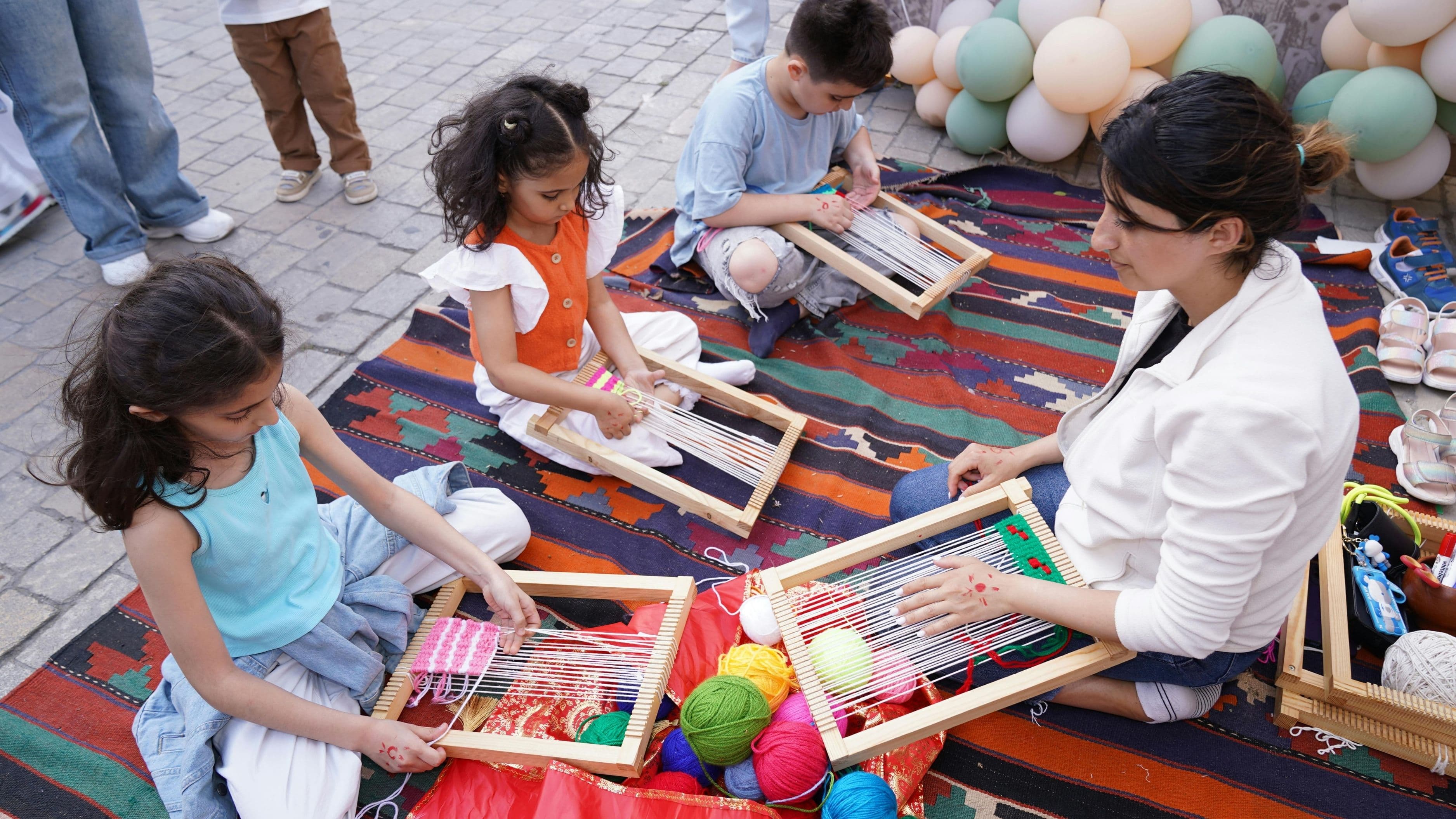
Children are extraordinary observers. Long before they can articulate what they're noticing, they're absorbing the emotional and behavioral patterns of the adults around them. They watch how you handle your own setbacks. They notice whether you speak about your own abilities as fixed ("I'm just not a creative person") or fluid ("I haven't really explored that yet, but maybe I should"). They hear the story you tell about yourself, and they begin to write their own story in the same genre.
This is both a humbling and an exciting realization. It means that teaching growth mindset to your children is inseparable from practicing it yourself. The willingness to say "I don't know, let's figure it out together" is itself a profound lesson. The moment you pick up a new skill you've been afraid to try — a language, an instrument, a recipe you've never attempted — and let your child witness both your stumbling and your perseverance, you're teaching something no worksheet can replicate.
Dr. Dweck herself has noted in interviews that parents and teachers often believe they're conveying a growth mindset when their actions tell a different story. If a parent is anxious about their child's grades and that anxiety communicates that performance is what matters most, the underlying message — regardless of the words used — is fixed mindset. Alignment between what we say and how we live is the most powerful teaching tool we have.
8. Growth Mindset Is a Practice, Not a Destination
One of the most liberating aspects of this entire framework — for children and adults alike — is that growth mindset isn't something you achieve once and then own forever. It's a practice. Some days you inhabit it fully; other days, the old fixed-mindset voice is loud and convincing. That's not failure. That's being human. The goal isn't to eliminate the fixed-mindset voice entirely but to recognize it when it shows up and choose a different response.
This is where mindfulness and growth mindset converge beautifully. Both practices are fundamentally about awareness — noticing what's happening internally without being completely at the mercy of it. When your child (or you) feels that familiar clench of "I can't do this," the mindful response is to pause, name it — "this is the part that feels hard" — and then gently redirect toward curiosity rather than judgment. What's one small thing I could try? What would it look like to take the next tiny step?
Normalize the practice in your household. Let it be okay to say "I'm in fixed mindset right now" and have that be the beginning of a conversation rather than a confession. The more openly a family talks about their mental and emotional processes, the more children understand that the mind is not a fixed landscape but a living, responsive terrain they have real agency over.
The Real Lesson at the Kitchen Table
My daughter eventually worked through those fractions. It took longer than either of us wanted, and there were definitely tears — mine included. But something shifted between us that evening that I didn't fully understand until much later. By staying at that table, by refusing to let her give up on herself even when she desperately wanted to, I wasn't just teaching her long division. I was teaching her that difficulty is survivable. That she is more capable than her frustration tells her she is. That the struggle itself is not a sign of limitation — it's a sign of growth in progress.
The research tells us that a growth mindset can predict resilience, academic achievement, and even emotional well-being in children. But what the research can't fully capture is what it feels like to watch a child's face change when they finally get something — that particular quality of light in their eyes that says I did that. Not "I was smart enough." Not "It was easy for me." But I stayed, I tried, and I did that. That kind of confidence — earned, embodied, real — is worth every frustrating minute at the kitchen table.
Teach your children that their minds are alive. That effort is honorable. That "yet" is a horizon, not a wall. And as you teach them, let yourself learn it too — perhaps for the very first time.
📚 Sources
1. Dweck, C. S. (2006). Mindset: The New Psychology of Success. Random House.
2. Blackwell, L. S., Trzesniewski, K. H., & Dweck, C. S. (2007). Implicit theories of intelligence predict achievement across an adolescent transition: A longitudinal study and an intervention. Child Development, 78(1), 246–263. https://doi.org/10.1111/j.1467-8624.2007.00995.x
3. Mueller, C. M., & Dweck, C. S. (1998). Praise for intelligence can undermine children's motivation and performance. Journal of Personality and Social Psychology, 75(1), 33–52. https://doi.org/10.1037/0022-3514.75.1.33
4. Vygotsky, L. S. (1978). Mind in Society: The Development of Higher Psychological Processes. Harvard University Press.
5. Yeager, D. S., & Dweck, C. S. (2012). Mindsets that promote resilience: When students believe that personal characteristics can be developed. Educational Psychologist, 47(4), 302–314. https://doi.org/10.1080/00461520.2012.722805