Not What You're Thinking
Forest bathing has nothing to do with a literal bath, and it's not hiking with a wellness rebrand. Originating in Japan in the 1980s under the name Shinrin-yoku (森林浴), it was developed as a national public health practice in response to rising burnout and stress in urban populations. The concept is elegantly simple: you walk slowly through a natural environment, engaging all five senses, with no destination and no performance. You're not there to conquer a trail or burn calories. You're there to just be — and to let the forest do the rest.
The Science Is Real
This isn't soft wellness talk. Researchers have found that spending time in forested environments measurably lowers cortisol (the stress hormone), reduces blood pressure, and boosts immune function. A landmark study published in Environmental Health and Preventive Medicine found that participants who walked in forest environments showed significantly lower cortisol levels compared to those who walked in urban settings. Part of this comes down to phytoncides — natural antimicrobial compounds released by trees — which, when inhaled, have been shown to increase the activity of natural killer (NK) cells in the human immune system. Your body, it turns out, knows exactly what to do when you give it a forest.
What It Actually Looks and Feels Like
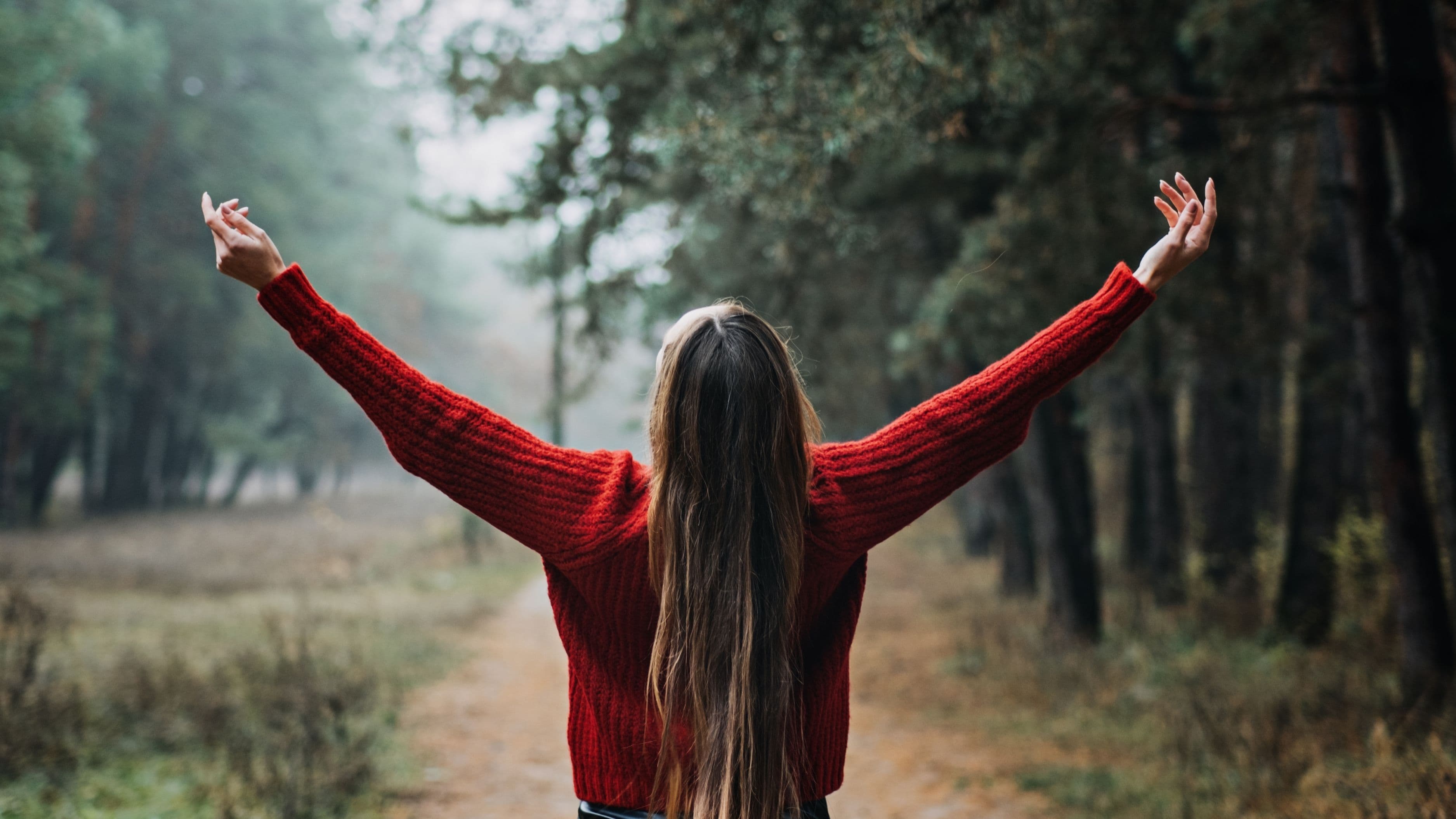
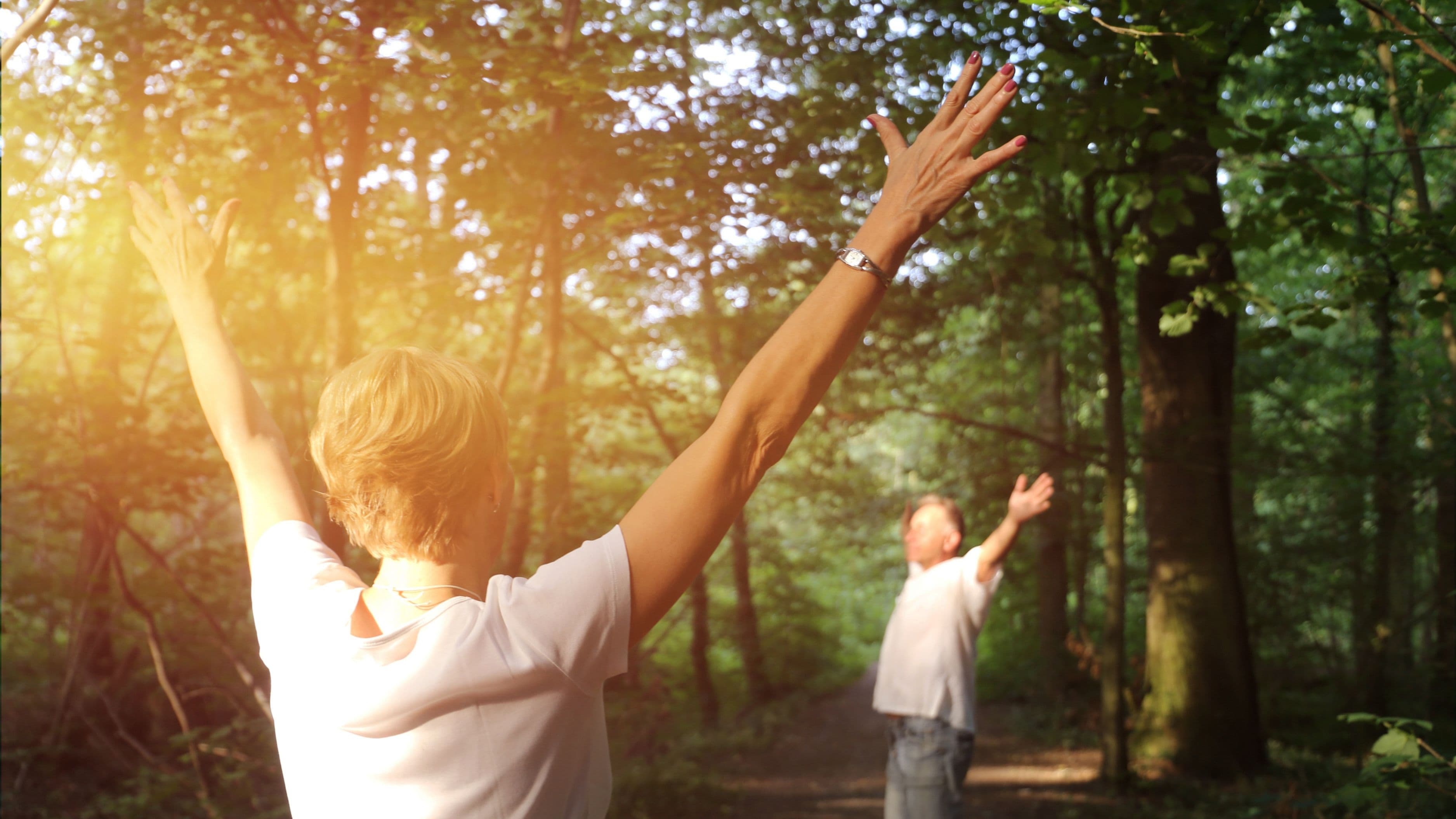
Imagine this: you step off the path. The air smells faintly of moss and pine. You put your phone in your pocket — face down, or better yet, left in the car. You move slowly, no faster than a quiet thought. You notice the way filtered light breaks apart between branches. You press a palm against the rough texture of bark and feel its weight, its stillness. You breathe deeply and something in your chest loosens. That's it. That's the whole practice. It's disarmingly ordinary, and somehow, that's the point.
7 Reasons to Try Forest Bathing
1. It quiets the noise — instantly. The moment you step under a tree canopy, your nervous system begins to shift. Studies show that exposure to natural environments activates the parasympathetic nervous system (your "rest and digest" mode) within minutes, pulling you out of the chronic fight-or-flight cycle that modern life keeps you locked in.
2. It's a mindfulness practice you don't have to think about. Unlike sitting meditation — which can feel impossible when your mind won't cooperate — forest bathing anchors you in sensation naturally. The sound of rustling leaves, the smell of damp earth, the cool air on your skin: the forest does the focusing for you.
3. It rebuilds your attention span. Attention Restoration Theory (ART), developed by environmental psychologists Rachel and Stephen Kaplan, suggests that natural environments allow your directed attention to rest and recover. After time in nature, people report sharper focus, better problem-solving, and reduced mental fatigue. Think of it as a reboot for your brain.
4. It's free, and almost everywhere. You don't need an ancient forest or a national park. Urban parks, tree-lined trails, botanical gardens — any space with enough greenery and enough quiet will work. The barrier to entry is almost zero.
5. It improves your mood in ways screens simply can't. A study by Stanford University researchers found that participants who walked in a natural setting for 90 minutes showed reduced activity in the subgenual prefrontal cortex — the part of the brain linked to rumination and depressive thought patterns — compared to those who walked in an urban setting. Nature literally interrupts the mental loop.
6. It reconnects you with your body. Most of us live from the neck up. Forest bathing invites you back into your whole self — your feet on uneven ground, your lungs expanding with cleaner air, your skin registering temperature and texture. Feel the earth push back gently with each step. That's not poetic license; that's proprioception, and it's grounding in the most literal sense.
7. It deepens your sense of belonging. There's a concept in Japanese aesthetics called mono no aware — a bittersweet awareness of impermanence. Spending time among trees, which outlive us by centuries, has a humbling, softening effect. Many people report feeling less isolated after time in a forest, not because they found community, but because they remembered they're part of something larger than their to-do list.
How to Start (No Gear Required)
Go slow. There's no pace goal. If you're walking fast enough to raise your heart rate, slow down.
Leave the earbuds behind. The point is to hear what's actually around you — wind, birds, the creak of branches.
Try the "5 senses" check-in. Every few minutes, pause and name one thing you can see, hear, smell, feel, and taste (yes, even the cool air counts).
Stay at least 20 minutes. Research suggests benefits begin to accumulate around the 20-minute mark, with stronger effects after 2 hours.
Go alone, at least once. The absence of conversation creates space for something quieter and more essential to surface.
It's Not Escaping — It's Arriving
Here's the reframe: forest bathing isn't about running away from your life. It's about arriving fully in it — without the performance, the productivity metrics, or the noise. When you let the forest hold you for an hour, you come back different. Not dramatically transformed, but subtly recalibrated. Your shoulders drop. Your thinking clears. You remember what it feels like to be a body in the world, not just a brain managing tasks.
Pick one afternoon this week. Find the nearest park or trail. Leave your podcast at home. Walk until the city fades to background hum — and then keep walking, slowly, toward something that doesn't need you to do anything at all.
Pick one and try it right now. Momentum starts small — sometimes it starts with a single tree.
📚 Sources
Li, Q. (2010). Effect of forest bathing trips on human immune function. Environmental Health and Preventive Medicine, 15(1), 9–17. https://doi.org/10.1007/s12199-008-0068-3
Bratman, G. N., Hamilton, J. P., Hahn, K. S., Daily, G. C., & Gross, J. J. (2015). Nature experience reduces rumination and subgenual prefrontal cortex activation. Proceedings of the National Academy of Sciences, 112(28), 8567–8572. https://doi.org/10.1073/pnas.1510459112
Kaplan, R., & Kaplan, S. (1989). The Experience of Nature: A Psychological Perspective. Cambridge University Press.
Park, B. J., Tsunetsugu, Y., Kasetani, T., Kagawa, T., & Miyazaki, Y. (2010). The physiological effects of Shinrin-yoku (taking in the forest atmosphere or forest bathing): Evidence from field experiments in 24 forests across Japan. Environmental Health and Preventive Medicine, 15(1), 18–26.