That girl was me. And looking back, I wasn't a bad kid or a jealous one, exactly. I was just emotionally illiterate. Nobody had ever taught me that what I was feeling had a name — envy — or that it was pointing at something I cared about deeply, not something wrong with my character. Nobody had taught me that feelings are data, not verdicts. That if I could have named it, I might have been able to sit with it instead of punishing my friendship for it.
Emotional intelligence — or EQ, as it's widely called — is the ability to recognize, understand, manage, and use emotions effectively, both your own and those of the people around you. It sounds almost too soft to matter in a school setting, especially one obsessed with test scores, college prep, and academic rankings. But the research tells a very different story. And so does anyone who's ever watched a brilliantly "smart" person implode under pressure, or seen a so-called average student quietly become the person everyone trusts with their hardest problems.
This article isn't an academic lecture. It's an invitation — from one person who had to learn EQ late and messily, to anyone who wonders whether the inner world of a student matters as much as the test scores on their wall.
1. Feelings don't disappear — they redirect
Here's the thing nobody tells you in school: suppressed emotions don't evaporate. They go underground, and then they surface somewhere less convenient — as a snapped comment at a teacher, a headache before every exam, or a friendship quietly starved of oxygen because no one knew how to say "I'm hurt."
Emotional intelligence begins with the radical, almost counterintuitive idea that feelings are worth paying attention to — not as distractions from learning, but as part of the learning environment. Psychologist Marc Brackett, founder of the Yale Center for Emotional Intelligence and author of Permission to Feel, describes emotions as "a form of information" that the brain is constantly processing whether we acknowledge it or not. When students are given language and space to process what they're feeling, the emotional signal gets decoded. When they aren't, the signal stays as background static — loud enough to interfere with focus, memory, and decision-making, but quiet enough to be misattributed as a character flaw.
Think about what happens in a typical school morning. A student might arrive carrying the weight of a difficult conversation at home, a sleepless night, anxiety about a presentation, or the low-grade hum of social exclusion. None of those experiences disappear the moment they sit down. Without the tools to recognize and metabolize those feelings, they simply leak into everything — concentration, relationship dynamics, willingness to take intellectual risks. Emotional intelligence gives students a container for that experience, so it doesn't spill all over the desk.
2. Self-awareness is the original superpower
Before a student can manage their emotions, they have to be able to see them. That sounds obvious, but self-awareness — the ability to accurately observe your own emotional states and understand how they influence your behavior — is genuinely rare, and genuinely teachable.
Dr. Tasha Eurich, an organizational psychologist who has researched self-awareness extensively, found in a study of nearly 5,000 people that while 95% believe they are self-aware, only about 10–15% actually meet the criteria for true self-awareness. That gap is not a personal failing; it's a teaching gap. Schools have historically prioritized external knowledge — facts, formulas, historical dates — over internal knowledge. But a student who can notice "I'm feeling defensive right now, which is probably why I want to argue with this feedback" is operating at a cognitive sophistication that will serve them in every classroom, career, and relationship they ever inhabit.
In practical terms, self-awareness in students looks like being able to identify feelings with precision (there's a big difference between "anxious" and "humiliated," even though they can feel similar in the body), recognizing emotional triggers before reacting to them, and understanding the difference between having a feeling and being the feeling. That last distinction is perhaps the most freeing thing a young person can learn.
3. Empathy isn't softness — it's intelligence
Walk into any school cafeteria and you're watching a live, complex social ecosystem at work. Who sits where. Who gets left out. Who laughs too loudly at something that isn't funny to mask something that hurts. Empathy — the capacity to understand and share the feelings of another — is the invisible architecture holding that ecosystem together, or tearing it apart.
There's a persistent cultural narrative that empathy is a "soft" skill, somehow less rigorous than analytical thinking. This is both factually wrong and actively harmful. Empathy is cognitively demanding. It requires the ability to hold someone else's perspective simultaneously with your own, resist the pull of snap judgment, and stay present with discomfort rather than retreating from it. These are not easy things. They are, in many ways, harder than solving an equation, because equations don't trigger your nervous system.
Research published in the journal Child Development found that students with higher empathy scores demonstrated better academic performance, lower rates of bullying behavior, and stronger peer relationships — all of which create the psychological safety that is a precondition for genuine learning. When a student feels seen and understood by teachers and peers, their nervous system relaxes. The brain shifts out of threat-detection mode and into the kind of open, curious, connected state where learning actually happens. Empathy, in other words, isn't a detour from academic success. It's a prerequisite for it.
4. Regulation is what separates reaction from response
This is the one that changes everything in real time. Emotional regulation — the ability to manage the intensity and expression of your emotions in ways that are appropriate to the situation — is what stands between a student's initial emotional impulse and their actual behavior.
Without it, a student who feels embarrassed in front of the class shuts down completely for the rest of the day. With it, that same student can feel the sting, take a breath, and stay present. Without it, a student who's been rejected by a friend group at lunch brings that unprocessed grief into the afternoon chemistry class and can't retain a single thing. With it, they can acknowledge the hurt and set it aside temporarily — not suppress it, but hold it, with the understanding that it will need attention later.
The distinction between reaction and response is physiological as much as psychological. When an emotion spikes — anger, fear, shame — the body's stress response activates. Heart rate climbs. The prefrontal cortex (the seat of reasoning, planning, and impulse control) effectively goes partially offline. What emotional regulation skills do is create a pause in that physiological cascade — enough space for the thinking brain to come back online before a word is said or a door is slammed. Teaching students to build that pause is one of the most genuinely life-changing things a school can do, and it costs nothing beyond intention and practice.
5. The classroom is a social-emotional laboratory
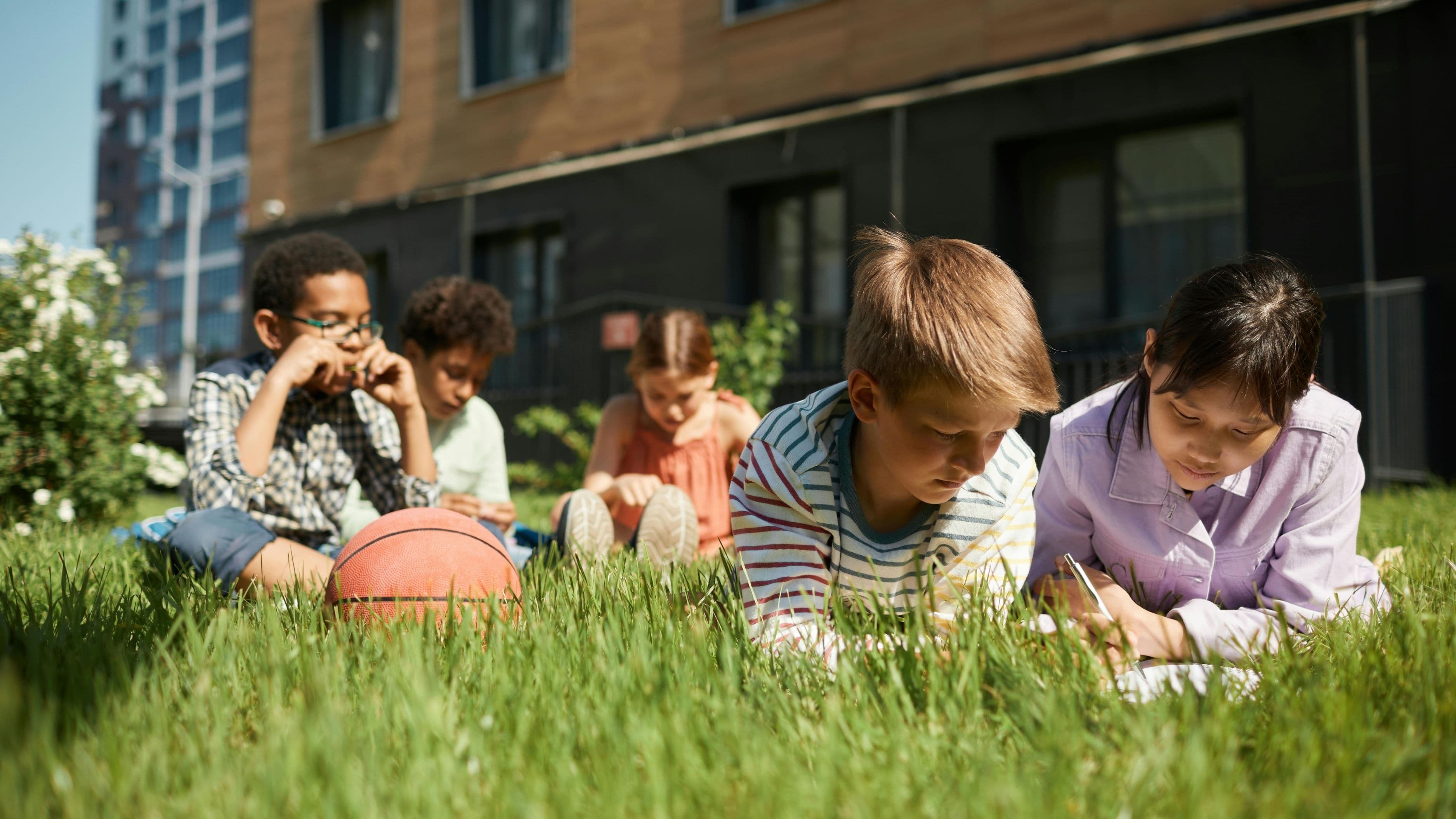
Every single school day, students are navigating group projects with people they didn't choose, receiving feedback on work they care about, competing for attention and recognition, managing fear of failure, and negotiating the relentless social complexity of adolescence. In other words, the classroom is already a full-immersion emotional experience. The question is only whether that experience is going to be processed intentionally or just absorbed unconsciously.
Social-Emotional Learning (SEL) — the formal framework for teaching EQ skills in schools — has been studied extensively and the results are striking. A landmark meta-analysis of 213 studies involving over 270,000 students, published by the Collaborative for Academic, Social, and Emotional Learning (CASEL), found that students who received SEL instruction showed an 11-percentile-point gain in academic achievement compared to control groups. They also demonstrated significant improvements in social skills and significant reductions in conduct problems and emotional distress. These aren't marginal benefits. They're the kind of outcomes school systems spend enormous resources trying to produce through purely academic interventions.
What makes SEL effective is not that it adds an extra "feelings class" to the schedule. The most impactful SEL programs weave emotional intelligence into the existing fabric of school life — through how teachers respond to conflict, how mistakes are framed, how feedback is delivered, and how classroom community is built day by day. The message students absorb is that their inner lives are valid, manageable, and worth understanding. That message, received consistently over years, is genuinely transformative.
6. EQ shapes who students become — not just how they score
It would be convenient, and perhaps more persuasive to certain audiences, if the argument for emotional intelligence in schools rested entirely on academic performance data. But the more honest and more compelling argument is simply this: schools are not just preparing students to pass tests. They are preparing human beings to live alongside other human beings, and that requires a fundamentally different skill set than rote memorization or exam technique.
The World Economic Forum's Future of Jobs Report has consistently ranked emotional intelligence among the top skills employers seek — alongside critical thinking, creativity, and complex problem-solving. The ability to manage yourself under pressure, work effectively in teams, navigate conflict without escalation, and sustain motivation through difficulty — these are not soft skills. They are survival skills for the modern adult world. Students who graduate with strong EQ are not just better colleagues and partners; they're more resilient individuals who know how to recover from setbacks without being defined by them.
Daniel Goleman, whose 1995 book Emotional Intelligence first brought the concept into mainstream consciousness, argued that EQ accounts for more of the variance in life success than IQ — a claim that remains debated but directionally supported by decades of subsequent research. What's less debated is that academic intelligence without emotional intelligence is a genuinely limiting combination: the student who is brilliant at analysis but shatters under criticism, or who can solve any problem except the ones involving other people. Schools that teach both are not compromising academic rigor. They are completing it.
A closing thought: the literacy we forgot to teach
That twelve-year-old in the back of the classroom, quietly punishing her friend for something that was really just an unexamined feeling — she didn't need a therapist or a lecture. She needed a language. A map of her inner world with enough labels on it to navigate by. She needed someone to tell her that what she felt was normal, that it had a name, and that she had the capacity to understand it rather than just be dragged around by it.
Emotional intelligence is that language. It doesn't promise a life without difficult feelings — it promises something better: a life where difficult feelings are no longer in charge. Where you can feel the heat of envy and ask what it's telling you instead of acting it out. Where you can sit in a classroom with a bruised heart and still be present enough to learn. Where you can disagree with someone without losing the relationship, or receive criticism without losing yourself.
That's not a small thing to give a child. It might be the most important thing we can teach — not instead of reading and math and science, but woven into the same fabric, because human beings are not just minds that happen to carry bodies and emotions around. We are whole, and the schools that educate the whole person are the ones that send whole people out into the world.
The inner life of a student is not a distraction from learning. It is the ground on which all learning stands.
📚 Sources
Brackett, M. (2019). Permission to Feel: Unlocking the Power of Emotions to Help Our Kids, Ourselves, and Our Society Thrive. Celadon Books.
Durlak, J. A., Weissberg, R. P., Dymnicki, A. B., Taylor, R. D., & Schellinger, K. B. (2011). The impact of enhancing students' social and emotional learning: A meta-analysis of school-based universal interventions. Child Development, 82(1), 405–432.
Eurich, T. (2018). What self-awareness really is (and how to cultivate it). Harvard Business Review. https://hbr.org/2018/01/what-self-awareness-really-is-and-how-to-cultivate-it
Goleman, D. (1995). Emotional Intelligence: Why It Can Matter More Than IQ. Bantam Books.
World Economic Forum. (2023). Future of Jobs Report 2023. https://www.weforum.org/reports/the-future-of-jobs-report-2023
Caprara, G. V., Barbaranelli, C., Pastorelli, C., Bandura, A., & Zimbardo, P. G. (2000). Prosocial foundations of children's academic achievement. Psychological Science, 11(4), 302–306.