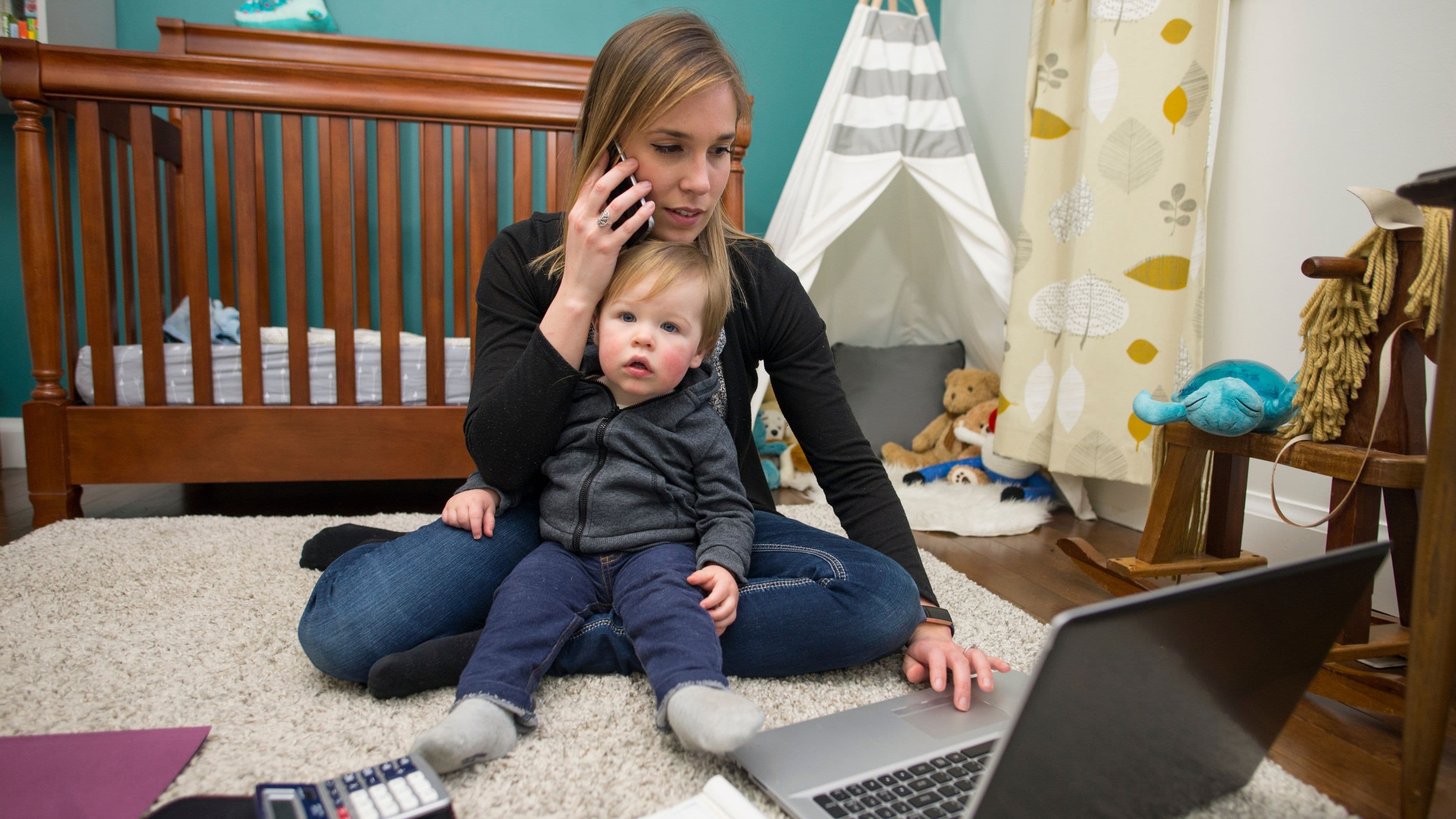
The hard truth is that mom guilt rarely responds to logic, even when you know intellectually that you're doing a good job. It responds to something deeper – often an internalized, often impossible, standard of what a "good mom" is supposed to look like. Letting it go isn't about convincing yourself you're perfect. It's about learning to separate the guilt that's actually useful from the guilt that's just noise.
Understanding Where Mom Guilt Actually Comes From
Mom guilt usually isn't really about the specific moment that triggers it. It's about a much bigger, quieter fear underneath – that you're not enough, that your kids will remember the hard days more than the good ones, that somewhere there's a version of motherhood you're falling short of. That fear gets attached to small daily decisions because those are the moments you can actually see and measure, even though the thing you're really worried about is much bigger and much harder to quantify.
Recognizing this distinction matters, because it means the guilt you feel over a missed bedtime story isn't really about that one bedtime story. Once you can name what's underneath it, the guilt often loses some of its grip, simply because you're responding to the real fear instead of the surface-level trigger.
The Difference Between Useful Guilt and Noise
Not all guilt is worth dismissing. If you snapped at your child in a way that felt disproportionate to what happened, that discomfort is doing something useful – it's pointing you toward a repair conversation and a chance to model what accountability looks like. That kind of guilt has a job to do, and once you've acknowledged it and made a small repair, it can be released.
Most day-to-day mom guilt isn't that kind, though. Feeling guilty for working, for needing alone time, for choosing convenience food on a hard day, or for not being endlessly patient isn't pointing you toward anything actionable. It's just an old, unrealistic standard playing on a loop. Learning to tell these two types apart is one of the most practical tools for actually reducing how much guilt you carry day to day.
Reframing What "Good Enough" Actually Means
Much of the research on child development points to something reassuring: kids don't need perfect parents, they need "good enough" ones – present, responsive, and repairing ruptures when they happen. This idea, sometimes called good enough parenting, isn't a lowered bar out of laziness. It's an accurate reflection of what actually builds secure, resilient kids.
Sitting with this idea can feel uncomfortable at first if you've spent years measuring yourself against an impossibly high bar. But it's worth returning to regularly, especially on the days when guilt feels loudest. Your child doesn't need you to be everything. They need you to be there, imperfectly and consistently, which is a much more achievable and sustainable standard.
Practical Ways to Loosen Guilt's Grip
When guilt shows up, try naming it out loud, even just to yourself – "this is mom guilt, not a fact." That small separation between the feeling and reality can create enough space to keep it from spiraling into a longer cycle of self-criticism.
It also helps to keep a short mental or written list of things you're doing well, updated regularly rather than only in moments of crisis. Guilt has a way of erasing everything good that came before it, so having something concrete to look back on interrupts that pattern. This doesn't need to be elaborate – even noticing "I made time to really listen to her today" counts.
Talking to other parents honestly, rather than only sharing the polished version of your days, also matters more than it might seem. Guilt thrives in isolation and comparison, and hearing that other parents feel the same uncertainty on hard days can quietly dissolve a lot of its power.
Setting Boundaries Without the Guilt Spiral
Needing rest, needing time away from your kids, or choosing yourself in a specific moment isn't a betrayal of motherhood, even though guilt will often insist otherwise. A parent who's regulated, rested, and has some sense of self outside of parenting generally shows up more present and patient than one who's constantly depleted.
Practicing small boundaries – a short walk alone, an evening where someone else handles bedtime, a "no" to an extra commitment – without immediately backfilling that choice with guilt is a skill, and like most skills, it gets easier with repetition. The goal isn't to feel zero discomfort the first time you do this. It's to notice the guilt, let it pass through without acting on it, and keep the boundary anyway.
What to Avoid
Don't use guilt as a motivational tool for yourself, even subtly. Telling yourself "I should feel bad about this so I do better next time" tends to create more anxiety and less actual change than simply making a values-based decision without the guilt attached.
Avoid comparing your daily reality to other parents' curated highlight reels, especially on social media. What you're seeing is rarely the full picture, and comparing your hardest moments to someone else's best ones is a guaranteed way to feel like you're falling short.
Try not to dismiss guilt that's actually pointing you somewhere useful, either. The goal isn't to eliminate all guilt entirely, but to respond to the kind that's genuinely asking for a repair or a change, while letting go of the kind that's just old noise.
FAQ
Is mom guilt something that ever fully goes away? For most parents, it softens significantly rather than disappearing completely. The goal isn't zero guilt, it's guilt that no longer controls your daily decisions or self-worth.
How do I know if guilt is worth listening to? Ask whether it's pointing toward a specific, repairable action, like an apology or a changed behavior. If it's more of a general feeling of "not enough" without a clear next step, it's usually noise rather than useful information.
Does working full-time make mom guilt worse? It can add a specific layer of guilt, but research consistently shows children of working parents thrive just as well as children of stay-at-home parents when the relationship itself is warm and consistent.
📚 Sources
American Psychological Association – "Parenting Stress and Well-Being" – https://www.apa.org/topics/parenting
Zero to Three – "Building Secure Attachment" – https://www.zerotothree.org/