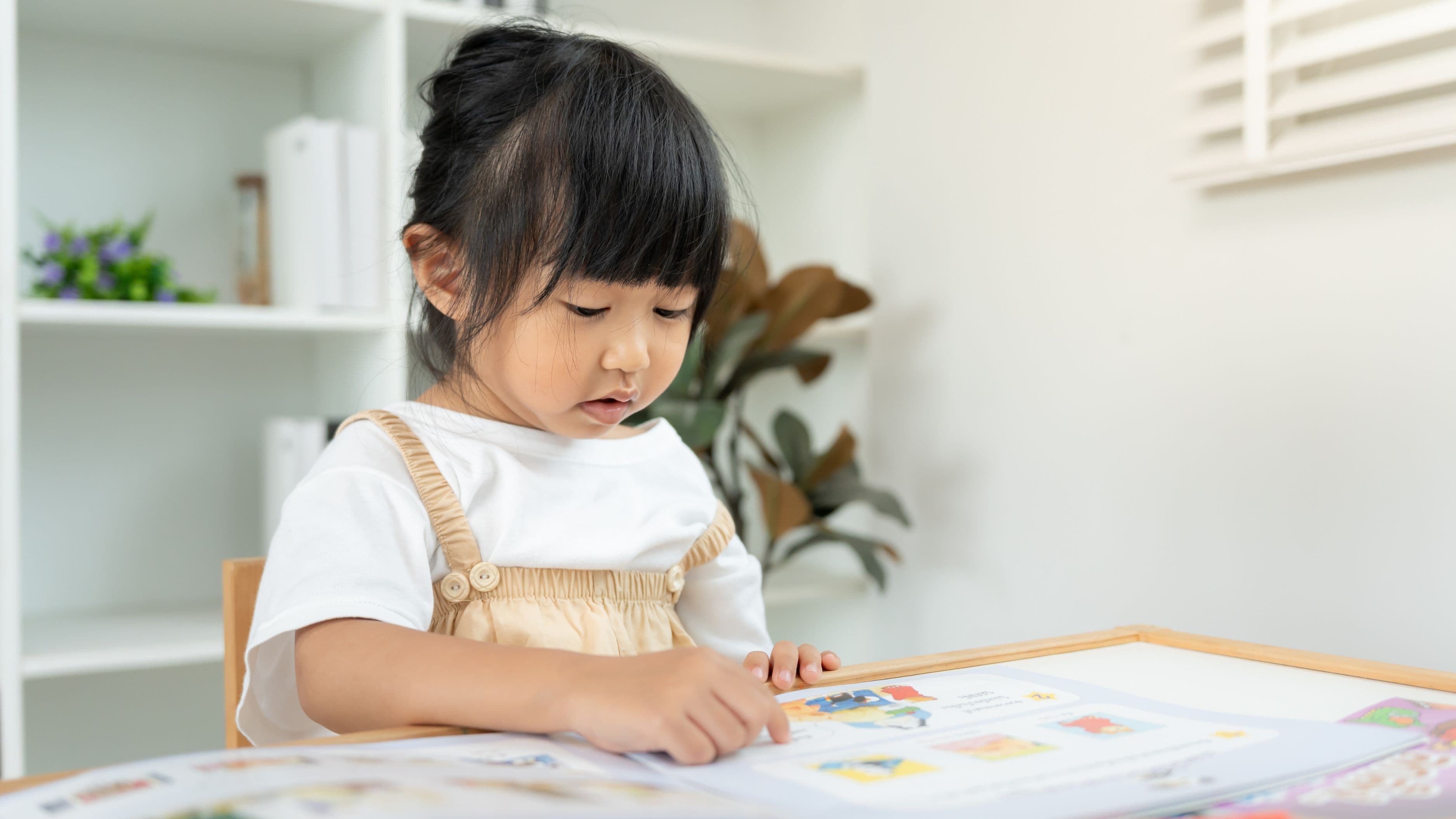
Reading readiness isn't about age as much as it's about development. Some children show these signals at three. Others aren't quite there until closer to six or seven, and that's completely within the normal range. What matters is knowing what to look for so you can meet your child exactly where they are – not ahead of it, not behind it – and create a home environment that supports rather than pressures.
Here are the signs that your child may be ready to start their reading journey.
1. They Show Interest in Books and Stories
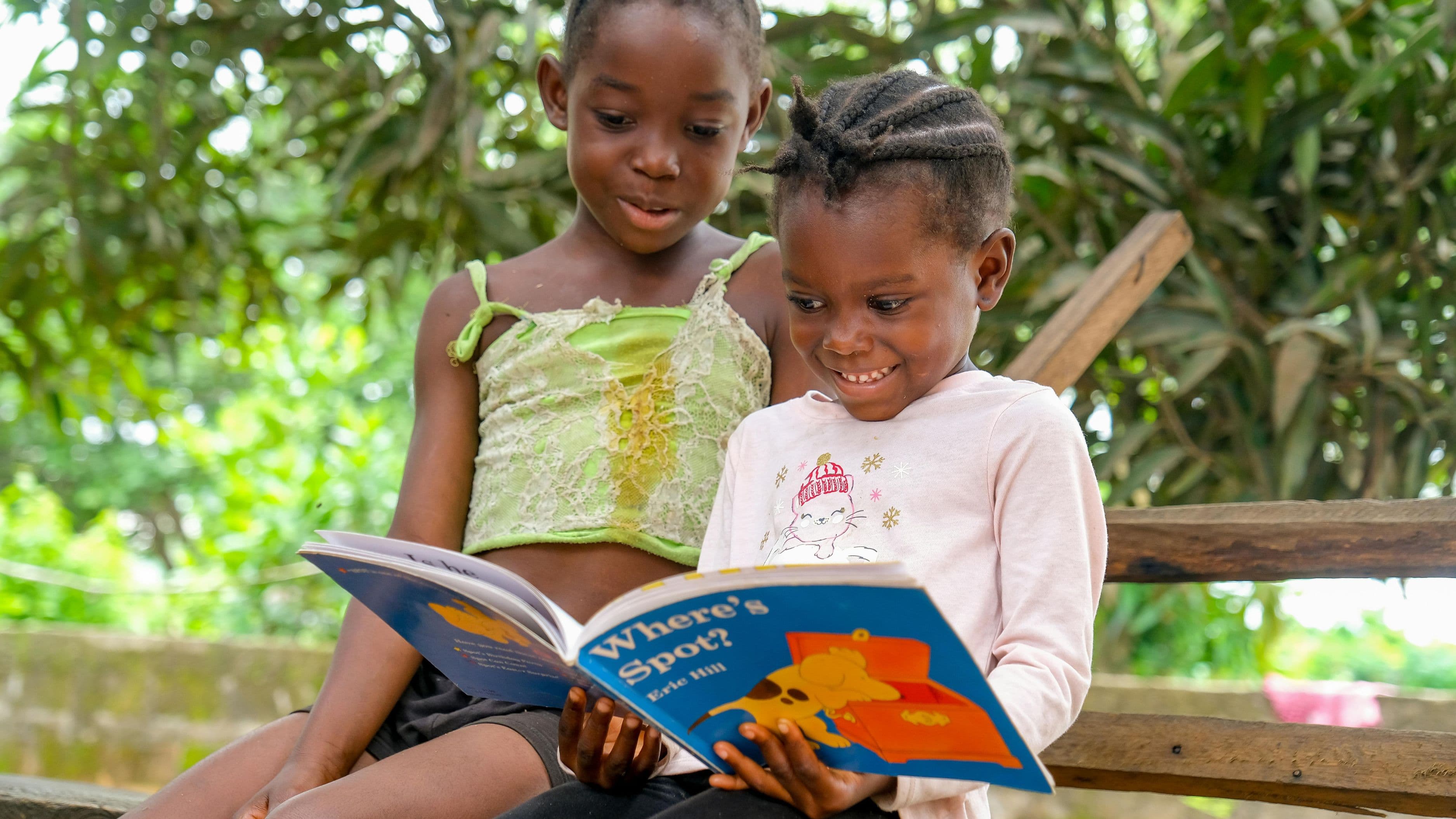
The first and most reliable sign is simple: your child wants to be around books. They bring them to you, they linger over pictures, they ask to hear the same story again and again. That repetition isn't boredom – it's deep engagement. Children process stories in layers, and each re-read builds comprehension, vocabulary, and the beginning of an understanding that words on a page carry meaning.
If your child is regularly drawn to books as objects of curiosity rather than something you have to coax them toward, that appetite is the foundation everything else will build on. You don't need flashcards or structured lessons yet – just keep feeding that interest with stories they love.
2. They Understand That Print Has Meaning
This is sometimes called "print awareness," and it's one of the clearest pre-reading signals. Your child begins to recognize that the squiggles and lines on a page aren't random – they represent something. They might ask what a word says, point at text in the environment (a stop sign, a restaurant menu, their name on a birthday card), or notice when you're reading left to right and top to bottom.
You might also see them "pretend to read" – holding a book and narrating a story as they flip the pages, even though they're going from memory rather than decoding the text. This behavior is a very healthy sign. It shows they understand the purpose of print and have internalized what reading looks like, which is exactly the kind of conceptual foundation that helps formal reading click later.
3. They Can Recognize Their Own Name in Writing
Being able to identify their written name is often one of the first reading-adjacent skills children develop, and it tends to arrive earlier than parents expect. This matters because it signals that letter recognition is beginning – the understanding that specific shapes correspond to specific sounds and have consistent, stable identities.
Once a child can pick out their name on a cubby label, a drawing, or a birthday card, they're starting to build the mental framework that reading requires: letters are symbols, symbols have sounds, and sounds together make words. It's worth celebrating this moment genuinely when it happens. That spark of recognition – "that's me on that page" – is one of the earliest joys of literacy.
4. They're Developing Phonological Awareness
Phonological awareness is the ability to hear and play with the sounds in spoken language, and it's one of the strongest predictors of reading success. You'll notice it when your child starts rhyming words (sometimes endlessly and delightedly), claps syllables in names, or makes up nonsense words that follow sound patterns they've noticed. They might finish the rhyme in a book before you get there, or ask why "cat" and "bat" sound so similar.
This playfulness with sound is doing something important: it's teaching the brain that language is made up of smaller units that can be broken apart and recombined. When it comes time to decode written words, children with strong phonological awareness tend to pick it up much more naturally because they already understand that words have internal structure. Songs, rhyming books, and simple word games are all excellent ways to encourage this without it feeling like work.
5. They're Starting to Recognize Letters
Letter recognition is different from phonological awareness – one is about sound, the other is about visual symbols. When your child begins to correctly identify letters by name, point them out in their environment, or show interest in the alphabet, they're moving into the early stages of decoding. They don't need to know all 26 letters to be ready to start reading – in fact, most early readers begin with a partial alphabet and fill in the rest as they go.
Watch for signs like recognizing the letter their name starts with and calling it "their letter," pointing out familiar letters on signs or packaging, or asking "what letter is that?" with genuine curiosity. Some children also begin making the connection between letters and sounds around this time – understanding that the letter "S" makes a specific sound, for example. When that letter-sound connection starts forming, early reading is usually not far behind.
6. They Can Retell a Story in Order
Narrative comprehension – understanding that stories have a beginning, middle, and end, and being able to reproduce that sequence – is a more sophisticated skill than it looks. When your child finishes a book and can tell you what happened in their own words, roughly in order, they're demonstrating comprehension skills that will transfer directly to reading independently.
You might test this gently and playfully after a favourite story: "What happened first? Then what? How did it end?" Children who can walk through a basic story arc are showing that they're not just passively receiving words – they're actively constructing meaning from them. That meaning-making capacity is the core of reading comprehension, and it develops through storytelling, conversation, and repeated exposure to good narratives well before a child ever learns to decode a single word.
7. They Have a Reasonable Attention Span for Sitting and Listening
Reading requires sustained focus – not for very long at first, but for long enough to get through a short book and engage with its content. If your child can sit with you through a picture book without wriggling away after 30 seconds, they likely have the attentional capacity to begin some early reading practice. This doesn't need to be perfect or forced – you're looking for natural engagement, not obedience.
Children develop this capacity at different rates, and some naturally have more active bodies than others. If your child is energetic but still shows genuine absorption when a story catches their interest, that's the thing to pay attention to. The right book for the right child can hold attention that seems otherwise impossible. If they're not there yet, that's fine too – this is one skill that develops steadily and quietly over time.
8. They're Asking Questions About Words and Language
Curiosity about language itself – not just stories, but words and how they work – is a beautiful and telling sign. Children who are approaching reading readiness often start asking things like "why does that word look like that?" or "how do you spell ___?" or "what does that word mean?" They're beginning to think of language as a system they want to understand, not just use.
This meta-awareness of language is called metalinguistic understanding, and it tends to emerge naturally in children who've been read to consistently. They've absorbed so much language through stories and conversation that they're now turning their attention to its mechanics. When that curiosity shows up, it's worth encouraging gently – without turning every question into a lesson. A curious child asking about words is already doing some of their best learning.
A Gentle Word About Timing
If you've read through these signs and your child shows a few but not all of them, that's perfectly normal. Reading readiness isn't a checklist that has to be fully completed before anything begins. Children develop these skills in different orders and at different paces, and early pressure to read before a child is genuinely ready can actually dampen the intrinsic motivation that makes reading last a lifetime.
The most supportive thing you can do at home is keep reading together, talk about books and stories, play with words and sounds, and let your child's curiosity lead the pace. When they're ready, you'll know – because they'll start asking to figure it out themselves. And that moment, when it comes, is one worth slowing down for.
What to Avoid as You Watch for These Signs
One of the most common pitfalls is comparing your child to a sibling, a classmate, or a developmental chart and deciding something is wrong if the timing doesn't match. Reading readiness varies enormously across children, and an otherwise thriving four-year-old who isn't yet showing these signs is not behind – they're just on their own timeline. Introducing formal reading instruction before a child has the foundational skills tends to create frustration rather than progress.
It's also worth resisting the urge to turn every bedtime story into a phonics lesson. There's enormous value in reading to your child simply for the joy of it, without any academic agenda attached. Children who grow up associating books with warmth and pleasure tend to become stronger readers over time than those who learned early that reading is something to be evaluated and corrected.
FAQ
What age should a child start reading? Most children begin to show clear reading readiness between ages 4 and 6, with formal reading typically beginning around kindergarten (age 5–6 in most US schools). However, there's a wide natural range – some children read fluently at 4, others aren't ready until 7. Both can be completely normal.
Can I help my child become reading-ready at home? Yes, meaningfully. Reading aloud daily, having books accessible and visible, singing songs and nursery rhymes, playing with language through rhyming games, and having rich conversations are all evidence-backed ways to build the foundations of reading. None of these need to feel like instruction.
What if my child shows no interest in books? Some children are more drawn to movement, building, or imaginative play early on. You can try different types of books – non-fiction about their interests, wordless picture books, lift-the-flap books – and keep reading sessions short and low-pressure. Interest often follows exposure and the right match between book and child.
Should I be concerned if my child is 6 and still not reading? If your child is approaching the end of first grade and still hasn't made meaningful progress with early reading despite regular exposure and instruction, it's worth talking to their teacher and possibly requesting a developmental screening. Some children have dyslexia or other processing differences that benefit from early identification and tailored support – catching it early makes a significant difference.
Are reading apps and educational screen programs helpful? Some research supports the use of certain literacy apps for developing phonological awareness and letter recognition, but they work best as supplements rather than replacements for human interaction, shared reading, and conversation. A good app used for 10 minutes alongside daily reading-aloud is different from screen time as a primary literacy tool.
📚 Sources
American Academy of Pediatrics – Literacy Promotion: An Essential Component of Primary Care Pediatric Practice: https://publications.aap.org/pediatrics/article/134/2/404/32718/Literacy-Promotion-An-Essential-Component-of
Reading Rockets – Phonological and Phonemic Awareness: https://www.readingrockets.org/topics/phonological-and-phonemic-awareness
Harvard Graduate School of Education – HGSE Usable Knowledge: Early Literacy: https://www.gse.harvard.edu/ideas/usable-knowledge/23/02/when-should-kids-start-learning-to-read
National Institute for Literacy – Developing Early Literacy: Report of the National Early Literacy Panel: https://lincs.ed.gov/publications/pdf/NELPReport09.pdf
Zero to Three – Early Literacy: Babies and Books: https://www.zerotothree.org/resource/making-the-most-of-story-time/
Child Mind Institute – How to Raise a Reader: https://childmind.org/article/how-to-raise-a-reader/
Reading Rockets – Print Awareness: https://www.readingrockets.org/topics/print-awareness
International Literacy Association – Literacy Glossary: Phonological Awareness: https://www.literacyworldwide.org/get-resources/literacy-glossary
Understood.org – Signs of Reading Readiness: https://www.understood.org/articles/signs-that-your-child-is-ready-to-read
PBS Kids for Parents – When Will My Child Be Ready to Read?: https://www.pbs.org/parents/thrive/when-will-my-child-be-ready-to-read