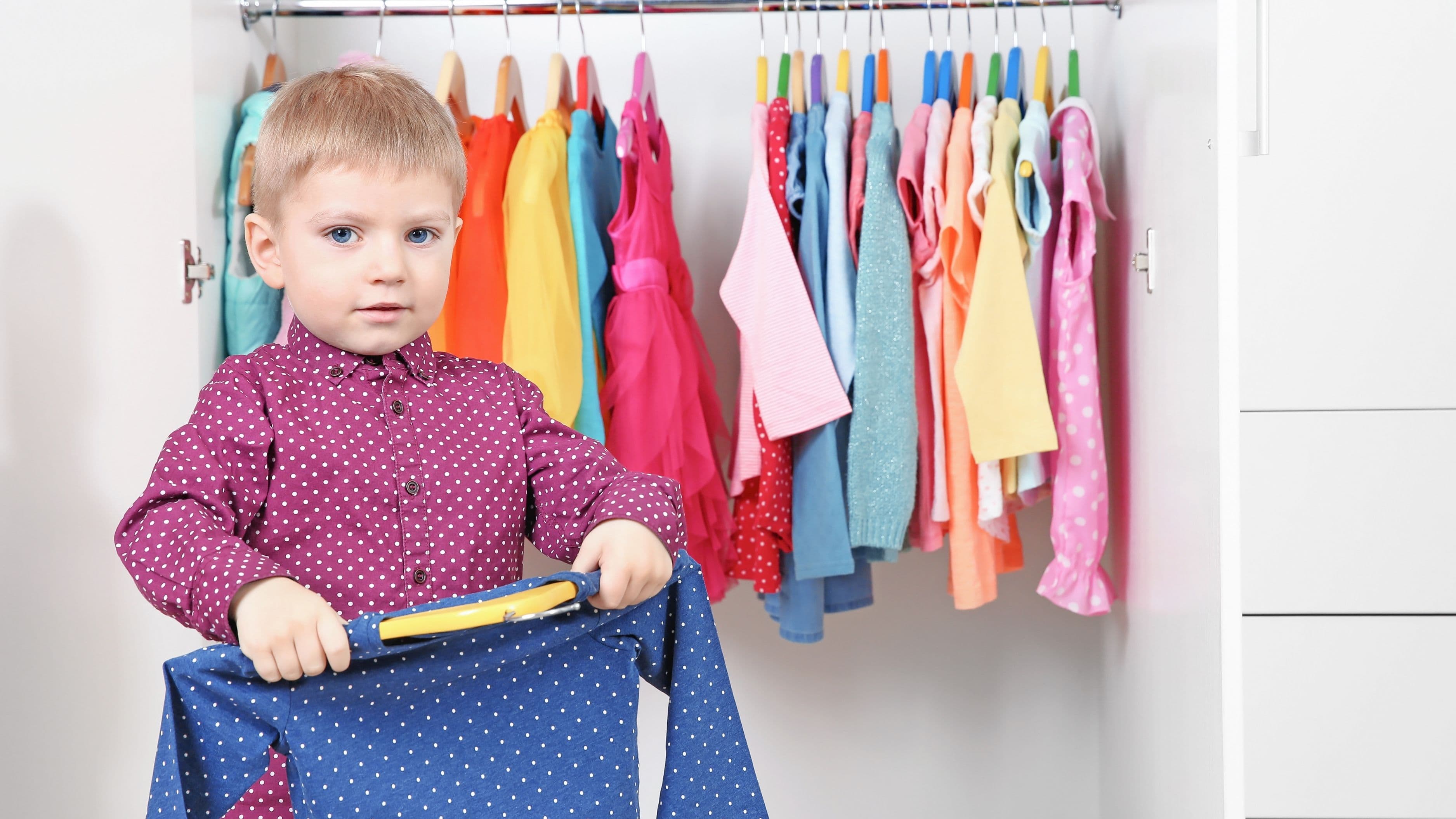
A capsule wardrobe — a curated, intentional collection of versatile pieces that actually work together — sounds like something reserved for minimalist influencers with unlimited budgets and no children. But here's the truth: building one on a family budget is not only possible, it might be the most freeing thing you do all year. Less decision fatigue every morning. Less money bleeding out on things that never get worn. More of that quiet, grounded feeling of opening your closet and knowing exactly what to reach for. Let's get into it.
1. The "What Do I Actually Wear?" Reality Check
Before you buy a single thing, you have to survive the great closet audit — and yes, it's as confrontational as it sounds. Pull everything out. Not mentally. Physically. Pile it on the bed, the floor, wherever it fits. Now ask yourself, honestly: what did you wear in the last three months? Those are your keepers. Everything else is just taking up square footage and quietly judging you every morning.
The magic of this step isn't the purging — it's the clarity. Once you see your actual wearing patterns laid out in front of you, a shape emerges: the colors you gravitate toward, the silhouettes that make you feel like yourself, the fabrics you keep reaching for. That shape is your personal style blueprint, and it costs nothing to discover. From here, every future purchase gets filtered through one simple question: does this fit the blueprint?
2. The "Uniform Theory" Steal
Barack Obama famously wore the same style suit every day to eliminate decision fatigue. Steve Jobs had his turtleneck. Matilda Kahl, a New York art director, wore the same outfit to work for three years and reported feeling happier and less stressed as a result. The point isn't to dress like a tech CEO — it's to borrow the philosophy. When your wardrobe has a loose "uniform" built into it, getting dressed stops being a daily negotiation with yourself.
For families especially, this translates into serious mental bandwidth savings. Pick two or three outfit formulas that work for your real life — school drop-off, work meetings, weekend errands — and build your capsule around those. For example: dark jeans + a fitted top + a layer = done. You're not limiting yourself; you're liberating yourself from the chaos of too many options. Studies have consistently shown that reducing trivial decisions improves focus and emotional regulation throughout the day — a win the whole household benefits from.
3. The "Cost Per Wear" Math That Changes Everything
Here's where the budget gets smart. A $15 trendy top you wear twice costs $7.50 per wear. A $60 well-made button-down you wear 80 times costs $0.75 per wear. That's the cost-per-wear formula, and once it's in your head, you can't un-think it. Cheap and frequently replaced is almost always more expensive in the long run than investing in a few quality staples.
For family budgets, this doesn't mean splurging all at once. It means being ruthlessly selective about where quality actually matters. Shoes, outerwear, and daily-wear basics (think: a great pair of trousers, a reliable denim jacket, a white button-down) are worth the investment. Trendy or seasonal pieces? Go affordable, go secondhand, or skip entirely. Spread your capsule-building across a few months rather than one big haul, and the financial sting barely registers.
4. The Thrift Store Glow-Up
Secondhand shopping has had a full cultural rebirth, and it's not just for people who love the smell of old paperbacks. ThredUp's 2023 Resale Report estimated the secondhand market will reach $350 billion globally by 2027 — because people have figured out that pre-loved clothing is one of the best-kept wardrobe secrets on the planet. You can find quality basics, barely-worn staples, and even name-brand pieces for a fraction of retail, and the thrill of the find genuinely never gets old.
For families, thrifting is especially powerful for kids' clothing (they grow out of it in five minutes anyway) and for building out adult basics without the full price tag. Apps like Poshmark, Depop, and ThredUp make it possible to filter by size, color, and brand from your couch. Set aside a small monthly "thrift budget" — even $20 — and watch your capsule grow in ways that feel almost like cheating the system.
5. The "Multiply Before You Buy" Rule
Before any new piece earns a spot in your capsule, it has to pass the multiplication test: can you style it at least three different ways with things you already own? Hold the item up (or imagine it in your cart) and actually picture three outfits. If you're struggling to get past one, that's the closet speaking to you — and it's saying not yet. This rule quietly eliminates the "nothing to wear with it" regret purchases that crowd out the good stuff.
This is where your color palette discipline pays off. Capsule wardrobes work best in a cohesive color story — neutrals as your foundation, one or two accent colors woven through. When everything plays nicely together, the outfit math gets easy and the multiplication test feels less like homework and more like a fun puzzle. Suddenly, ten pieces feel like thirty.
6. The Kid Capsule (Yes, It's Possible)
Building a capsule for kids feels laughable until you try it — and then it becomes one of the most sane decisions you've ever made. The formula is simple: five to seven bottoms, seven to ten tops, two to three layering pieces, two pairs of shoes (one casual, one for occasions), and enough underwear to survive a week without doing laundry. That's it. That's the whole closet. Getting dressed in the morning stops being a negotiation and starts being a five-minute fact.
The key is buying neutral, mix-and-match pieces rather than themed sets that only work together. Navy, gray, white, and olive work for all kids, all seasons, and all occasions with minor layering adjustments. Buying secondhand or end-of-season sales extends your budget dramatically. And when kids have fewer, better options, they actually learn to make decisions for themselves — which is a life skill worth more than any individual outfit.
7. The Seasonal Refresh (Not Reset)
A capsule wardrobe isn't a static museum exhibit — it breathes and evolves with the seasons. Twice a year, do a lightweight audit: swap out weather-inappropriate pieces, assess what got worn (and what didn't), and identify one or two gaps worth filling. This seasonal refresh keeps the wardrobe feeling alive without triggering the impulse to blow it all up and start over with a shopping spree.
The refresh also creates a natural checkpoint for the whole family. What did the kids outgrow? What staples finally wore out and need replacing? What aspirational pieces are still sitting there, tags on, untouched? Answering these questions twice a year keeps the closet honest and the budget in check. Think of it less like a chore and more like a quiet check-in — the wardrobe version of a Sunday reset.
Less Closet, More Life
Your family's wardrobe doesn't need to be a Pinterest board. It needs to work for your actual life — the school runs, the quick Zoom calls, the impromptu dinners, the lazy Saturdays that accidentally turn into something. A capsule wardrobe built on a real budget gives you that. It gives you mornings where getting dressed takes three minutes and feels good. It gives you a closet that doesn't exhaust you before the day has even started.
Your life doesn't need to be perfect — just less chaotic and more you. Start with one drawer, one honest audit, one intentional purchase. The simplicity you're craving is closer than you think, and it definitely doesn't require spending money you don't have.
📚 Sources
ThredUp. (2023). 2023 Resale Report. Retrieved from thredup.com/resale-report
Schwartz, B. (2004). The Paradox of Choice: Why More Is Less. HarperCollins.
Kahl, M. (2015). Why I Wear the Exact Same Thing to Work Every Week. Cosmopolitan.
Baumeister, R. F., & Tierney, J. (2011). Willpower: Rediscovering the Greatest Human Strength. Penguin Press.