This isn't about creating a perfectly curated wellness aesthetic or adopting a complicated new routine. Aromatherapy at its core is simple, accessible, and quietly effective – one of the most low-barrier tools you can bring into your daily life to support emotional balance.
What Aromatherapy Actually Is
Aromatherapy is the therapeutic use of plant-derived essential oils to support physical and emotional well-being. The practice has roots in ancient Egypt, China, and Greece, where aromatic plants were used in medicine, ritual, and daily care. The modern framework of aromatherapy as a distinct wellness discipline was largely formalized in the early 20th century by French chemist René-Maurice Gattefossé, who began studying the properties of essential oils after discovering that lavender helped heal a burn on his hand.
Today, aromatherapy is used in a wide range of settings – from clinical environments like hospitals and hospice care to personal wellness routines at home. It's practiced through inhalation (diffusers, steam, direct inhalation) and topical application (diluted in a carrier oil and applied to the skin). The most common and accessible method for emotional wellness is inhalation, which works quickly and doesn't require much preparation or equipment.
Why Scent Has Such a Direct Effect on Emotion
To understand why aromatherapy can influence how you feel, it helps to understand how scent is processed in the brain. Unlike other senses, smell is the only one that bypasses the thalamus – the brain's central relay station – and connects directly to the limbic system, which governs emotion, memory, and stress response. This direct pathway is why a scent can trigger an emotional reaction almost instantly, before you've consciously registered what you're even smelling.
The limbic system includes the amygdala, which processes fear and emotional responses, and the hippocampus, which handles memory. This is why certain smells can feel emotionally loaded – why your grandmother's perfume or the scent of a childhood kitchen can bring a physical feeling of safety or nostalgia in an instant. Aromatherapy works with this pathway deliberately, using specific scents with documented effects on mood, stress levels, and mental clarity to create intentional emotional shifts rather than accidental ones.
The Essential Oils Most Closely Linked to Emotional Wellness
Not all essential oils are created equal when it comes to emotional support. Some have been studied more thoroughly than others, and the research – while still developing – points to a consistent set of oils that most reliably produce emotional benefits.
Lavender is the most studied essential oil in the world for emotional wellness. Multiple peer-reviewed studies have demonstrated its ability to reduce anxiety, lower cortisol levels, improve sleep quality, and create a measurable sense of calm. It's versatile, widely available, and one of the safest oils for most people. If you're starting with aromatherapy for emotional reasons, lavender is the most logical first choice.
Bergamot, a citrus oil with floral undertones, has been shown in clinical settings to reduce anxiety and improve mood. A 2015 study published in Phytotherapy Research found that bergamot aromatherapy significantly reduced feelings of fatigue and anxiety in participants. It has a bright, slightly sweet quality that feels uplifting without being overwhelming.
Frankincense has a long history in spiritual practice, and there's some scientific basis for why it creates a sense of calm and groundedness. It's often used to support meditation and emotional processing – its deep, resinous scent has a slowing-down quality that many people find easier to sit with than more stimulating oils.
Ylang ylang is known for its calming and slightly euphoric effect. Research has shown it can lower blood pressure and heart rate, making it useful in moments of acute stress or anxious energy. Because it's quite potent, a little goes a long way.
Peppermint and eucalyptus work differently from the above – rather than calming, they stimulate alertness and mental clarity. These are better used during the day for mental fatigue, brain fog, or low-energy afternoons. They're not ideal for winding down but are excellent for creating focus.
Clary sage is particularly relevant for emotional wellness connected to hormonal cycles. It has been studied for its potential to reduce cortisol levels and ease the emotional intensity that can accompany different phases of the menstrual cycle or perimenopause. It has a warm, herbal quality that blends well with other grounding oils.
How to Actually Use Aromatherapy for Emotional Support
The method of application shapes how quickly and how fully you'll feel the effects. Inhalation is the fastest route to emotional impact because of that direct limbic system connection. Topical application works more slowly but can sustain effects over a longer period.
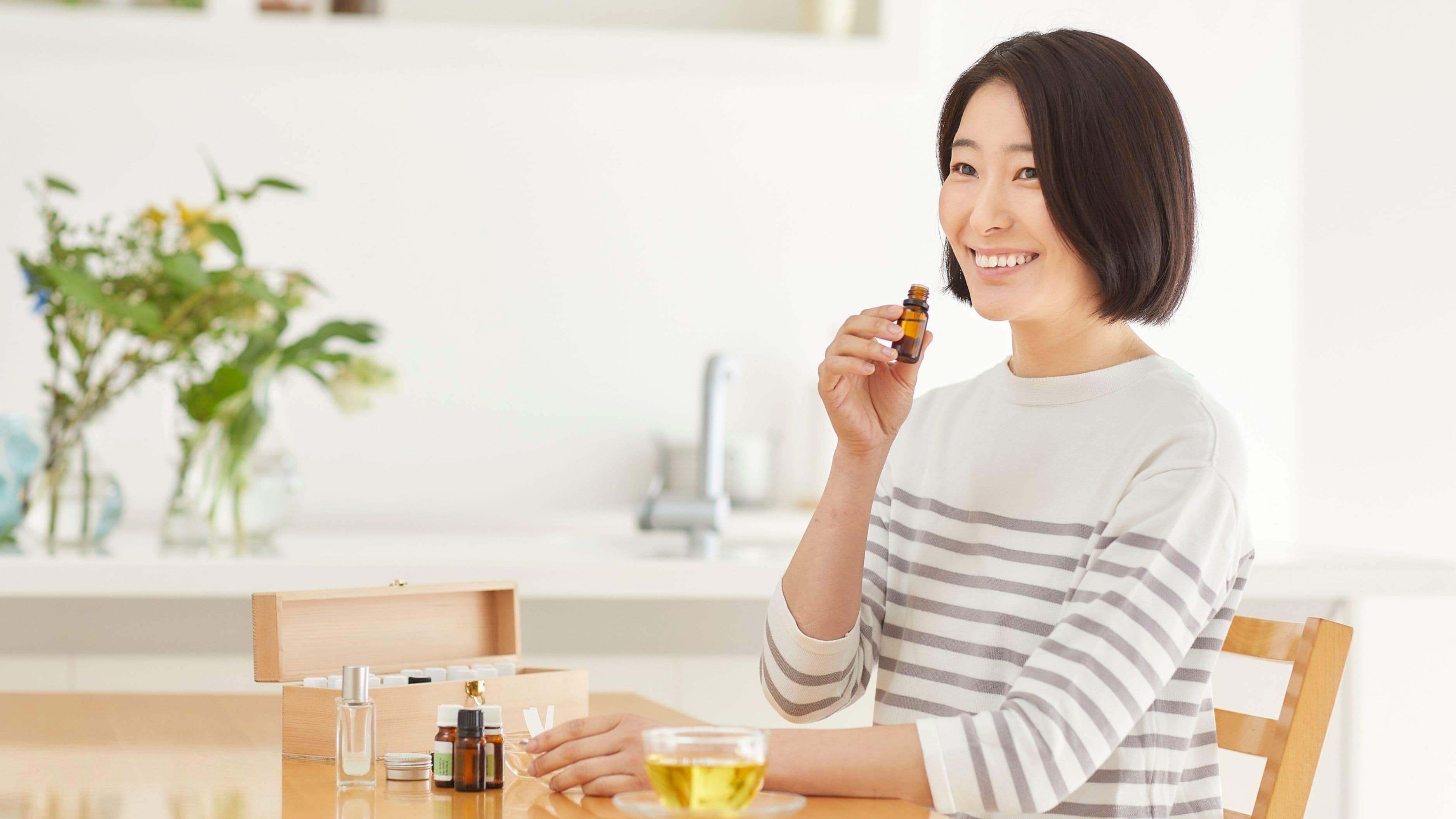
Diffusing is the most popular home method. An ultrasonic diffuser disperses a fine mist of water and essential oil into the air, allowing you to breathe it in passively over an extended period. For emotional wellness, diffusing 30–60 minutes at a time is enough for most people – you don't need to run a diffuser continuously. A few drops of lavender in the bedroom before sleep, or bergamot in the workspace during a tense afternoon, can be enough to create a noticeable shift.
Steam inhalation works quickly and feels immediate. Add a few drops of your chosen oil to a bowl of hot water, drape a towel over your head, and breathe deeply for a few minutes. This is particularly effective for acute stress moments – the warmth amplifies the effect and the focused breathing itself adds a calming dimension.
Personal inhalers are small, portable devices that hold an essential oil-soaked wick inside a tube, like a lip balm-sized inhaler. They're discreet, travel-friendly, and effective for on-the-go emotional support. You can find them online or at most health food stores and fill them yourself with the oil of your choosing.
Topical application requires diluting an essential oil in a carrier oil like jojoba, sweet almond, or fractionated coconut oil before it touches your skin. A safe general dilution is 2–3 drops of essential oil per teaspoon of carrier oil. Pulse points – wrists, temples, the back of the neck – are common application spots. Some people find the ritual of applying oil to their skin as grounding as the scent itself.
Building a Simple Aromatherapy Practice
You don't need a cabinet full of oils or an elaborate routine to benefit from aromatherapy. In fact, starting with just two or three oils that you choose based on how they make you feel is a more sustainable approach than buying a full collection upfront.
A gentle way to begin is to identify one emotional challenge you want to address – difficulty sleeping, afternoon anxiety, low motivation in the mornings – and find one oil with evidence behind it for that specific use case. Use it consistently for two to three weeks in a simple way, like diffusing it at the same time each day. Notice whether it's making a difference. Let your own experience guide what you try next.
Creating small, repeated rituals around aromatherapy also amplifies its effects over time. When you consistently diffuse lavender as part of a wind-down routine, your nervous system starts to associate that scent with safety and rest – a kind of pavlovian calm that builds the more consistently you use it. The scent becomes a cue, and over time, it takes less effort to settle your nervous system because the signal is already familiar.
What to Keep in Mind (and What to Avoid)
Aromatherapy is a complement to emotional wellness, not a replacement for professional mental health support. If you're navigating significant anxiety, depression, grief, or trauma, please work with a qualified therapist or healthcare provider. Aromatherapy can absolutely be part of a broader wellness practice, but it works best alongside other tools – not in place of them.
A few practical safety notes worth knowing: essential oils are highly concentrated plant compounds and should never be applied directly to skin without a carrier oil. Some oils, particularly citrus ones like bergamot, are photosensitive and shouldn't be applied to skin before sun exposure. If you're pregnant, nursing, or have a chronic health condition, it's worth consulting with a healthcare provider before using aromatherapy regularly, as some oils can interact with medications or aren't recommended during pregnancy.
Quality matters more than quantity. A cheap essential oil may contain synthetic fragrance compounds rather than true plant extracts, which won't carry the same therapeutic properties. Look for oils labeled as 100% pure and either steam-distilled or cold-pressed, from brands that disclose their sourcing and provide third-party testing.
FAQ
How quickly can aromatherapy affect my mood? Inhalation can produce noticeable effects within minutes because of the direct connection between smell and the emotional centers of the brain. The effects tend to be subtle rather than dramatic – a gentle shift in how you feel rather than a transformation.
Can I use aromatherapy every day? Yes, and consistency is actually part of what makes it effective. Using the same oils in the same contexts over time builds a conditioned response that makes the emotional signal more reliable. However, it's also good practice to rotate oils occasionally to avoid olfactory fatigue, which is when you stop noticing a scent because you've been exposed to it too often.
Is there scientific evidence that aromatherapy works? The research is promising but still developing. Lavender is the most thoroughly studied oil, with numerous peer-reviewed studies supporting its calming and anxiety-reducing effects. Other oils have emerging evidence behind them. It's worth approaching the practice as a supportive tool with a reasonable evidence base, rather than as a cure.
What's the difference between essential oils and fragrance oils? Essential oils are natural plant extracts produced through distillation or cold-pressing. Fragrance oils are synthetic compounds designed to smell like something – they don't carry the same therapeutic compounds and aren't suitable for aromatherapy. Always check that you're buying true essential oils.
What if a "calming" oil doesn't feel calming to me? Scent response is partly individual and influenced by personal memory and association. If lavender doesn't feel calming to you – or if it carries an unpleasant memory – try a different oil with similar properties. Roman chamomile, vetiver, or cedarwood are all grounding oils with calming qualities that some people respond to better than lavender.
A Final Thought
Aromatherapy won't solve everything, and it doesn't need to. What it offers is something quieter – a moment of intentional pause, a sensory signal that tells your nervous system it can soften a little. In a life that often moves too fast and asks too much, that small, consistent invitation to come back to yourself is worth more than it might seem.
Start with one oil. Use it at one moment each day. Let it be simple. The effect tends to grow from there.
📚 Sources
Koulivand, P.H., et al. (2013). Lavender and the Nervous System. Evidence-Based Complementary and Alternative Medicine – https://www.ncbi.nlm.nih.gov/pmc/articles/PMC3612440/
Rombolà, L., et al. (2017). Bergamot Essential Oil Attenuates Anxiety-Like Behaviour. Molecules – https://www.ncbi.nlm.nih.gov/pmc/articles/PMC5750546/
Toda, M., & Morimoto, K. (2008). Effect of Lavender Aroma on Salivary Endocrinological Stress Markers. Archives of Oral Biology – https://pubmed.ncbi.nlm.nih.gov/18314071/
National Association for Holistic Aromatherapy – What Is Aromatherapy? – https://naha.org/explore-aromatherapy/about-aromatherapy/what-is-aromatherapy/
Moss, M., et al. (2003). Aromas of Rosemary and Lavender Essential Oils Differentially Affect Cognition and Mood in Healthy Adults. International Journal of Neuroscience – https://pubmed.ncbi.nlm.nih.gov/12690999/
Johns Hopkins Medicine – Aromatherapy: Do Essential Oils Really Work? – https://www.hopkinsmedicine.org/health/wellness-and-prevention/aromatherapy-do-essential-oils-really-work
Setzer, W.N. (2009). Essential Oils and Anxiolytic Aromatherapy. Natural Product Communications – https://pubmed.ncbi.nlm.nih.gov/19768837/