This isn't about achieving a perfectly zen pregnancy. It's about learning what actually helps, letting go of what doesn't, and building a quiet inner steadiness that carries you through the months ahead.
The Myths Are Making It Worse
Before diving into what works, it's worth dismantling what doesn't — because some of the most commonly repeated advice about pregnancy anxiety actively keeps women stuck. These myths feel like wisdom on the surface, but underneath, they add pressure instead of relief.
Myth: Anxiety means something is wrong with your pregnancy. Truth: Anxiety is a normal neurological response to one of life's biggest transitions.
Your brain is doing exactly what evolution designed it to do — scanning for threats, preparing for change, protecting what matters most. Anxiety during pregnancy doesn't signal danger; it signals that your nervous system is engaged and that you deeply care. The issue isn't the anxiety itself — it's when it becomes so loud and constant that it drowns out the present moment. Recognizing anxiety as a nervous system pattern, not a personal failing, is the first step toward working with it instead of fighting it.
Myth: You just need to stay positive. Truth: Toxic positivity can deepen anxiety by making you feel broken for having it.
When every fear is met with "but think of the good things," it sends a message that your difficult feelings are inconvenient — something to be suppressed rather than processed. Genuine emotional wellness during pregnancy isn't about eliminating fear; it's about making room for it without letting it take the wheel. Research in emotion regulation consistently shows that acknowledging and naming a feeling actually reduces its intensity more effectively than bypassing it ever could.
Myth: Medication is the only real solution. Truth: Natural approaches have strong evidence — and for mild to moderate anxiety, they can be profoundly effective.
This isn't an argument against medication — for some women, it's essential and life-changing, and that decision belongs between a woman and her provider. But the narrative that natural tools are just "extras" or placebo-adjacent dismisses a growing body of research. Mindfulness-based interventions, breathwork, movement, nutrition, and social support have all demonstrated measurable effects on prenatal anxiety in clinical settings. These aren't soft alternatives. They're legitimate tools.
Myth: Worrying means you're a bad mother already. Truth: Worrying is literally a symptom of how much you already love this baby.
The guilt spiral — "I'm anxious, which means I'm stressed, which means I'm harming my baby" — is one of the cruelest feedback loops a pregnant woman can get caught in. While chronic, unmanaged stress does carry risks worth taking seriously, the act of worrying itself is not the threat. What matters is what you do with it. Mothers who seek support, build coping tools, and learn to regulate their nervous systems are doing exactly the right thing — and that starts with releasing the shame attached to the feeling.
What Actually Helps
Now for the tools that work — not because they promise to eliminate anxiety, but because they change your relationship with it.
Breathe Before You Spiral
The breath is the fastest, most accessible lever you have over your nervous system. Slow, extended exhales activate the parasympathetic system — the body's built-in "rest and restore" response — in a matter of seconds. Try the 4-7-8 technique: inhale for 4 counts, hold for 7, exhale slowly for 8. Feel the release move through your chest and jaw as you let it go. Practicing this for just five minutes a day, especially before sleep or during moments of heightened worry, can recalibrate your stress response over time. The beauty of breathwork during pregnancy is that it's always available — no equipment, no appointment, no waiting.
Move Your Body Gentle
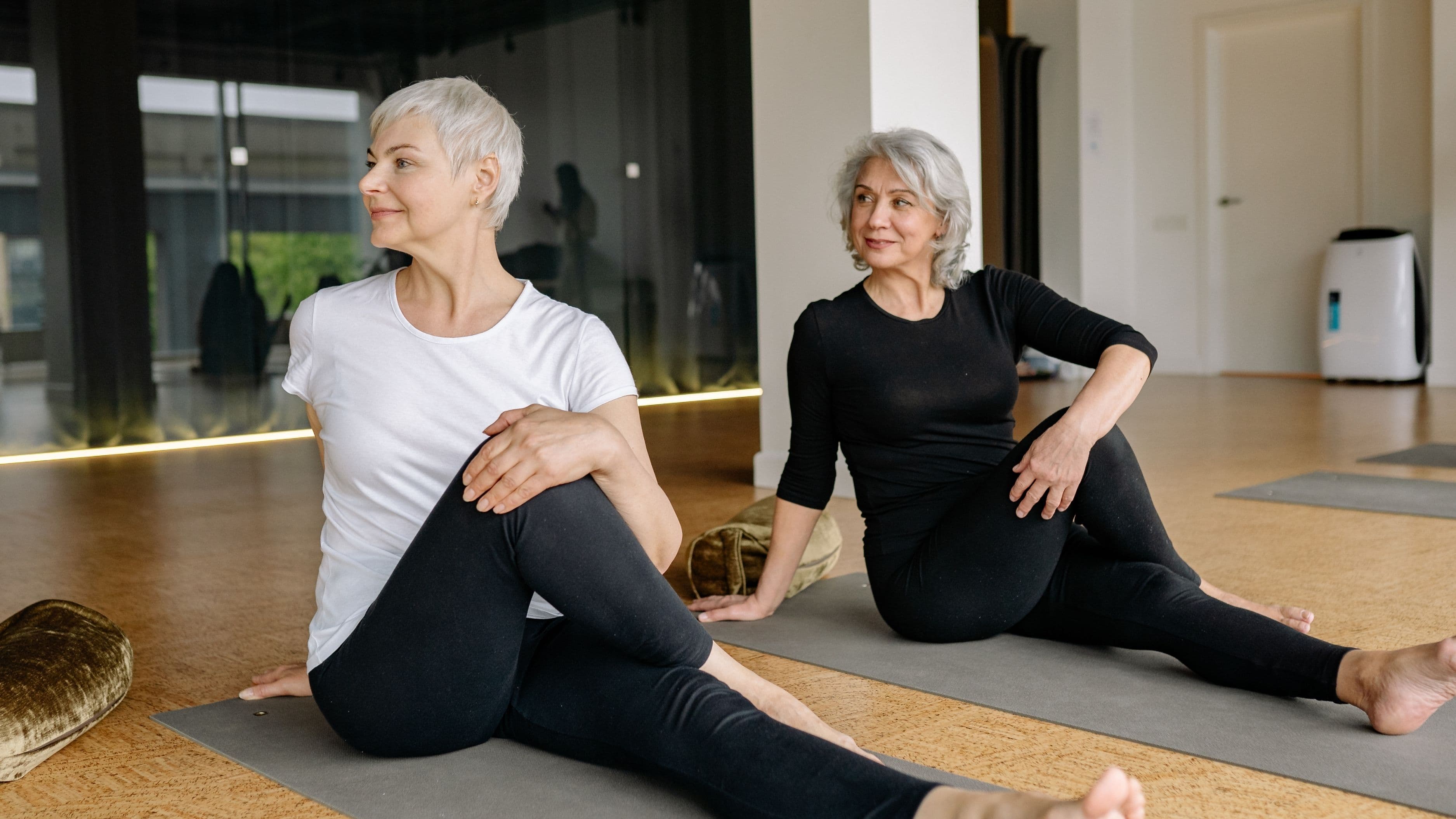
Exercise during pregnancy isn't just about physical health — it's one of the most effective natural anxiolytics available. Movement increases endorphins, reduces cortisol, and gives the body a productive outlet for the physical tension that anxiety creates. Prenatal yoga in particular has been studied for its combined effect on physical comfort and psychological calm, with multiple trials showing reduced anxiety and improved sleep in women who practiced regularly. Even a slow 20-minute walk in natural light — feeling the ground beneath your feet, the air shifting around you — can interrupt an anxiety spiral more effectively than an hour of rumination. The goal isn't intensity; it's consistency and presence.
Nourish Your Nervous System
What you eat directly affects the neurochemistry behind anxiety. The gut-brain axis — the communication highway between your digestive system and your nervous system — is especially active during pregnancy due to hormonal shifts. Foods rich in magnesium (leafy greens, pumpkin seeds, dark chocolate) support muscle relaxation and GABA production, the brain's primary calming neurotransmitter. Omega-3 fatty acids, found in fatty fish, walnuts, and flaxseed, have demonstrated anti-anxiety effects in multiple studies and are already recommended for fetal brain development. Stable blood sugar also plays a quiet but significant role — skipping meals or eating erratically can amplify anxious feelings by triggering cortisol release. Eating regularly, prioritizing whole foods, and staying hydrated aren't glamorous interventions, but they build the biochemical foundation that everything else rests on.
Talk to Someone — Really Talk
There's a particular kind of relief that comes from saying the scary thing out loud to someone who won't flinch. Prenatal therapy, support groups, and even honest conversations with a trusted friend who has been pregnant can significantly reduce the isolation that amplifies anxiety. Cognitive Behavioral Therapy (CBT) adapted for perinatal anxiety has strong clinical backing, and many therapists now offer virtual sessions that fit around even the most exhausted pregnancy schedule. If formal therapy feels out of reach, peer support communities — both online and in-person — offer something equally powerful: the reminder that you are not alone in this, and that your fears, however specific or irrational they feel, have been felt before. Community is medicine.
Create a "Worry Window"
One of the most counterintuitive but effective anxiety tools is scheduled worry time. Instead of trying to block anxious thoughts throughout the day — which usually makes them louder — set aside 15 minutes at the same time each day to intentionally think through your worries, write them down, and then close the notebook. Outside of that window, when anxiety surfaces, gently remind yourself: "I'll think about this at 4 PM." This technique, rooted in CBT, works because it removes the constant vigilance of trying to suppress anxiety. You're not ignoring it — you're giving it a designated, contained space. Over time, the nervous system learns that it doesn't need to sound the alarm all day to be heard.
Ground Yourself in the Present
Anxiety lives in the future — in the "what ifs" and worst-case rehearsals. Grounding practices pull you back into the body, into the sensory present, where the danger anxiety imagines usually doesn't exist. The 5-4-3-2-1 technique is simple and surprisingly powerful: name 5 things you can see, 4 you can touch, 3 you can hear, 2 you can smell, 1 you can taste. Feel the texture of whatever is beneath your hands. Notice the weight of your body in the chair. These small acts of sensory attention interrupt the anxiety loop and remind your nervous system that right now, in this moment, you are safe.
Let Go of the "Perfect Pregnancy" Myth
The deepest anxiety driver of all is the pressure to experience pregnancy as a seamless, glowing, grateful journey. Let go of that story. Pregnancy can be terrifying and beautiful at the same time. You can love your baby fiercely and still feel scared. You can be grateful and exhausted in the same breath. Managing anxiety naturally during pregnancy isn't about achieving serenity — it's about building a real, honest, sustainable relationship with your inner life during one of the most profound transitions a human body can move through.
Let go of the advice that tells you to suppress, perform, or push through. Start making space for the truth of your experience — and trust that meeting yourself there is already an act of extraordinary courage.
📚 Sources
Fawcett, E. J., Fairbrother, N., Cox, M. L., White, I. R., & Fawcett, J. M. (2019). The prevalence of anxiety disorders during pregnancy and the postpartum period: A multivariate Bayesian meta-analysis. The Journal of Clinical Psychiatry, 80(4). https://doi.org/10.4088/JCP.18r12527
Tomfohr-Madsen, L. M., Madsen, J. W., & Bonneville, D. (2021). A pilot randomized controlled trial of mindfulness-based cognitive therapy for insomnia in pregnancy. Mindfulness, 12, 1803–1814.
Field, T. (2011). Prenatal yoga studies review. Complementary Therapies in Clinical Practice, 17(1), 1–8. https://doi.org/10.1016/j.ctcp.2010.10.001
Kiecolt-Glaser, J. K., et al. (2011). Omega-3 supplementation lowers inflammation and anxiety in medical students: A randomized controlled trial. Brain, Behavior, and Immunity, 25(8), 1725–1734.
Arch, J. J., & Craske, M. G. (2006). Mechanisms of mindfulness: Emotion regulation following a focused breathing induction. Behaviour Research and Therapy, 44(12), 1849–1858.