The confusion makes sense - both devices deal with your indoor air, and both genuinely affect how you feel at home. But they do completely different things, and buying the wrong one won't just waste money. It might make your situation worse.
Here's a clear, calm look at both so you can land on the right choice for your home and your health.
What's actually the difference?
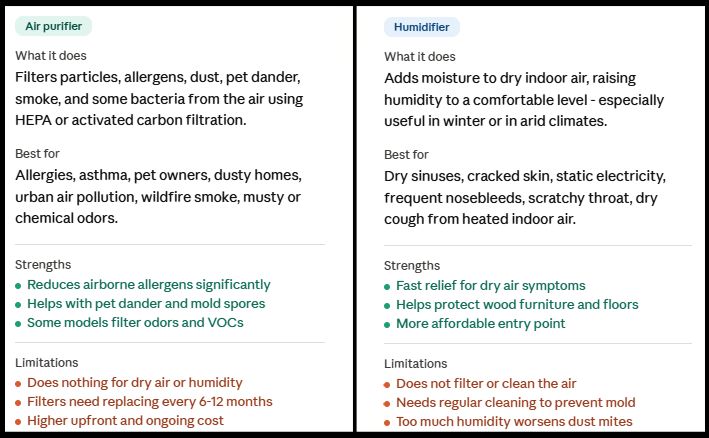
An air purifier removes things from your air - dust, pollen, pet dander, mold spores, smoke particles, and sometimes bacteria or viruses, depending on the filter type. It pulls air through a filtration system and pushes cleaner air back out. It doesn't change the moisture level in your room at all.
A humidifier adds moisture to your air. That's its one job. It doesn't filter anything or remove particles - it simply raises the humidity level in the room, which can relieve dry skin, irritated sinuses, and that scratchy throat that shows up every winter when your heating system has been running for weeks.
Think of it this way: a purifier cleans what's already there. A humidifier changes the air's feel.
A closer look at each
Breaking it down: air purifier
An air purifier is the right choice when the problem is what's in your air, not how it feels.
If you or someone in your home deals with allergies or asthma, a purifier with a true HEPA filter can make a real difference. HEPA filters capture at least 99.97% of particles 0.3 microns in size - which covers most common allergens including dust mites, pollen, and pet dander, according to the U.S. Environmental Protection Agency.
They're also worth considering if you live in a city with poor air quality, near traffic or industry, or if wildfires are a seasonal reality where you live. Some models include activated carbon filters that also absorb odors and volatile organic compounds (VOCs) from cleaning products, paints, or synthetic materials.
The catch is that a purifier will not make dry air feel more comfortable. If your nose is cracking, your throat is dry every morning, or your lips are constantly chapped in winter, a purifier won't touch any of that.
Breaking it down: humidifier
A humidifier is the right choice when your air feels physically harsh - when you wake up with a dry throat, when your skin is tight, or when static electricity has become a daily annoyance.
The EPA and American Academy of Otolaryngology both note that maintaining indoor humidity between 30% and 50% supports respiratory comfort and can ease symptoms of dry sinuses, cracked lips, and nasal irritation. In winter, central heating drops indoor humidity well below that range without you doing anything to cause it.
Humidifiers come in a few types - cool mist, warm mist, and ultrasonic - and each has its place. Cool mist and ultrasonic models are generally safer around children and more energy-efficient. Warm mist models heat water before releasing it, which can feel especially comforting when you're sick.
The important limitation: a humidifier doesn't purify anything. If your issue is allergens, dust, or air quality, adding moisture won't address it - and too much moisture (above 50-60% humidity) can actually make things worse by encouraging dust mites and mold growth.
Best for each situation
Here's a simple way to think about it based on your actual circumstances.
An air purifier is likely what you need if you have allergies or asthma that seem worse indoors, if you have pets, if you notice a musty or chemical smell in your home, if someone in your household smokes, or if air quality in your area is a known issue.
A humidifier is likely what you need if your symptoms are dryness-related - dry nose and throat, cracked skin, frequent nosebleeds, or a cough that gets worse in winter - and if you live somewhere cold where heating runs constantly for months at a time.
You may genuinely need both if you live in a cold, dry climate and also have allergies or pets. In that case, some brands offer 2-in-1 units, though standalone devices from dedicated brands tend to perform better at each individual function.
What to watch out for
With air purifiers, avoid models that generate ozone as a byproduct - often marketed as "ionic" or "ionizer" purifiers. The California Air Resources Board and EPA have both flagged ozone-generating air cleaners as potentially harmful to lung health. Stick to HEPA-based filtration.
With humidifiers, the biggest mistake is not cleaning them regularly. A humidifier that isn't cleaned every few days can become a source of mold and bacteria - dispersing them directly into your air. That's the opposite of what you're going for. If you're not willing to maintain it, it can do more harm than good.
FAQ
Can I use both an air purifier and a humidifier in the same room? Yes, and for some people this is actually the right setup. Just keep them at opposite ends of the room rather than pointing the humidifier directly at the purifier, as excess moisture can affect the filter.
Does an air purifier help with mold? It can capture mold spores that are already airborne, but it won't address mold growing on surfaces. If you have visible mold, that needs to be cleaned and the moisture source addressed first.
Will a humidifier help with snoring? It can, if the snoring is related to dry airway irritation. Adding moisture to the bedroom air can reduce that irritation, particularly in winter. It won't help with snoring caused by other factors like sleep position or anatomy.
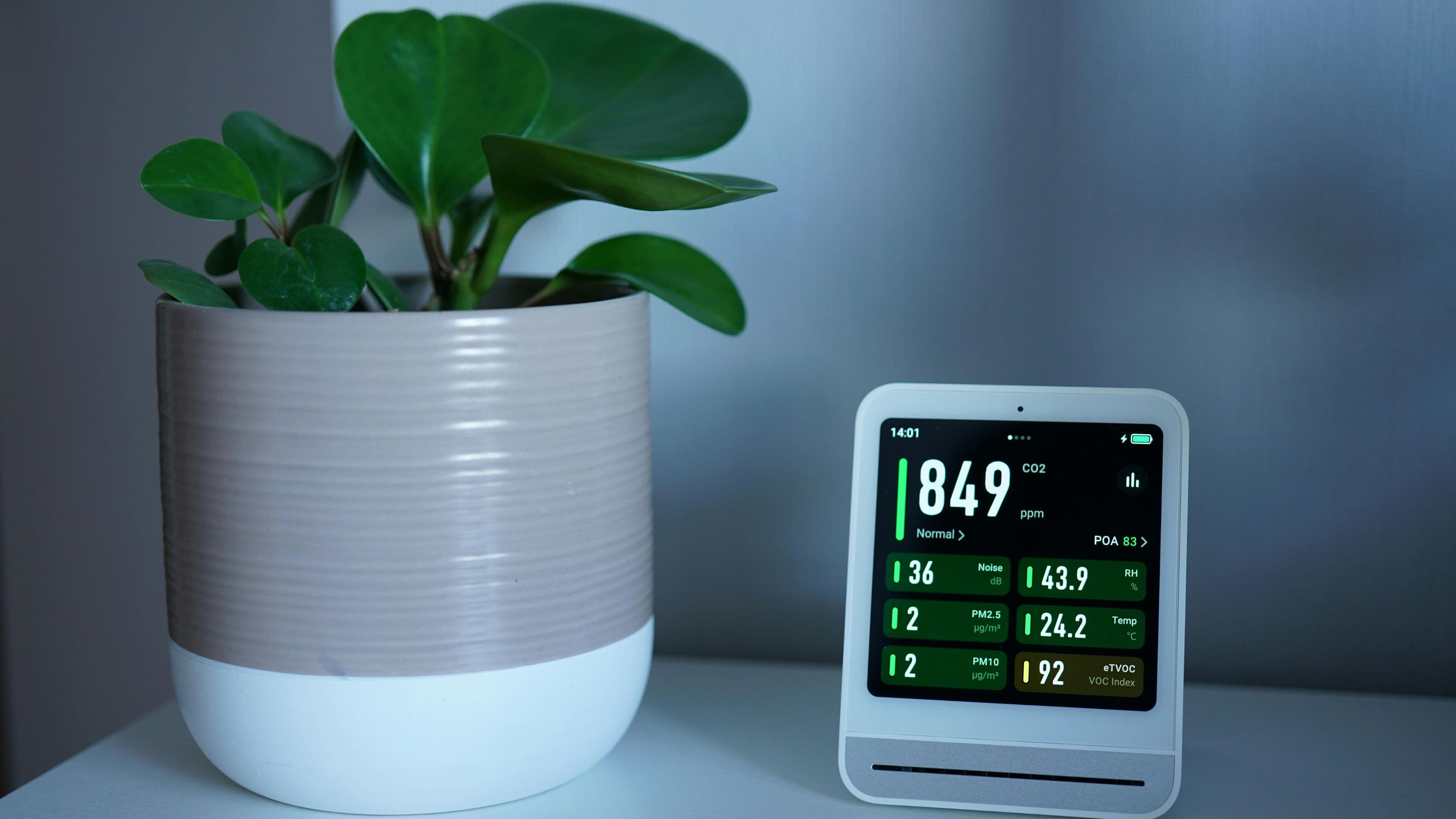
How do I know if my air is too dry? A small digital hygrometer (usually under $15) measures indoor humidity accurately. If your reading is consistently below 30%, your air is too dry. Between 30-50% is the comfortable, healthy range.
Are expensive air purifiers worth it? Not always. A mid-range purifier with a genuine HEPA filter often performs as well as a premium model for everyday use. What matters most is the HEPA certification, the room coverage rating (CADR), and how often filters need replacing.