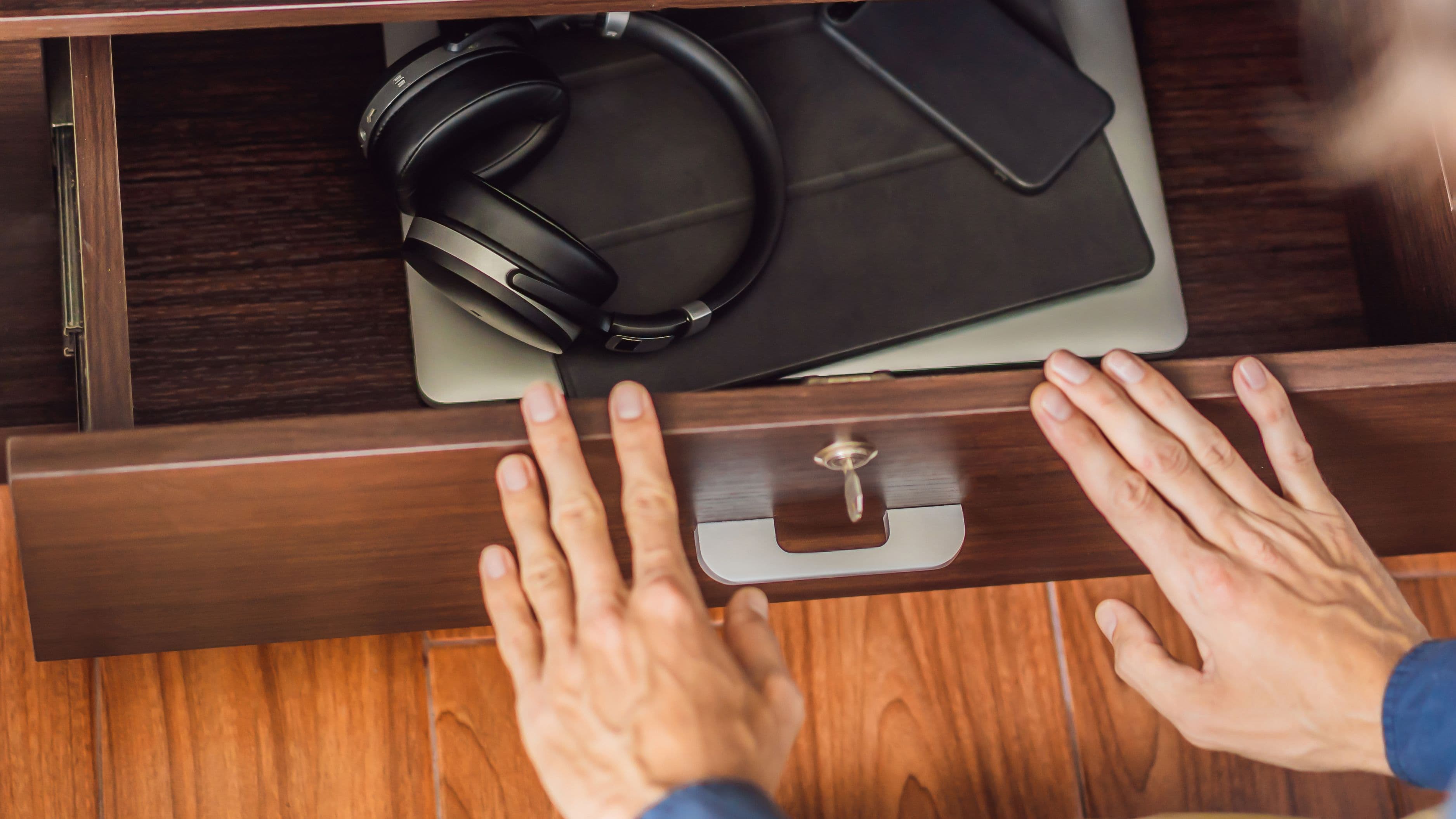
What I realized in that quiet, cluttered room wasn't that I needed to organize better. It wasn't that I needed a new system, a better planner, or a productivity app. What I realized — slowly, the way you realize things that matter — was that I had been tending to a version of my life I had long since outgrown. The commitments on my calendar, the possessions on my shelves, the relationships I maintained out of habit, the beliefs I still operated from out of loyalty to a younger self: none of it had been consciously chosen. It had simply accumulated, the way sediment does, layer by invisible layer, until the original riverbed was buried under ten years of unexamined yes.
That afternoon was the beginning of the most clarifying work I've done — not the dramatic, Marie Kondo kind of clear-out, but the slower, more honest process of asking does this still serve who I'm becoming? It's a question that applies to everything: your belongings, your schedule, your relationships, your inner narratives, your definitions of success. And it's a question that, once you start asking it, you cannot stop. Here's what that process has taught me, in the order it needed to be learned.
1. Accumulation Masquerades as Meaning
The things you keep are telling you something
There is a particular kind of guilt that attaches itself to objects, and it is one of the most effective anchors to a past version of yourself that exists. The guitar in the corner that you haven't played in four years isn't just a guitar — it's the self who was going to be musical, the dream that felt possible once, the money spent in a moment of optimism. Releasing it doesn't just mean releasing an object. It means releasing the identity scaffolding you built around it, and that is considerably more uncomfortable than dropping something at a donation center.
But here is what that discomfort is actually pointing toward: you have grown. The person who bought the guitar, committed to the hobby, signed up for the class — that person was real, and their hope was real, and honoring them doesn't require keeping every artifact of who they were. Psychologist Mihaly Csikszentmihalyi, whose research on the relationship between objects and identity found that we use our possessions to construct and maintain our sense of self, noted that the problem arises when we cling to objects that reflect an identity we've moved past — they become not reminders of who we are, but chains to who we were.
The invitation in your cluttered home, your overstuffed inbox, your drawer full of things you keep meaning to deal with, is not an organizational challenge. It's a self-knowledge question. What are you keeping that isn't a reflection of who you actually are today? What are you storing that belongs to a chapter that's already finished? Let that question sit with you as you walk through your space — feel where your breath tightens slightly, where your shoulders drop, where something in you quietly contracts. That contraction is information. Listen to it.
2. Your Calendar Is a Values Document
What you schedule is what you actually believe in
After the office, I turned to my calendar — and what I found there was even more revealing than the clutter. Buried under recurring obligations, social commitments held together by habit, and meetings that could have been emails were maybe six hours a week of time I had genuinely chosen. Six hours, in a week of 168, that felt like mine. The rest had been assigned, agreed to, accumulated — and every slot represented a silent vote for a version of my life that wasn't quite true anymore.
The philosopher and author Greg McKeown, in his book Essentialism, makes the case that the word "priority" was singular until the 20th century — you had a priority, one thing — and that the modern pluralization of the word into "priorities" reflects a cultural confusion that is costing us our capacity to live with intention. When everything is a priority, nothing is. When every request gets a yes, your yes means nothing, including to yourself. The radical act of simplifying your calendar isn't about doing less for its own sake — it's about doing the things that actually align with who you are and where you want to go, and doing those things with the full, unhurried presence they deserve.
Look at next week's calendar right now. Not with planning energy, but with honest eyes. Ask, for each item: Did I choose this, or did it choose me? The items that cause a quiet inner sigh — the ones you're already building mental energy to endure rather than looking forward to — are worth examining. Some you'll keep, because some obligations are genuinely worth honoring. But some are there because saying no once felt impossible, and the commitment calcified into routine. Those are the ones that are quietly spending the energy you need for what matters.
3. Not Every Relationship Is Meant to Last Forever
Some connections complete themselves
This one is tender, so let's hold it carefully. The relationships we outgrow are among the most difficult things to let go of, not because they're bad — many of them are full of genuine affection — but because releasing them requires acknowledging that we have changed, and that change sometimes moves us in directions that create distance from people who knew and loved a former version of us. That acknowledgment can feel like a betrayal of shared history. It isn't.
There is a difference between a relationship that has grown difficult and one that has grown complete. A difficult relationship — one full of friction, misunderstanding, and imperfect love — often deserves more time, more honesty, more willingness to show up and work through the discomfort. A complete relationship is different: it's one where the mutual nourishment has genuinely run its course, where both people are living in directions that no longer intersect, where every meeting leaves you feeling slightly less like yourself rather than more. Those relationships don't require anger to release. They require gratitude for what they were, and honesty about what they no longer are.
The practice here is one of the subtler ones on this list: it's not about cutting people off, but about consciously adjusting how much of your energy and emotional space you invest in connections that are quietly draining your reserves. Some friendships move to the periphery and stay there warmly. Some conversations happen less frequently but with more meaning when they do. Some people you simply wish well from a distance, with genuine love and without resentment. Simplifying your relational life isn't about creating a curated circle of perfect people — it's about being honest about where your energy is actually being met and returned, and tending to those places first.
4. Old Beliefs Are the Heaviest Luggage
The stories you inherited that aren't actually yours
The clutter in the physical world is visible. The clutter in the inner world is harder to see — but it is heavier. The beliefs we carry about what we're capable of, what we deserve, what "successful" looks like, what kind of person we fundamentally are — most of these were formed before we had the developmental capacity to evaluate them critically. A child who was told (or shown, or allowed to absorb through the emotional atmosphere of a household) that rest is laziness, that asking for help is weakness, that love must be earned through performance — that child becomes an adult still operating from those axioms, usually without knowing it.
The psychologist Carol Dweck's research on mindset distinguishes between fixed beliefs (this is who I am, this is what I'm capable of, this is how things are) and growth-oriented ones (this is where I am now, and it can change). What's less often discussed is the source of those fixed beliefs: most of them were absorbed, not chosen. They were the water we swam in during our most formative years, which is exactly why they feel so natural and so invisible. Questioning a core belief can feel like questioning reality itself — which is why most people never do it, and why those beliefs accumulate weight across a lifetime without ever being examined.
Simplifying at this level begins with curiosity rather than confrontation. Instead of attacking a belief, you approach it the way you might approach an unfamiliar animal — slowly, with respect for its defensiveness, curious about its origins. Where did I first learn this? Was it true then? Is it true now? Does it still serve who I want to become? Some beliefs will survive that inquiry and feel more consciously held for having been examined. Others will begin to loosen, their authority quietly diminished by the simple act of being seen clearly for the first time.
5. Busyness Is a Hiding Place
The discomfort waiting beneath the noise
One of the most uncomfortable discoveries in the simplification process is this: some of what you're carrying, you've been carrying on purpose. Not consciously. But the noise, the busyness, the overfull schedule and the overstuffed home — these things can serve as excellent insulation against the quieter, harder questions of what you actually want, who you actually are when no one's watching, and what you're actually afraid of. Stillness, for a person who has been moving fast for a long time, can feel less like relief and more like a threat.
The data on busyness is striking: a 2019 study published in the Journal of Marketing Research found that Americans increasingly wear busyness as a status symbol, equating it with importance and social value. But beneath the status signal is something more intimate — the way constant activity can become a strategy for not feeling the discomfort of an unlived life. When you slow down enough to hear yourself, what comes up? Often it's not clarity, at least not at first. Often it's grief — for the things you've postponed, the desires you've denied, the paths not taken. That grief is not a problem. It's the price of admission to a more honest life.
Letting go of busyness requires creating deliberate spaciousness — not just scheduling downtime, but learning to tolerate it without immediately filling it. This is harder than it sounds. The urge to pick up a phone, start a task, or create productive noise in a quiet moment is almost reflexive for modern people. But within that discomfort, held gently and without judgment, is where the most important simplifications happen: the dreams that surface when you finally stop drowning them out, the priorities that clarify when you remove the static, the quiet, insistent sense of what your life is actually asking you to do.
6. Letting Go Is a Practice, Not an Event
The one-time purge is a myth
There's a seductive fantasy that simplification is something you do once — a big clear-out weekend, a dramatic life overhaul — and that after it, everything stays beautifully curated and intentional forever. It doesn't work that way. Life continues to accumulate. New commitments creep in. Grief attaches itself to new objects. Old patterns return in new costumes. The work of letting go is not a destination but a practice — a repeated, gentle returning to the question of alignment, ideally built into the rhythm of ordinary life rather than reserved for crisis moments.
Some people build this into a seasonal ritual — a quarterly review of their calendar, commitments, and physical space. Others use the transitions that already exist: the turn of a new year, a birthday, a move, the end of a significant chapter. The container matters less than the consistency. What you're really building, over months and years of this practice, is a kind of inner editorial judgment — a developing ability to feel the difference between what is genuinely nourishing and what is simply familiar, to catch accumulation before it becomes a burden, to say yes more slowly and no more gently and both more consciously than you did before.
The Buddhist concept of anicca — impermanence — offers a useful frame here. Nothing is meant to stay forever. Everything, including the things you love most, is passing through. That truth, held lightly rather than mournfully, makes the act of releasing feel less like loss and more like participation in the natural rhythm of a life fully lived. Things come. They serve. They complete. They go. And in the space they leave, something new — sometimes something you couldn't have imagined while the old thing was still occupying the room — has the chance to arrive.
7. Simplicity Isn't Minimalism — It's Alignment
The difference between less and right
A final and important clarification: simplifying your life is not about aspiring to a particular aesthetic. It's not about owning fewer than 100 things, eliminating all social media, or converting to a capsule wardrobe. These choices might be right for some people and genuinely wrong for others — a musician's instrument collection is not clutter; a chef's kitchen full of specialized tools is not excess; a grandmother's shelves of family photographs are not accumulation. Simplicity is not the subtraction of everything; it's the subtraction of misalignment.
The question is never how much but how aligned. Does this — this object, this commitment, this relationship, this belief, this habit — reflect who I actually am and what I actually value? Is it earning its place in my limited and precious energy field? Or is it here because I haven't yet had the courage to be honest about the fact that it isn't right for me anymore? Those are the questions that lead to genuine simplicity, regardless of how many things you own at the end of the process.
What you're building, through this ongoing practice, is not an empty life but a resonant one — a life that vibrates at the frequency of your actual values rather than the accumulated frequency of accumulated shoulds. And a resonant life, even a full and busy and richly committed one, has a quality of spaciousness to it — not because there is less in it, but because everything in it has been consciously chosen. That quality is unmistakable when you encounter it in someone else. It's the sense that they are living from the inside out. That is what simplification, at its deepest level, is building toward.
What the Cluttered Room Was Trying to Tell Me
I look back at that October Sunday and the floor I sat on surrounded by a decade's worth of accumulated becoming, and I feel something that surprises me still: gratitude. Not because the clutter was good — it wasn't — but because it was honest. It was the visible evidence of a life that needed attention, a self that had been growing faster than the structures around it, a quiet readiness for something truer. The mess wasn't a failure. It was a message.
Your life is sending you messages right now — in the things that feel heavy when you carry them, in the calendar slots that make you sigh, in the relationships that leave you feeling dimmer rather than brighter, in the beliefs that make you smaller rather than more capable. You don't have to act on all of them today. But you can begin, gently and without judgment, to listen. To sit with the question. To ask, of each thing you're holding: is this mine to keep carrying, or is it time to set it down?
The life on the other side of that question is lighter. Not empty — lighter. Resonant rather than noisy. Chosen rather than accumulated. More you than it has ever been. And that life has been waiting, patient and unhurried, for exactly this moment of honest attention.
📚 Sources
1. Csikszentmihalyi, M., & Rochberg-Halton, E. (1981). The Meaning of Things: Domestic Symbols and the Self. Cambridge University Press.
2. McKeown, G. (2014). Essentialism: The Disciplined Pursuit of Less. Crown Business.
3. Dweck, C. S. (2006). Mindset: The New Psychology of Success. Random House.
4. Bellezza, S., Paharia, N., & Keinan, A. (2019). "Conspicuous consumption of time: When busyness and lack of leisure time become a status symbol." Journal of Marketing Research, 54(1), 118–138. https://doi.org/10.1509/jmr.15.0031
5. Brown, B. (2010). The Gifts of Imperfection: Let Go of Who You Think You're Supposed to Be and Embrace Who You Are. Hazelden Publishing.